Jeep Catalytic Converter Replacement & Exhaust Emission System Repair in Musaffah
800Sayara handles complete Jeep catalytic converter repair in Musaffah, covering exhaust backpressure testing, oxygen sensor diagnosis, substrate inspection, and OBD-II emission fault resolution for all Jeep platforms.
Years of Experience
Satisfied Clients
Pickup & Delivery Service
Quick Service
Why Choose 800Sayara for Jeep Catalytic Converter Repair in Musaffah?
Emission system technicians follow manufacturer-defined backpressure thresholds, air-fuel ratio parameters, and lambda values for every Jeep model. Each repair covers the converter substrate, O2 sensors, manifold connections, and ECM fuel trim data. Emission output is confirmed to meet GCC-equivalent standards.
Jeep-Certified Exhaust & Emission System Technicians
Technicians hold manufacturer-level training in Jeep exhaust architectures. This includes the dual converter layout on the Grand Cherokee WK2 5.7L HEMI. The Cherokee KL 2.4L and Compass MP 2.4L are also covered. Diagnosis references OEM TSBs throughout.
Genuine OEM Emission Components & Specialist Diagnostic Equipment
All catalytic converters, O2 sensors, AFR sensors, flex sections, and manifold gaskets are OEM-approved. The workshop uses a four-gas analyser, OBD-II scan tool, and backpressure gauge. A wideband lambda meter calibrated to 0.01 resolution is also used.
Efficient Exhaust System Service Turnaround
An upstream O2 sensor replacement takes 45 to 90 minutes. Catalytic converter replacement requires 2 to 3 hours. A full exhaust inspection with four-gas analysis takes 1 to 2 hours. DPF cleaning on the Cherokee KL 2.2L takes 3 hours.
Transparent and Confirmed Pricing
All exhaust repair costs are confirmed in writing before work begins. Parts, labour, and emission results are all included. No charges are added after authorisation. A full report with gas readings, backpressure data, and DTC history is provided at handover.
Jeep Catalytic Converter & Exhaust Emission System Services
Read More
Exhaust Emission Diagnostic & OBD-II Fault Code Scanning
The ECM tracks upstream and downstream O2 sensor voltage, STFT, LTFT, and catalyst efficiency ratio. DTCs, including P0420, P0430, P0136, and P0171, are retrieved via bi-directional scan tools. Live lambda values and MAF readings are reviewed before any component is removed.
Catalytic Converter Inspection & Replacement
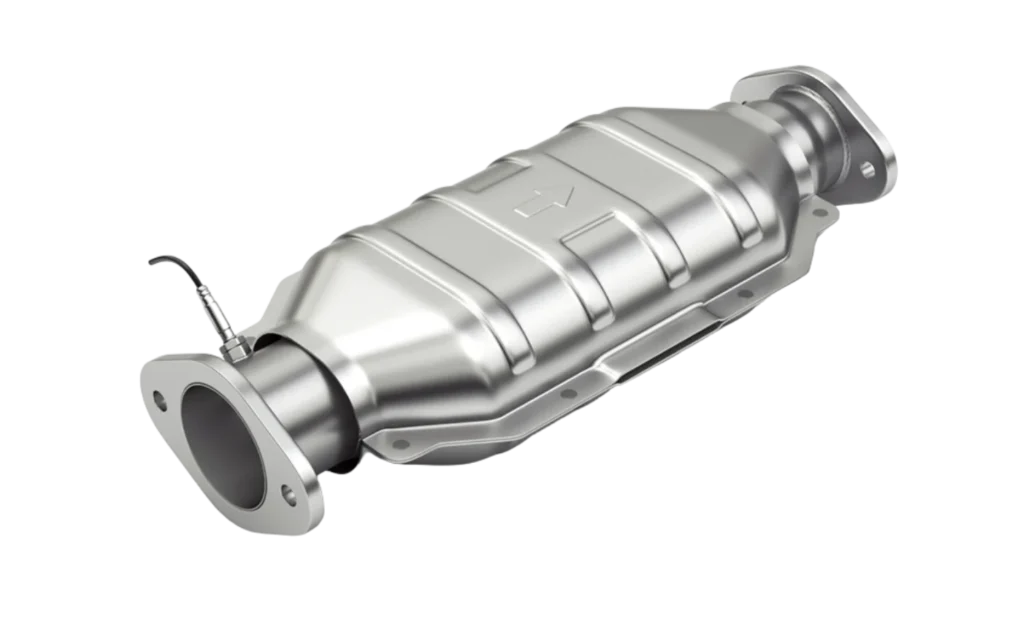
The catalytic converter reduces HC, CO, and NOx across a ceramic substrate. A downstream O2 efficiency ratio below 0.5 confirms substrate wear. Backpressure above 1.5 bar at 2,500 RPM confirms collapse. OEM units are fitted and verified with a four-gas test.
Upstream & Downstream Oxygen Sensor Replacement
Upstream O2 sensors switch between 0.1V and 0.9V at 1 to 3 Hz. Response time exceeding 100 milliseconds confirms degradation. Downstream voltage above 0.6V confirms converter function. AFR sensors on the Grand Cherokee 5.7L HEMI are calibrated through an ECM drive cycle.
Exhaust Manifold & Gasket Inspection
Manifold cracks allow unmeasured gas ahead of the upstream O2 sensor. This produces false lean readings and STFT above +10%. Surface warpage beyond 0.3mm per 150mm confirms replacement. OEM multi-layer steel gaskets are torqued to specification after stud inspection.
Diesel Particulate Filter (DPF) Cleaning & Regeneration
The DPF on the Cherokee KL 2.2L MultiJet captures soot above 85% efficiency. Differential pressure exceeding 80 kPa confirms blockage. A scan tool raises the exhaust temperature above 550°C to oxidise accumulated soot. Units beyond recovery are replaced with OEM-approved assemblies.
Air-Fuel Ratio (AFR) Sensor Diagnosis & Calibration
The AFR sensor operates from 0.7 to 1.6 lambda, delivering continuous mixture data to the ECM. Heater resistance outside 5 to 10 ohms confirms failure. LTFT beyond ±10% at idle signals inaccuracy. Post-replacement calibration is verified via a lambda meter.
Exhaust Flex Section & Pipe Replacement
Flex sections absorb powertrain vibration through a braided stainless mesh liner. Mesh separation alters O2 sensor reference conditions and triggers P0420 DTCs. OEM slip-fit or flanged assemblies are used as replacements. Hangers are inspected for rubber fatigue before clearance is confirmed.
EGR Valve Inspection & Carbon Cleaning
The EGR valve recirculates exhaust gas to reduce NOx emissions. Carbon buildup restricts valve lift and triggers P0400 and P0404 DTCs. Passages are cleaned with solvent and compressed air. Actuation is confirmed via scan tool after cleaning is complete.
Exhaust Heat Shield Inspection & Replacement
Heat shields protect underbody fuel lines from radiated temperatures exceeding 650°C. Corroded panels produce a metallic rattle at idle. Fixing points are checked for thread condition. Corroded units are replaced with OEM aluminised steel, with 25mm minimum clearance confirmed.
Secondary Air Injection System Inspection (Wrangler & Grand Cherokee)
The SAI system injects air during cold-start to accelerate converter light-off below 250°C. Pump output below 35 kPa confirms impeller wear. DTCs P0410 and P0418 are cleared only after confirmed airflow meets OEM specification on Wrangler JK and Grand Cherokee WK2.
Exhaust Backpressure Testing & Flow Verification
Backpressure is measured at the upstream O2 sensor bung at 1,500 RPM and 2,500 RPM. Readings above 0.5 bar at idle confirm collapse or blockage. Post-repair values must fall below 0.3 bar at idle. Road clearance is issued only after confirmation.
Catalytic Converter Substrate Inspection (Thermal Camera & Tap Test)
A thermal camera identifies cold zones from deactivated substrate sections across the converter face. A tap test detects rattling from a fractured ceramic substrate. Both assessments run before and after replacement. Uniform thermal distribution is confirmed without cutting the converter open.
Post-Repair Emission Verification & Four-Gas Analysis
A four-gas analyser measures HC below 50 ppm, CO below 0.30%, CO2 above 14.0%, and O2 below 0.50%. Values align with GCC-equivalent UAE inspection thresholds. Results are recorded in the written handover report. OBD-II readiness monitor status is confirmed before vehicle release.
Full Exhaust & Emission System Service & Recommission
A complete service covers the catalytic converter, O2 sensors, EGR valve, SAI system, manifold gaskets, flex section, and heat shields. DPF and AFR calibration are included on applicable models. Four-gas analysis confirms final emission output. Recommended at 80,000 km intervals or after misfires.
How to Book a Jeep Catalytic Converter Repair at 800Sayara?
Booking a Jeep catalytic converter repair at the Musaffah workshop follows three clear steps.
Share Your Jeep Details
Provide the Jeep model, production year, current mileage, active DTCs if known, and the specific emission or exhaust concern observed. This allows technicians to prepare the correct OEM catalytic converter, oxygen sensors, and diagnostic equipment before the vehicle arrives at the workshop.
Make a Booking
Choose a date and time that suits your schedule. Same-day and next-day appointments are available for most exhaust system repairs. Free vehicle pickup and delivery is provided throughout Musaffah for customers who prefer not to bring the Jeep directly to the workshop.
We Repair
Certified technicians carry out the full emission system repair, backpressure test, four-gas analysis, O2 sensor waveform confirmation, and OBD-II readiness monitor check. A written inspection and repair report is provided at handover, and the customer is kept informed at each stage, including any supplementary findings from the diagnostic sequence.
Key Features of Our Jeep Emission System Service
When Does Your Jeep's Exhaust System Need Professional Attention?
The following conditions indicate that an emission system inspection is required. Addressing these symptoms promptly reduces the risk of progressive mechanical damage and keeps exhaust output within safe operating thresholds.
| Issue | Symptoms / Signs | Possible Cause | Recommended Action |
|---|---|---|---|
| Check Engine Light Active | MIL illuminated, often with reduced engine response | P0420, P0430, P0136, or P0171 DTC stored in ECM | OBD-II scan, O2 sensor waveform analysis, catalyst efficiency test |
| Reduced Engine Power | Noticeable power loss above 3,000 RPM | Collapsed converter substrate causing exhaust backpressure above 1.5 bar | Backpressure test at upstream O2 sensor bung, substrate tap test |
| Rotten Egg Odour from Exhaust | Sulphur smell during acceleration or idling | Rich fuel mixture overloading converter with unburned HC, or substrate failure | Four-gas analysis, STFT and LTFT review, O2 sensor replacement if needed |
| Rattling Sound Under Vehicle | Metallic rattle at idle or during cold starts | Fractured ceramic substrate inside the converter or loose heat shield | Thermal imaging inspection, tap test, heat shield fastener check |
| DPF Warning Light Active (Diesel) | DPF warning on dash, reduced performance | DPF differential pressure exceeding 80 kPa from excessive soot accumulation | Forced regeneration via scan tool, ash load assessment, DPF cleaning if required |
| Failed Emission Inspection | Vehicle does not pass UAE or GCC emission test | HC above 50 ppm, CO above 0.30%, or non-ready OBD-II monitors | Four-gas analysis, catalyst replacement, drive cycle completion for readiness monitors |
| Excessive Fuel Consumption | Fuel economy drops by more than 15% | Faulty AFR sensor causing open-loop enrichment, or EGR blockage | LTFT review, AFR sensor waveform test, EGR valve actuation check |
| Exhaust Smoke During Warm Running | Visible grey or blue smoke after full engine warm-up | Oil contamination of the converter substrate, or ongoing engine misfire | Misfire DTC scan, compression test, converter substrate inspection |
Our Services In Mussafah

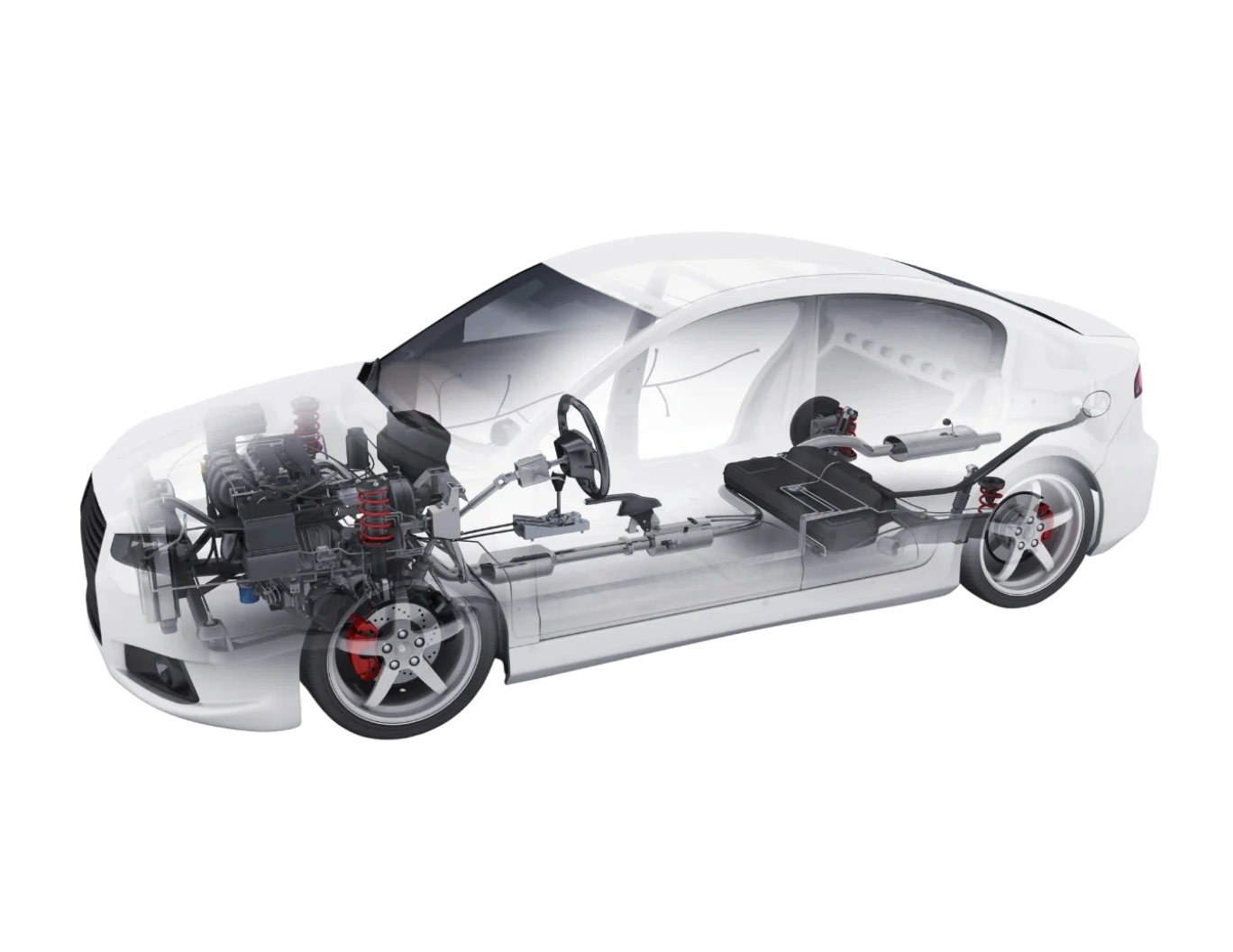
Benefits of Regular Jeep Exhaust & Emission System Servicing
| Benefit | Description | Measurable Impact |
|---|---|---|
| Consistent Engine Performance | Replacing a restricted catalytic converter restores exhaust flow and removes backpressure that reduces peak power output | A substrate collapse causing 1.5 bar backpressure can reduce engine output by up to 12% at high RPM |
| Improved Fuel Efficiency | Correctly functioning O2 and AFR sensors maintain closed-loop fuel control within +/-5% of stoichiometric (lambda = 1.0) | A failed upstream O2 sensor forcing open-loop operation increases fuel consumption by 10% to 18% |
| Reduced Harmful Emissions | An intact converter substrate maintains HC conversion efficiency above 95% and CO reduction above 90% | A degraded converter substrate can increase tailpipe HC concentration from below 50 ppm to above 400 ppm |
| Extended Converter Service Life | Addressing misfires, oil contamination, and enrichment faults before they reach the converter prevents premature substrate poisoning | Substrate poisoning from untreated engine oil consumption can reduce converter life by up to 60% |
| UAE Emission Test Compliance | Post-repair four-gas verification confirms HC, CO, CO2, and O2 values within GCC inspection thresholds, along with OBD-II readiness monitor status | Completing all OBD-II readiness monitors before inspection reduces re-test failure rate to below 5% |
| Lower Long-Term Repair Costs | Identifying EGR carbon build-up, flex section leaks, and O2 sensor degradation at service intervals prevents converter substrate damage | Proactive emission servicing reduces total exhaust system repair costs by up to 35% compared to post-failure replacement |
| Warranty and Resale Value | Emission component replacement at OEM intervals using genuine parts supports manufacturer warranty validity and UAE registration renewal | Full emission service records improve resale confidence and can increase vehicle value by up to 10% |
Maintenance Guidance After Jeep Catalytic Converter Repair
- Complete the OBD-II Drive Cycle After Repair: Allow a minimum of 3 complete warm-up and cool-down cycles to ensure all ECM readiness monitors reach a ready status before presenting the vehicle for emission inspection.
- Use the Correct Engine Oil Grade: Confirm the correct API-rated or ACEA-rated oil specification from the owner’s manual. High-sulphur or incorrect oil grades accelerate substrate phosphorus poisoning, reducing converter efficiency within 20,000 km.
- Address Engine Misfires Promptly: Unresolved misfires deliver raw fuel into the exhaust stream, causing converter overheating above 1,000 degrees C and substrate melt-down within hours of continuous misfiring.
- Inspect O2 Sensors at Every 50,000 km: Upstream O2 sensor response time and downstream voltage stability should be assessed at intervals no longer than 50,000 km to maintain accurate fuel trim control.
- Avoid Short-Trip Driving Repeatedly: Frequent cold-start journeys under 8 km prevent the converter from reaching light-off temperature above 250 degrees C, causing HC accumulation and accelerated catalyst coating degradation.
- Schedule a 1,000 km Follow-Up Check: A post-repair verification confirms stable STFT and LTFT readings, correct O2 sensor waveform switching frequency, and no exhaust leaks from replaced flex sections or gaskets.
- Monitor Exhaust Smoke After Repair: Any return of grey smoke, sulphur odour, or MIL activation after a confirmed repair should be reported to the workshop immediately, as this may indicate a secondary oil consumption or misfire event affecting the new converter.
Customer Reviews
The check engine light appeared on my Grand Cherokee with a noticeable drop in power above 3,000 RPM. The scan retrieved P0420, and the backpressure test confirmed a reading of 1.8 bar at 2,500 RPM, well above the 0.8 bar limit. The catalytic converter was replaced with an OEM unit, and the post-repair backpressure measured 0.6 bar. Power delivery returned to normal, and the check engine light has not returned through 4,000 km of driving since.
My Wrangler had a persistent rattle from under the vehicle during cold starts that disappeared once the engine warmed up. The tap test and thermal imaging identified a fractured ceramic substrate with three cold zones across the converter face. The converter was replaced in a single visit, and a full four-gas test confirmed HC at 28 ppm and CO at 0.12% after the repair. The rattle is completely gone, and the engine feels smoother at low speed.
The DPF warning light appeared on my Cherokee KL diesel, and the vehicle entered a restricted performance mode. The differential pressure reading was 94 kPa, confirming a heavily blocked DPF. The technician performed a forced regeneration cycle via the scan tool, reaching a soot burn temperature of 570 degrees C, and the post-regeneration pressure dropped to 22 kPa. The warning light cleared after the drive cycle, and performance returned to normal within the same day.
My Compass was consuming more fuel than usual, and the LTFT reading showed +14% at idle, well outside the acceptable range. The upstream O2 sensor waveform showed a slow response time of 180 milliseconds, confirming sensor degradation. After replacing the sensor with an OEM unit and completing the drive cycle, the LTFT settled to -2%, and fuel consumption returned to the expected figure within a week.
A strong exhaust smell inside the cabin prompted me to bring the Gladiator in for an inspection. The technician identified a cracked exhaust flex section ahead of the catalytic converter, which was drawing in exhaust gas under negative cabin pressure conditions. The flex section was replaced with an OEM stainless assembly, all hanger brackets were reset to correct clearance, and a post-repair exhaust gas test confirmed zero HC detection at the cabin air inlet. The smell has not returned.
Jeep Models, We Service in Musaffah
800Sayara provides catalytic converter repair and complete exhaust emission system servicing for the full range of Jeep models at the Musaffah workshop.
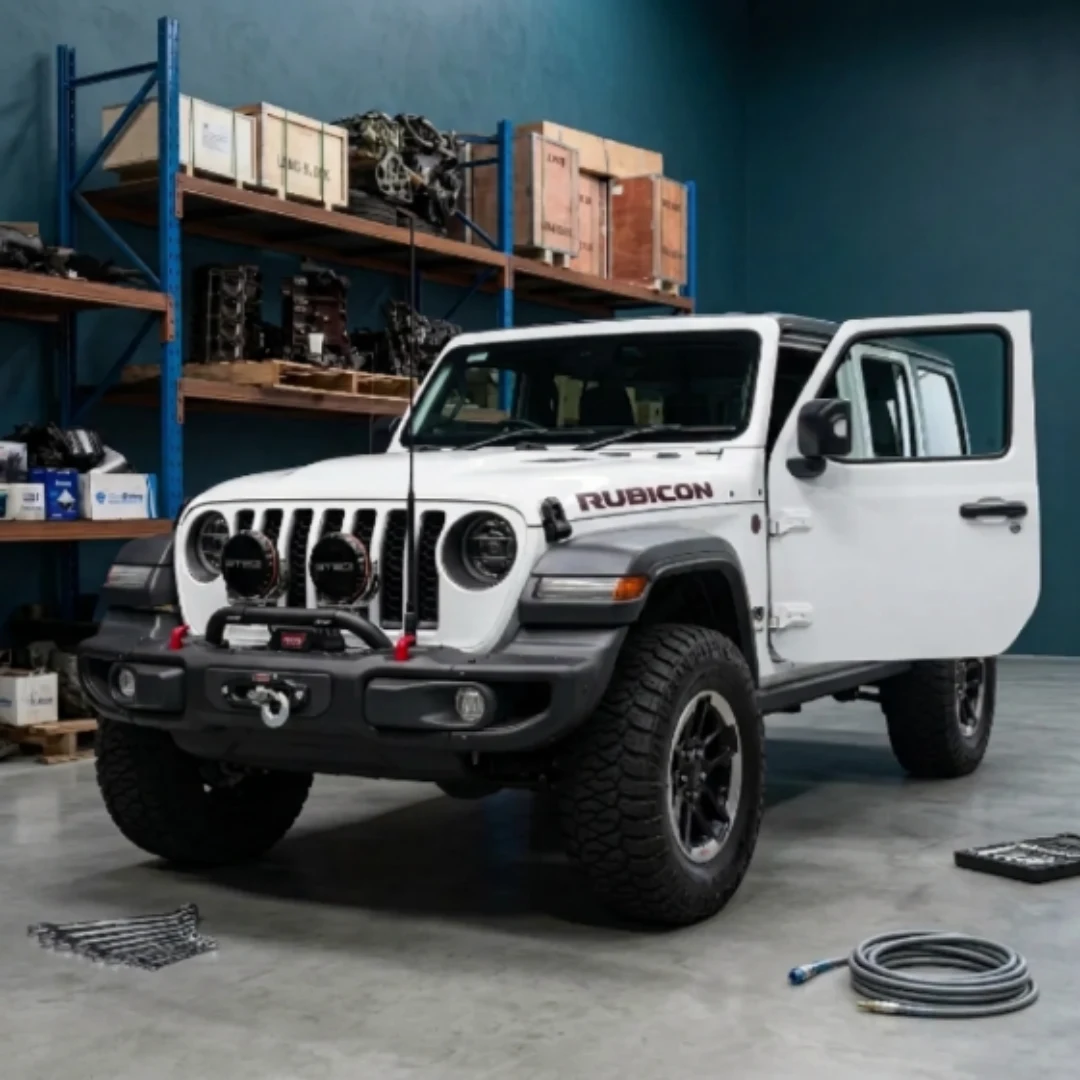
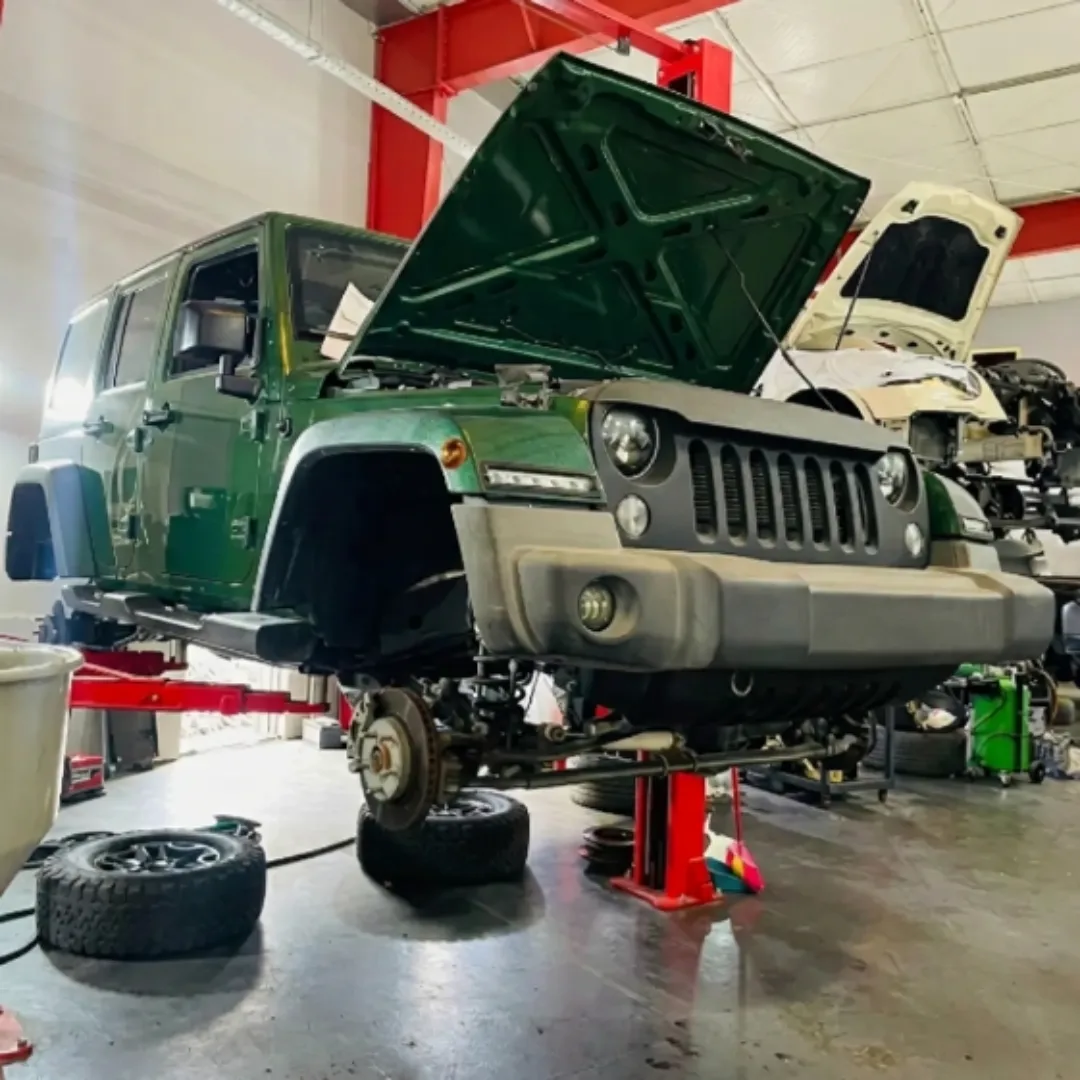
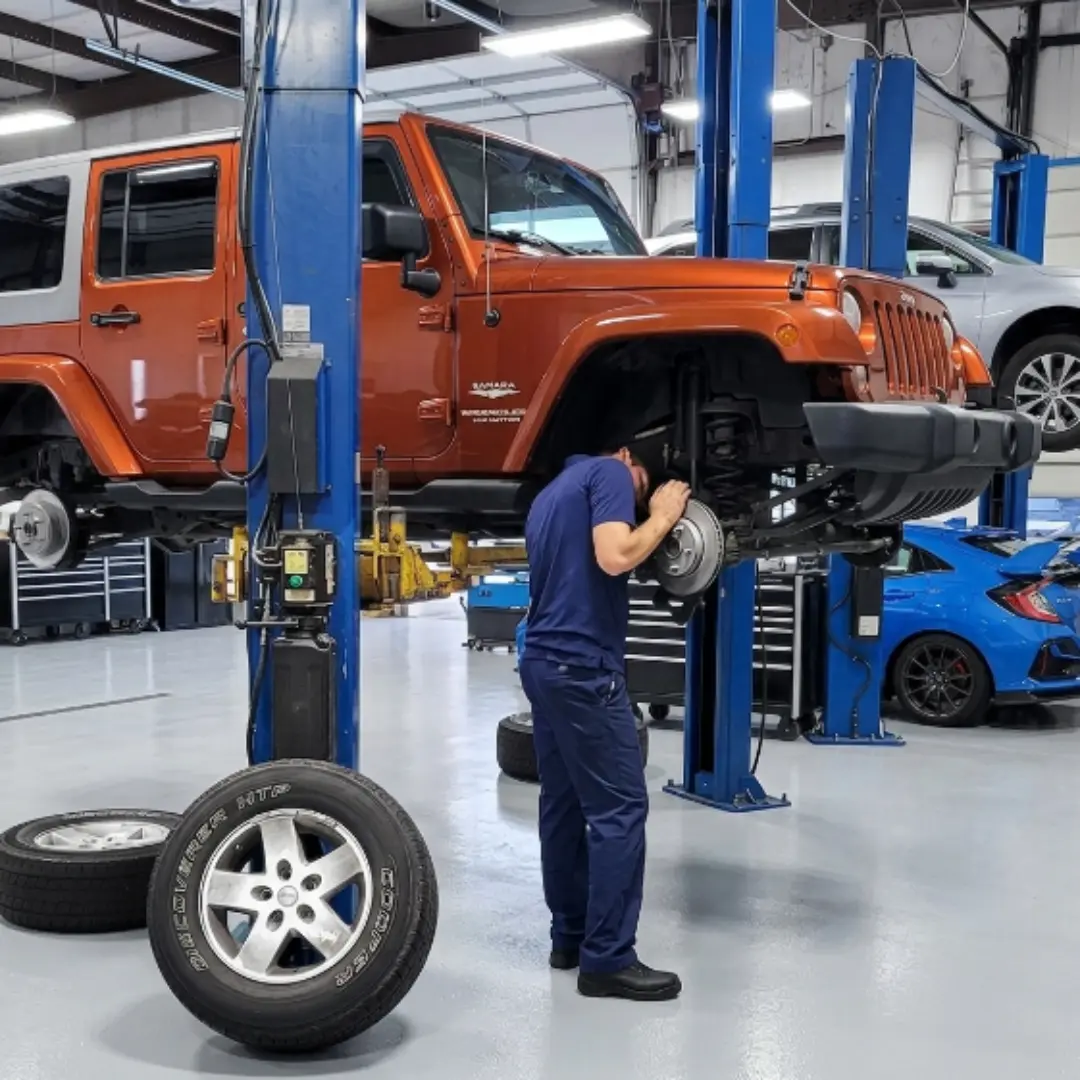
Our Recently Work
Frequently Asked Questions
What does a Jeep catalytic converter service at your workshop include?
A standard emission system service covers OBD-II DTC retrieval, live O2 sensor waveform capture, upstream and downstream voltage analysis, exhaust backpressure measurement at the upstream sensor bung, four-gas tailpipe analysis measuring HC, CO, CO2, and O2 concentrations, EGR valve actuation check, DPF differential pressure reading (diesel models), AFR sensor resistance and response time test, and post-repair OBD-II readiness monitor verification.
How do I know if my Jeep needs catalytic converter repair or full replacement?
Targeted repair addresses isolated issues such as a loose converter heat shield, a deteriorated inlet gasket, or a failed O2 sensor that triggered a false P0420 DTC. Full converter replacement is required when exhaust backpressure exceeds 1.5 bar at 2,500 RPM, when thermal imaging identifies cold zones across more than 20% of the converter face, when the tap test confirms internal substrate fragmentation, or when the four-gas test shows HC above 400 ppm and CO above 1.0% after all upstream faults have been resolved.
What engine types in my Jeep affect catalytic converter service requirements?
Petrol-engined models, including the 3.6L Pentastar V6 and 5.7L HEMI V8, use a three-way catalytic converter with platinum-palladium-rhodium substrate coating. The 2.4L Tigershark inline-four uses a close-coupled converter positioned within 300mm of the exhaust manifold to accelerate light-off. Diesel models, including the Cherokee KL 2.2L MultiJet, use a diesel oxidation catalyst (DOC) and a DPF instead of a conventional three-way converter, requiring different diagnostic and servicing procedures.
How long does a Jeep catalytic converter replacement take?
An upstream or downstream O2 sensor replacement takes 45 to 90 minutes. A single catalytic converter replacement with gasket renewal and post-repair gas test takes 2 to 3 hours. A dual converter replacement on the Grand Cherokee WK2 5.7L HEMI takes 4 to 5 hours. A DPF forced regeneration takes 2 to 4 hours. A full emission system service covering all components takes 5 to 7 hours. Final times depend on the Jeep model and parts availability on the day.
Do you service exhaust systems on Jeep 4xe hybrid models?
Yes. The Jeep Wrangler 4xe and Grand Cherokee 4xe retain a conventional petrol exhaust and catalytic converter system that operates independently of the high-voltage battery circuit. Catalytic converter repairs on these models follow standard ICE procedures, with high-voltage system isolation carried out before any work begins in adjacent underbody areas. Technicians hold the required training for hybrid powertrain safety protocols.
Can you clear emission warning lights after a catalytic converter repair?
Yes. All MIL and emission-related warning indicators are cleared using a bi-directional OBD-II scan tool after the confirmed fault has been repaired and the vehicle has completed a full ECM drive cycle with all readiness monitors reaching a ready status. Warning lights are only cleared after post-repair four-gas analysis and O2 sensor waveform data confirm the emission system is operating within OEM parameters.
How often should the catalytic converter system be inspected on a Jeep?
A full emission system inspection is recommended every 80,000 km or whenever a P0420, P0430, or related emission DTC is stored. Vehicles with a history of engine misfires, oil consumption above 0.5L per 1,000 km, or repeated short-trip driving below 8 km benefit from inspection every 50,000 km to identify early substrate contamination before full converter failure occurs.
Do you offer a warranty on catalytic converter replacements?
Yes. All catalytic converter replacements and exhaust emission system repairs carried out at the Musaffah workshop include a repair warranty covering both parts and labour. The warranty period and specific terms are confirmed in the written service report provided at vehicle handover. Any repeat concern within the warranty period is assessed and resolved at no additional cost to the customer.