Trusted Jeep Head Gasket Replacement & Engine Sealing Specialists in Musaffah
800Sayara provides precision Jeep head gasket replacement in Musaffah, covering combustion sealing diagnostics, cylinder head inspection, MLS gasket installation, torque-to-yield (TTY) fastener renewal, and cooling system integrity testing by engine-certified technicians.
Years of Experience
Satisfied Clients
Pickup & Delivery Service
Quick Service
Why Choose 800Sayara for Jeep Head Gasket Replacement in Musaffah?
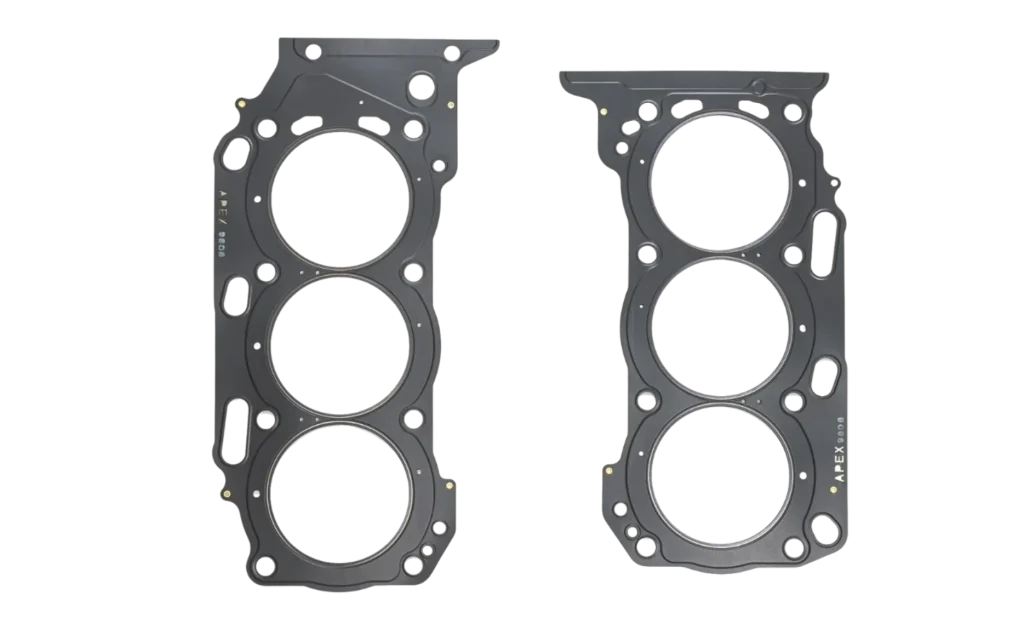
A head gasket seals the combustion chamber, oil galleries, and coolant passages. It sits between the cylinder block and the head. A compromised seal causes coolant and oil cross-contamination. This leads to hydrolocking, bearing damage, and complete engine failure without timely repair.
Certified Jeep Engine Technicians
Technicians at 800Sayara hold manufacturer-level certifications. They cover the 2.0L turbo four-cylinder, 3.6L Pentastar V6, 5.7L HEMI V8, 3.0L EcoDiesel V6, and 2.4L Tigershark MultiAir engines. All cylinder head bolt torque angles are verified using a torque angle meter for the correct clamping load.
Genuine OEM Head Gasket Parts & Specialist Equipment
Only OEM-approved MLS gaskets, fire ring assemblies, TTY bolt sets, and thermostat housing seals are used. The workshop operates combustion leak test kits, cooling system pressure testers, cylinder leakdown testers, OBD-II scan tools, and surface finish comparators on every repair.
Efficient Head Gasket Service Turnaround
A four-cylinder head gasket replacement is completed within 6 to 8 hours. A V6 or V8 dual replacement with resurfacing takes 1 to 2 working days. A full engine sealing overhaul covering both heads and valve stem seals takes 2 to 3 working days.
Clear and Consistent Pricing
All head gasket replacement costs, covering OEM parts, machining, labour, and pressure testing, are confirmed before work begins. No additional charges are introduced mid-repair. A written service report with torque readings, flatness measurements, and pressure test data is provided at vehicle handover.
Jeep Head Gasket Replacement Services We Provide
Read More
Combustion Leak Diagnosis & Engine Pressure Testing
The PCM monitors coolant temperature and misfire frequency across all Jeep engines. A chemical indicator test detects hydrocarbons in the coolant tank, confirming a gasket breach. OBD-II tools retrieve stored DTCs. A cylinder leakdown test identifies which cylinder is losing compression before disassembly.
Cylinder Head Removal & Inspection
Cylinder head removal requires draining coolant, disconnecting the fuel rail, releasing vacuum lines, and removing the timing chain or belt. Each head is inspected for warping, combustion chamber cracks, and valve seat recession. Warpage beyond 0.05 mm per 150 mm span requires precision surface grinding before refitting.
Multi-Layer Steel (MLS) Head Gasket Replacement
MLS gaskets contain three to five laminated steel layers with embossed sealing beads. They conform to surface irregularities under correct clamping load. Gasket selection matches the engine bore diameter and fire ring thickness. Incorrect thickness shifts the compression ratio, affecting detonation thresholds on turbocharged and EcoDiesel units.
Torque-to-Yield (TTY) Head Bolt Replacement
TTY head bolts are single-use fasteners that permanently stretch during initial torquing. They must be replaced after every head removal. Reusing TTY bolts reduces clamping load by up to 25%. Replacement follows a three-stage sequence verified with a torque angle meter.
Cylinder Head Resurfacing & Flatness Verification
A warped cylinder head prevents the MLS gasket from sealing combustion chambers and coolant passages correctly. Surface grinding removes material in 0.01 mm increments to restore flatness. A precision straight edge is applied at six points across the head face before reassembly proceeds.
Cooling System Pressure Test & Bleed Procedure
A calibrated tester applies 110 to 140 kPa to the cooling circuit and holds pressure for 15 minutes. This confirms head gasket seal integrity across all connections. The system is filled with OEM coolant at 50:50 concentration. Air is purged by running the engine with the expansion tank cap removed.
Intake Manifold Gasket Replacement
The intake manifold gasket seals the inlet plenum to the cylinder head ports. On the 3.6L Pentastar V6, rubber-coated plastic gaskets are replaced during head gasket service. This prevents vacuum leaks that cause rough idling and P0171 or P0174 fault codes. Manifold bolts are torqued to 12 Nm in the outward-spiral sequence.
Exhaust Manifold Gasket & Stud Replacement
Exhaust manifold gaskets endure repeated thermal cycling, compressing the sealing material and causing exhaust leaks over time. Corroded studs are extracted using penetrating fluid, heat, and stud extractors. Replacement studs are installed to the correct thread depth. Manifold nuts are torqued to OEM specification to prevent distortion.
Valve Stem Seal Replacement
Worn valve stem seals allow oil to migrate into the combustion chamber along the valve guide. This produces blue exhaust smoke under deceleration. It also raises oil consumption above 0.5 to 1.0 litres per 10,000 km. A dedicated seal driver ensures each new seal seats at the correct depth.
Thermostat & Coolant Temperature Sensor Service
A sticking thermostat forces the engine outside its normal operating range of 88 to 107 degrees Celsius. This increases head gasket stress through repeated thermal shock. The thermostat, housing gasket, and CTS are replaced during service. OBD-II live data confirms correct sensor output across the full temperature range.
Timing Chain or Belt Resetting & Tensioner Inspection
Head removal requires detaching the timing chain or belt from the camshaft sprocket. Refitting follows OEM timing mark alignment to within one tooth on both sprockets. Tensioner condition, chain guide wear, and belt tensioner bearing play are all assessed. Worn tensioner components cause chain slap or belt skip within 5,000 km.
Post-Repair Engine Run-In & Road Test
After head gasket replacement, a controlled warm-up cycle allows the MLS gasket to seat properly under thermal expansion. Coolant level is rechecked at 5, 15, and 30 minutes of operation. A 15 to 20 km road test confirms stable idle, correct coolant temperature, no exhaust smoke, and no returning fault codes.
How to Book a Jeep Head Gasket Replacement at 800Sayara?
Scheduling a Jeep head gasket replacement at the Musaffah workshop takes three straightforward steps.
Share Your Jeep Details
Provide your Jeep model, model year, current mileage, engine code, and a description of the symptoms you have observed, such as white exhaust smoke, coolant loss, or engine overheating. This information allows technicians to prepare the correct OEM gasket set, TTY fastener kit, and diagnostic equipment before your vehicle arrives at the workshop.
Make a Booking
Select a date and time that fits your schedule. Same-day and next-day appointments are available. A free pickup and delivery service is offered across Musaffah for customers who prefer not to bring their Jeep in directly.
We Repair
Certified engine technicians carry out the complete head gasket replacement and provide a written inspection report at job completion. You receive status updates at each stage of the repair, including any additional findings identified during cylinder head inspection or machining assessment.
Key Features We Provide
When Does Your Jeep Need a Professional Head Gasket Replacement?
The following indicators suggest that your Jeep’s head gasket or engine sealing system requires a professional inspection. Addressing these symptoms early prevents escalating damage to the connected cylinder head, bearing, and cooling system components.
| Issue | Symptoms / Signs | Possible Cause | Recommended Solution |
|---|---|---|---|
| White Exhaust Smoke | Persistent white or steam-like smoke from the exhaust, particularly after the engine reaches operating temperature | Coolant entering the combustion chamber through a breached head gasket, fire ring | Combustion leak test, cylinder compression check, and head gasket replacement with TTY bolt renewal |
| Coolant Loss Without Visible Leak | Coolant level dropping in the expansion tank between service intervals, with no external leak on the ground | Internal coolant-to-combustion crossover at the head gasket surface | Pressure test at 110 to 140 kPa, cylinder leakdown test, and head removal for gasket and surface inspection |
| Engine Overheating | Coolant temperature gauge reading above the normal range of 88 to 107 degrees Celsius; coolant reservoir boiling | Combustion gas entering the cooling circuit, reducing coolant flow, and increasing system pressure above 140 kPa | Cooling system pressure test, combustion gas detection test, and cylinder head inspection for warping |
| Milky or Foamy Engine Oil | Engine oil on the dipstick or inside the oil filler cap appears milky brown or frothy | Coolant is entering the oil circuit through a head gasket breach at an oil gallery passage | Head gasket replacement, engine oil flush, and oil cooler inspection to confirm no secondary contamination |
| Loss of Compression in One Cylinder | Misfires on a specific cylinder logged as P030X DTCs; rough idle; noticeable power reduction | Head gasket breach between adjacent cylinders or at the cylinder bore edge, allowing combustion pressure to escape | OBD-II fault code scan, cylinder compression test, and leakdown test to confirm breach location before head removal |
| Coolant Contamination in Expansion Tank | Brown sludge or oily film floating on the coolant surface in the expansion tank | Oil is entering the cooling system through a compromised head gasket or cracked cylinder head | Combustion leak detection, cylinder head crack inspection under pressure, and full head gasket replacement |
| Rough Idle After Overheating Event | Unstable idle or misfires that appear after a previous engine overheating incident | Cylinder head warping during the overheating event, causing uneven head gasket compression and seal breach | Cylinder head flatness measurement, surface resurfacing if warpage exceeds 0.05 mm per 150 mm, and new gasket fitting |
| Bubbles in Coolant Reservoir | Continuous bubbling in the expansion tank while the engine is running, even when the coolant level is correct | Combustion gas escaping into the cooling system through a head gasket breach | Chemical combustion leak test, cylinder pressure differential test, and head gasket inspection |
Our Services In Mussafah

Benefits of Professional Jeep Head Gasket Servicing
Timely head gasket replacement delivers measurable improvements in engine compression, coolant system integrity, oil quality, fuel economy, and long-term engine reliability across all Jeep models.
| Benefit | Description | Impact |
|---|---|---|
| Restored Combustion Compression | Replacement of a breached head gasket restores correct cylinder compression, eliminating misfires and power loss caused by combustion pressure escaping to the coolant jacket | A correctly sealed combustion chamber maintains compression within 10% variance between cylinders, restoring rated torque output |
| Eliminated Coolant Contamination | Sealing the breach between the coolant passage and the oil gallery prevents coolant from mixing with engine oil, which reduces lubrication film thickness and causes bearing wear | Correct head gasket sealing eliminates coolant-oil contamination that can reduce bearing film strength by up to 40% |
| Reduced Engine Overheating Risk | A new head gasket prevents combustion gases from pressurising the cooling circuit, allowing the thermostat and coolant pump to maintain temperature within the 88 to 107 degrees Celsius design range | Correct combustion sealing keeps cooling system pressure within the design limit of 110 to 140 kPa, preventing premature hose and radiator failure |
| Extended Cylinder Head Life | Replacing the head gasket at the first symptom prevents sustained overheating that causes irreversible cylinder head warping, valve seat distortion, and camshaft journal wear | Early replacement avoids resurfacing costs when surface deviation is below 0.05 mm per 150 mm, preserving the original cylinder head |
| Correct Oil Condition Maintenance | A sealed head gasket keeps coolant out of the engine oil circuit, maintaining the oil's viscosity grade and lubricating film across all bearing surfaces | Eliminating coolant ingress into the oil maintains oil viscosity within the OEM-specified grade range, reducing bearing wear rates |
| Improved Fuel Efficiency | Restoring correct cylinder compression reduces the quantity of unburned fuel passing into the exhaust, improving combustion efficiency and lowering fuel consumption | Correcting a compression loss of 15% in one cylinder can recover fuel economy to within 3% of the manufacturer's rated figure |
| Resale & Warranty Compliance | Complete head gasket service records using OEM parts, support the manufacturer's engine warranty validity, and confirm correct cooling and combustion system function to prospective buyers | Full engine sealing documentation contributes to resale value retention and demonstrates verified engine integrity to UAE technical inspection standards |
Maintenance Tips After Jeep Head Gasket Replacement
- Complete Two Full Warm-Up Cycles Before Highway Driving: Drive below 80 km/h for the first 50 km to allow the MLS gasket to seat correctly under thermal cycling.
- Monitor Coolant Level Daily for the First 1,000 km: Check the expansion tank every day. A drop exceeding 50 ml suggests an unpurged air pocket or secondary sealing issue.
- Avoid Hard Acceleration for the First 500 km: Allow TTY head bolts and the MLS gasket to stabilise under normal loads before sustained high-RPM driving or towing.
- Inspect Engine Oil Every 2,500 km for the First 10,000 km: Check the dipstick for milky or frothy oil, which indicates residual coolant contamination not fully flushed during repair.
- Schedule a Cooling System Pressure Re-Test at 5,000 km: A pressure test at 110 to 140 kPa confirms the head gasket and associated seals are holding as the engine settles.
- Use Only OEM-Specified Coolant at a 50:50 Concentration: Tap water introduces mineral deposits that build scale inside coolant passages, reducing cylinder head heat transfer efficiency over time.
Customer Reviews
"My Grand Cherokee began losing coolant consistently over two weeks with no visible leak. The technicians performed a combustion leak test and identified a head gasket breach on the rear cylinder of the 3.6L V6. Both cylinder heads were resurfaced to within the 0.05 mm flatness tolerance, and new MLS gaskets were fitted with fresh TTY bolts. The engine has been running correctly for 6,000 km without any coolant loss."
"White exhaust smoke on cold starts had been getting progressively worse over several months. 800Sayara confirmed a combustion-to-coolant breach using a leakdown test and identified the intake-side cylinder bridge as the origin. A new head gasket and valve stem seals were fitted in one working day, and the exhaust has been completely clear since the repair through 4,200 km."
"My Commander showed a P0300 random misfire, and the coolant level was dropping by about 200 ml per week. The cylinder compression test identified one low-compression cylinder at 1,050 kPa against a normal reading of 1,300 kPa. After the head gasket was replaced and the head was resurfaced, all cylinders tested within 8% of each other, and the misfire codes have not returned in 5,000 km."
"Engine oil on the dipstick turned milky after a brief overheating incident. A full oil flush and head gasket replacement were carried out, and the cylinder head was measured at 0.08 mm warpage, requiring surface grinding before refitting. Since the repair and oil change, the oil has remained clean amber for 3,800 km, and the coolant temperature gauge stays steady between 90 and 100 degrees Celsius."
"Bubbling in the coolant reservoir at idle was the first sign that something was incorrect. The combustion leak test confirmed hydrocarbons in the coolant circuit. The 3.6L Pentastar head gasket was replaced along with the intake manifold gaskets and thermostat. The cooling system pressure tested clean at 140 kPa, and the reservoir has shown no further bubbling in 4,500 km of driving."
Jeep Models, We Service in Musaffah
Our Recently Work
Frequently Asked Questions
What does a Jeep head gasket replacement service at your workshop include?
A standard head gasket replacement covers OBD-II fault code scanning, combustion leak detection using a chemical indicator test, cylinder compression and leakdown testing at each cylinder, cylinder head removal and flatness measurement at six points across the head face, surface resurfacing if warpage exceeds 0.05 mm per 150 mm, OEM MLS gasket and TTY head bolt fitting, intake and exhaust manifold gasket renewal, cooling system fill and bleed, and a final pressure test at 110 to 140 kPa. A written inspection report is provided at handover, including torque readings, surface flatness data, and pressure test results.
How do I know if my Jeep needs a head gasket replacement or a full cylinder head rebuild?
Head gasket replacement alone is appropriate when the cylinder head surface flatness measures within the 0.05 mm per 150 mm tolerance, the combustion chamber bridges show no cracking, and valve seat recession remains within serviceable limits. A full cylinder head rebuild, which includes valve seat re-cutting, valve guide replacement, and valve face reconditioning, is required when valve-to-seat sealing drops below 85% contact area or when guide-to-stem clearance exceeds 0.05 mm on the intake side or 0.07 mm on the exhaust side. Both conditions are assessed before any parts are ordered.
How long does a Jeep head gasket replacement take?
A four-cylinder single-head replacement takes 6 to 8 hours. A V6 or V8 with dual head gasket replacement and cylinder head resurfacing takes 1 to 2 working days. A complete engine sealing overhaul covering both cylinder heads, valve stem seals, timing chain tensioner, and intake manifold gaskets takes 2 to 3 working days, depending on machining turnaround for cylinder head resurfacing and parts availability for the specific Jeep engine variant.
Can a Jeep head gasket failure be repaired without replacing the cylinder head?
Yes, in many cases. If the cylinder head surface is within the flatness tolerance of 0.05 mm per 150 mm after resurfacing, and no cracks are detected using magnetic particle inspection or dye penetrant testing at the combustion chamber bridges, the original cylinder head can be reused with a new MLS gasket and replacement TTY head bolts. Full cylinder head replacement is required only when crack depth exceeds the reparable zone, when a valve seat has dropped, or when the material removed during resurfacing reduces the head thickness below the OEM minimum.
Do you service Jeep models with turbocharged engines such as the 2.0L and 3.0L EcoDiesel?
Yes. Turbocharged Jeep engines, including the 2.0L Hurricane four-cylinder and 3.0L EcoDiesel V6, require thicker MLS gaskets with tighter fire ring tolerances than naturally aspirated units. The EcoDiesel operates at cylinder pressures between 150 and 180 bar, requiring head bolt torque sequences with final angle increments of 90 to 120 degrees using a torque angle meter. Separate OBD-II software profiles are used for diesel-specific fault code retrieval and after-repair glow plug system verification.
What causes a head gasket to fail on a Jeep engine?
The most frequent causes are engine overheating above 110 degrees Celsius, which causes aluminium cylinder head expansion that exceeds the MLS gasket’s elastic range; detonation from incorrect fuel octane or ignition timing drift, which places cyclic pressure spikes above the fire ring design load; coolant system neglect leading to depleted antifreeze concentration below 40%, which reduces the boiling point and increases thermal shock; and reuse of TTY head bolts during a previous repair, which reduces clamping load and allows gasket micro-movement under combustion pressure.
How often should the head gasket condition be assessed on a Jeep?
A combustion leak test and cooling system pressure check are recommended every 60,000 km on Jeep models with aluminium cylinder heads, or immediately after any overheating event, regardless of mileage. Coolant condition should be tested for pH between 7 and 10.5 and antifreeze concentration above 40% at every 30,000 km service interval, as degraded coolant accelerates internal corrosion of the head gasket, fire ring armour layer, and coolant passage sealing beads.
Do you reset engine fault codes after a head gasket replacement?
Yes. All engine-related DTCs stored in the PCM, including misfires (P030X), coolant temperature faults (P0115 to P0119), and lean trim codes (P0171, P0174), are cleared using OBD-II scan tools after the specific fault has been repaired and physically verified. Codes are cleared only once a completed system check confirms correct cylinder compression, stable fuel trim values within plus or minus 5%, normal coolant temperature sensor output, and no residual combustion gas in the cooling circuit.