Expert Jeep Transfer Case Repair & 4WD Drivetrain Services in Musaffah
800Sayara provides complete transfer case diagnosis, repair, and rebuild services for all Jeep models in Musaffah, using OEM-compatible components and certified technicians trained in 4WD drivetrain systems.
Years of Experience
Satisfied Clients
Pickup & Delivery Service
Quick Service
Why Choose 800Sayara for Jeep Transfer Case Repair in Musaffah?
Jeep transfer case repairs require precision, specialised diagnostic equipment, and solid knowledge of full-time and part-time 4WD systems. Every repair follows OEM torque specifications, fluid capacity standards, and electronic shift control calibration. This ensures factory performance benchmarks are met across all 4WD operating modes.
Certified Jeep Drivetrain Technicians
Technicians hold manufacturer-level certifications covering NV231, NV241, NV242, NV244, BW4405, and Selec-Terrain™ units. Training includes SOTF and ATC technologies. Every service follows a structured inspection protocol covering input shaft seals, chain assemblies, mode fork actuators, and output shaft bearings.
Genuine OEM-Compatible Parts & Advanced Workshop Equipment
OEM-compatible seals, bearings, chains, sprockets, and ATF+4 or NV fluid are used on every repair. The workshop carries shift controller interfaces, driveline vibration analysers, and full OBD-II TCCM scan equipment. This ensures correct range engagement and compatibility with Jeep PCM and ABS parameters.
Efficient Transfer Case Service Turnaround
A fluid drain and fill takes 45–60 minutes. A full rebuild with bearing replacement and chain inspection requires 4–6 hours, depending on unit type. Multiple vehicles are serviced simultaneously, keeping appointment times manageable without reducing diagnostic or rebuild quality.
Clear and Consistent Pricing
All repair costs, covering parts, labour, and inspection findings, are confirmed before work begins. No additional charges are applied mid-job. A written report documenting completed work, replaced parts, fluid specifications, and torque measurements is provided at vehicle handover.
Jeep Transfer Case Repair Services We Provide
Read More
Transfer Case Fluid Drain & Fill
Transfer case lubricant degrades through thermal cycling and metal particle contamination. The unit is fully drained, the drain plug checked for debris, and refilled to 0.85–1.1 litres using ATF+4 or NV fluid matching the identification tag specification.
Transfer Case Seal & Gasket Replacement
Input shaft, output shaft seals, and the adapter gasket are common leak points on high-mileage Jeeps. Leaks are confirmed via UV dye trace, and OEM-dimension seals are installed using a seal driver to achieve correct seating depth without lip distortion.
Transfer Case Chain & Sprocket Replacement
Drive chain stretch is measured against the OEM slack tolerance of 3–5 mm. Worn chains cause vibration between 40–80 km/h and delayed engagement. Chain and sprocket sets are always replaced together to ensure correct pitch alignment and uniform load distribution.
Transfer Case Bearing Replacement
Input shaft, output shaft, and carrier bearings are inspected for pitting, spalling, and race scoring. Worn bearings are hydraulically pressed out and replaced with OEM-specification units. Bearing preload is set to 0.05–0.15 mm end-play before case reassembly.
Transfer Case Mode Fork & Shift Actuator Service
Electronic shift actuators on NV244 and BW4405 units are replaced when motor current draw exceeds 4.5 amps or encoder output deviates from the 0–5V positional signal. Fault codes C0550, C0327, and C0569 are retrieved and cleared after service.
Transfer Case Control Module (TCCM) Diagnosis & Programming
The TCCM governs shift timing, interaxle lock engagement, and 4WD indicator output. Configuration errors and corrupted calibration data are corrected through reprogramming using a VIN-matched software calibration file loaded via a manufacturer-compatible OBD-II programming interface.
Transfer Case Rebuild (Full Strip & Reassembly)
Full rebuilds address simultaneous wear across the planetary gear set, annulus gear, mode fork, chain, and all seals and bearings. Critical fastener torque values range from 27 Nm on drain plugs to 115 Nm on output flange retaining nuts.
Transfer Case Removal & Reinstallation
The transfer case is supported on a transmission jack during removal. Driveshaft flange bolts are marked for alignment before separation, and adapter housing bolts are removed in the correct sequence. A 4WD engagement test confirms correct operation after reinstallation.
Front & Rear Driveshaft Inspection
Universal joints are inspected for rotational binding and axial play. Slip yoke splines are measured against the 2 mm OEM longitudinal movement limit. Any driveshaft showing runout above 0.5 mm at 1,000 RPM is removed for rebalancing or replacement.
Viscous Coupling Unit (VCU) Inspection & Replacement
VCU condition is assessed by measuring torque resistance at 0 RPM and 20 RPM differential on a bench test fixture. A coupling producing below 15 Nm resistance at 20 RPM differential indicates silicone fluid breakdown and requires immediate replacement.
Skid Plate Removal & Reinstallation
Skid plates on Wrangler, Gladiator, and Grand Cherokee models are removed before drivetrain access. Mounting hardware is inspected for corrosion and thread damage during removal. Replacement fasteners are fitted where needed, and the plate is reinstalled to 28–34 Nm.
OBD-II Drivetrain Diagnostics & 4WD System Data Analysis
A full OBD-II scan retrieves TCCM, ABS, and PCM fault codes covering range position errors, wheel speed conflicts, and throttle inhibit faults. Live actuator current draw, mode fork position voltage, and interaxle lock status are verified against OEM parameters before handover.
How to Book a Jeep Transfer Case Repair at 800Sayara?
Booking a Jeep transfer case repair at the Musaffah workshop is a straightforward process. Follow these three steps to schedule an appointment.
Share Your Jeep Details
Provide the Jeep model, year, current mileage, and the drivetrain concern noticed, such as grinding noise during 4WD engagement, a flashing 4WD indicator, or difficulty shifting between 2H and 4H. This allows technicians to prepare the correct OEM-compatible components and diagnostic equipment before the vehicle arrives at the workshop.
Make a Booking
Select a date and time that fits the schedule. Same-day and next-day appointments are available, and free pickup and delivery service is provided across the Musaffah area for customers who are unable to bring the Jeep in directly.
We Repair
Certified technicians complete the transfer case repair or rebuild service and provide a written diagnostic and service report at the end of the job. Customers are kept informed throughout the process, including any additional findings identified during the drivetrain inspection.
Key Features of Our Jeep Transfer Case Repair Service
When Does Your Jeep Need Transfer Case Repair?
The following signs indicate that the Jeep transfer case or 4WD system requires professional inspection. Addressing these symptoms promptly prevents further damage to the driveshaft, differentials, and transmission adapter housing.
| Issue | Symptoms / Signs | Possible Cause | Recommended Solution |
|---|---|---|---|
| Grinding Noise During 4WD Engagement | Metallic grinding or clunking when shifting into 4H or 4L | Worn chain, damaged mode fork, low or degraded transfer case fluid | Fluid inspection, chain and mode fork assessment, internal inspection |
| 4WD Indicator Light Flashing | 4WD warning lamp flashes repeatedly, and 4WD does not engage | TCCM fault code stored, shift actuator motor fault, wheel speed conflict | OBD-II TCCM scan, actuator current draw test, wheel speed sensor review |
| Difficulty Shifting Between Ranges | The transfer case fails to move cleanly between 2H, 4H, and 4L | Worn shift actuator encoder, binding mode fork, stripped range sector shaft | Shift actuator inspection, mode fork removal and wear assessment |
| Vibration at Road Speed | Driveline vibration between 60 and 120 km/h, worse under load | Worn output shaft bearing, driveshaft u-joint failure, slip yoke wear | Output bearing inspection, driveshaft vibration analysis, and u-joint replacement |
| Fluid Leak Under the Vehicle | Oil pooling under the centre of the vehicle or on the undercarriage | Failed input or output shaft seal, cracked case half, loose drain plug | UV dye leak trace, seal replacement, case inspection |
| Binding During Low-Speed Turns | Front wheels skip or drag during parking manoeuvres on dry tarmac | Degraded VCU, incorrect 4WD mode engaged on dry road, axle shaft bind | VCU bench test, operating mode verification, axle inspection |
| Unusual Noise in All Drive Modes | Whining or growling noise present in 2H, 4H, and 4L | Worn internal bearings, insufficient lubrication, and chain tensioner failure | Full internal inspection, bearing replacement, and fluid service |
| 4WD System Warning in Instrument Cluster | MIL or dedicated 4WD warning displayed on the dashboard | TCCM, ABS, or PCM fault codes active, wiring harness fault, sensor failure | Full OBD-II drivetrain scan, wiring harness inspection, sensor replacement |
Our Services In Mussafah

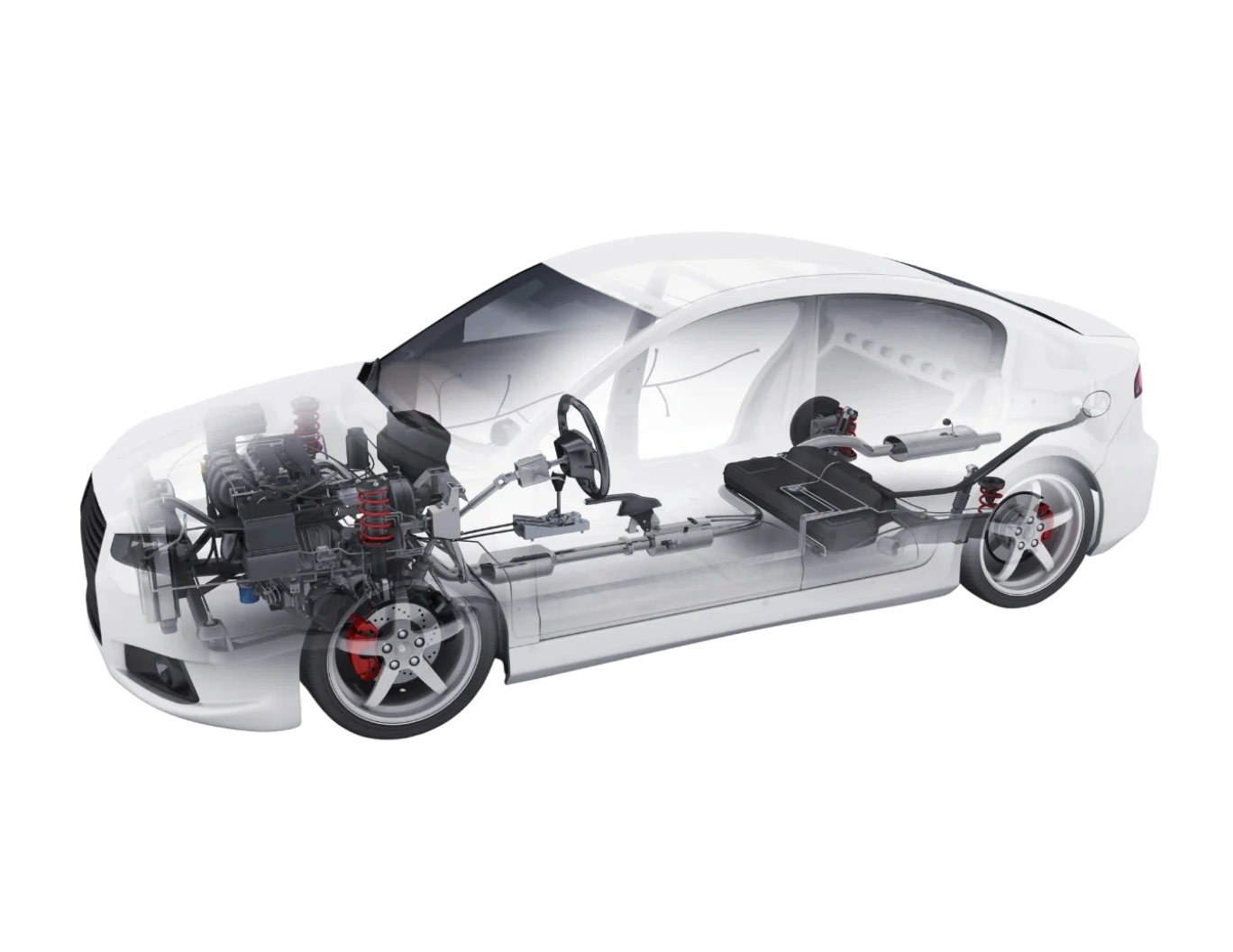
Benefits of Professional Jeep Transfer Case Repair & Drivetrain Servicing
Regular transfer case maintenance and timely repair at correct intervals provide measurable performance and safety benefits for the Jeep over its full service life.
| Benefit | Description | Impact |
|---|---|---|
| Restored 4WD Engagement Reliability | Correct internal tolerances and a matched chain and sprocket set restore smooth, immediate range engagement | Properly rebuilt transfer cases restore 4WD engagement response to within 1.5 seconds of the OEM specification |
| Improved Drivetrain Efficiency | Correct fluid viscosity and bearing preload reduce parasitic drag through the 4WD system | Parasitic drivetrain loss can decrease by 3 to 6% after a full fluid service and bearing replacement on high-mileage units |
| Extended Transfer Case Service Life | Removing metallic contamination from degraded fluid and replacing worn bearings early prevents progressive case damage | Timely fluid and seal service extends transfer case service life by up to 50% compared to units serviced only at mechanical failure |
| Reduced Driveline Vibration | Correcting output shaft bearing wear and driveshaft phasing eliminates vibration that affects ride quality and wears adjacent components | Driveline vibration amplitude reduces to below 0.5 mm/s at 100 km/h after output bearing replacement and shaft rebalancing |
| Safer Off-Road Performance | A correctly functioning transfer case delivers consistent torque split to the front and rear axles during technical terrain driving | Correct torque distribution across all four wheels improves the traction control system accuracy during off-road ABS events |
| Lower Long-Term Repair Costs | Identifying seal leaks, fluid contamination, and chain wear early prevents a full internal rebuild from becoming necessary | Addressing minor transfer case faults at inspection intervals reduces total drivetrain repair costs by up to 60% over the vehicle's service life |
| Correct TCCM Calibration | A properly programmed TCCM maintains correct shift inhibit logic, preventing 4L engagement above the safe vehicle speed limit of 5 km/h | Correct TCCM calibration eliminates incorrect fault code storage and prevents unnecessary drivetrain damage from out-of-specification shift events |
Maintenance Tips After Jeep Transfer Case Repair
Following these practices between service intervals helps maintain drivetrain performance and extends the life of recently repaired or rebuilt transfer case components.
- Change Transfer Case Fluid at Correct Intervals: Fluid replacement is recommended every 48,000 to 72,000 KM, or every 4 years, whichever comes first. Degraded fluid loses its viscosity index and anti-wear additive package, accelerating bearing and chain wear.
- Cycle the 4WD System Regularly: Engaging and disengaging 4WD once per month, even in everyday driving conditions, lubricates internal shift components and prevents mode fork actuators from seizing in a fixed position.
- Avoid Engaging 4L at Speed: Shifting into 4L (Low Range) must only occur at a complete stop or below 5 km/h on most Jeep transfer cases. Shift events above this speed cause impact loading on the planetary gear set and can fracture the annulus gear.
- Inspect for Fluid Leaks at Routine Service Visits: Output shaft and input shaft seals are the most common leak points. Early identification of seal weeping, before the fluid level drops below the minimum mark, prevents dry-running bearing damage.
- Address 4WD Warning Lights Without Delay: A flashing 4WD indicator or stored TCCM fault code signals an active system fault. Continued operation without diagnosis can result in the shift actuator failing in an intermediate position, requiring a full actuator and mode fork assembly replacement.
- Verify Tyre Diameter Consistency Across All Four Wheels: A tyre diameter difference greater than 3 mm between the front and rear axles creates a continuous speed differential across the transfer case during full-time 4WD operation, accelerating VCU and chain wear. Consistent tyre size and pressure across all four positions is essential.
- Book a Drivetrain Inspection at Regular Intervals: Transfer case condition, fluid quality, and TCCM data should be reviewed every 24,000 KM or sooner if any 4WD symptoms appear during normal or off-road driving.
Customer Reviews
"The transfer case on my Wrangler was making a grinding noise when shifting into 4H. The technicians ran a full TCCM diagnostic and found a worn drive chain with stretch well outside the acceptable tolerance. After the chain and sprocket replacement and a fresh fluid service, the 4WD system engages cleanly with no noise. The written report showed the exact chain slack measurement before and after the repair."
"My Grand Cherokee had a flashing 4WD indicator that kept appearing during motorway driving. After an OBD-II scan, the team identified a faulty shift actuator encoder that was storing a C0327 fault code. The actuator was replaced at the same visit, and the indicator has not returned. They explained what caused the fault and what was done to correct it before starting the repair."
"I noticed a driveline vibration between 70 and 90 km/h that got worse under load. The inspection found a worn rear output shaft bearing and a rear driveshaft u-joint with rotational binding. Both were replaced, and the vibration was gone on the test drive. The service report included the vibration measurement readings taken before and after the bearing replacement."
"There was a visible fluid leak under the centre of the Cherokee after off-road use. The team used a UV dye trace and confirmed the rear output shaft seal had failed. The seal was replaced, the fluid was topped up to the correct level, and the skid plate was refitted with new hardware. No further leaks after three weeks of use."
"The Commander needed a full transfer case rebuild at 130,000 KM due to significant internal wear from years of towing. The technicians stripped the unit completely and replaced the bearings, chain, mode fork, and all seals. The rebuild took one day, and the 4WD system now functions as it did when the vehicle was newer. The itemised service report was detailed and clearly explained every component that was replaced."
Jeep Models, We Service in Musaffah
800Sayara provides transfer case repair and 4WD drivetrain servicing for the complete range of Jeep models at the Musaffah workshop.
Our Recently Work
Frequently Asked Questions
What does a Jeep transfer case repair service at your workshop include?
A standard transfer case service covers an OBD-II TCCM diagnostic scan for 4WD fault codes, fluid condition assessment, chain and bearing wear inspection, seal and gasket examination, mode fork actuator current draw testing, and a full written service report with measurements recorded before and after the repair.
How do I know if my Jeep transfer case needs repair?
Common indicators include grinding or clunking noise when engaging 4WD, a flashing 4WD indicator lamp, difficulty shifting between 2H, 4H, and 4L, driveline vibration between 60 and 120 km/h, visible fluid leaking from the undercarriage, or binding during low-speed turning manoeuvres.
How often should the transfer case fluid be changed on a Jeep?
Most Jeep transfer case units require a fluid change every 48,000 to 72,000 KM, or every 4 years. Vehicles used regularly in off-road conditions, river crossings, or sustained towing benefit from a shorter interval of 30,000 to 40,000 KM, as these conditions accelerate lubricant breakdown and introduce water contamination.
How long does a Jeep transfer case repair take?
A fluid drain and fill takes 45 to 60 minutes. Seal and actuator replacements typically require 2 to 3 hours. A full transfer case rebuild with bearing and chain replacement requires 4 to 6 hours. Total service time for any additional work, such as driveshaft u-joint replacement or skid plate hardware renewal, is discussed and confirmed before the repair begins.
Do you rebuild transfer cases or only replace them?
Both options are available. Where internal wear is limited to bearings, seals, the drive chain, and mode fork components, a rebuild using OEM-compatible parts is the most cost-effective solution. Where the case half is cracked, the planetary carrier is damaged, or the annulus gear has fractured, a replacement unit may be recommended depending on the extent of the damage.
Can you programme or replace the Transfer Case Control Module (TCCM)?
Yes. Where the TCCM has stored non-recoverable configuration errors, failed shift inhibit logic, or corrupted calibration data, reprogramming or replacement is carried out using a VIN-matched calibration file and a compatible programming interface. Module replacement includes a full 4WD engagement cycle test to confirm correct operation across all range positions.
Do you service the transfer cases on Jeep hybrid models?
Yes. Jeep Wrangler 4xe models with plug-in hybrid (PHEV) powertrains retain a conventional petrol-driven transfer case that requires the same mechanical maintenance as standard Jeep 4WD models. Technicians follow the correct high-voltage isolation procedures when working on 4xe drivetrains before any mechanical transfer case work begins.
What transfer case units are fitted to common Jeep models?
The NV231 Command-Trac is fitted to Wrangler TJ models, the NV241 Rock-Trac to Wrangler JK and JL Rubicon variants, the NV242 Select-Trac to Cherokee XJ models, the NV244 to Grand Cherokee WJ and WK platforms, and the BW4405 and BW4406 units to Grand Cherokee WK2 models. The correct unit is confirmed from the transfer case identification tag before any parts are sourced or service procedures are applied.