Jeep Exhaust System Repair & Replacement Service in Musaffah
800Sayara performs complete Jeep exhaust system repairs in Musaffah, covering diagnostics, catalytic converter service, manifold repairs, DPF cleaning, oxygen sensor replacement, EGR valve service, and full exhaust replacement using OEM-grade components and certified technicians.
Years of Experience
Satisfied Clients
Pickup & Delivery Service
Quick Service
Why Choose 800Sayara for Jeep Exhaust Repair in Musaffah?
Exhaust system faults on Jeep models affect emission compliance, fuel efficiency, and engine back pressure. Each repair at our Musaffah workshop follows OEM torque specifications and pipe diameter tolerances to ensure correct exhaust gas flow, backpressure balance, and full compliance with UAE emission standards.
Certified Jeep Exhaust Technicians
Our technicians hold manufacturer-level certifications covering Jeep exhaust architectures across the 3.6L Pentastar V6, 2.0L turbocharged four-cylinder, and 6.4L HEMI V8 platforms. Each repair follows structured inspection protocols, from the exhaust manifold gasket face at the cylinder head to the rear tailpipe outlet. Four-gas emission analyser results are reviewed at each stage to confirm correct CO, HC, NOx, and O2 readings before any vehicle is returned to service.
Genuine OEM Exhaust Parts & Specialist Equipment
Only OEM-approved manifolds, flex pipes, catalytic converter substrates, diesel particulate filter (DPF) assemblies, lambda sensors (O2 sensors), resonators, and muffler assemblies are used across all repair work. The workshop is equipped with four-gas exhaust analysers, ultrasonic DPF cleaning units, backpressure gauges, and OBD-II multi-channel scan tools to confirm correct exhaust gas composition and system integrity after every repair.
Efficient Exhaust Service Turnaround
A standard exhaust sensor replacement or gasket repair takes 1 to 3 hours. Catalytic converter replacement or DPF service takes 3 to 6 hours. A complete exhaust system replacement, including manifold, mid-pipe, and rear section, takes 1 to 2 working days, depending on parts availability and pipe fabrication requirements. Multiple vehicles are processed simultaneously without reducing inspection depth or weld integrity verification.
Clear and Consistent Pricing
All exhaust repair costs are confirmed before work begins, covering parts, labour, and emission test results. No additional charges are added after the repair begins, and a written service report listing all replaced components, measurements, and emission analyser readings is provided at vehicle handover.
Jeep Exhaust Repair Services We Provide
Read More
Exhaust System Diagnostic & OBD-II Emission Scan
The PCM monitors exhaust gas composition through upstream and downstream lambda sensors on all modern Jeep exhaust systems. OBD-II multi-channel scan tools retrieve active and stored DTCs, including P0420, P0430, and P2002. Live data from HEGO, MAP, and EGT sensors is reviewed to isolate faults accurately before any physical disassembly begins.
Exhaust Manifold Inspection & Replacement
Cast iron and stainless steel exhaust manifolds develop cracks and warped sealing faces from repeated thermal cycling. Manifold face flatness is measured with a maximum allowable warpage of 0.05mm. Replacement includes OEM manifold gaskets, anti-seize-treated studs torqued to specification, and a full heat shield refit to protect adjacent wiring and brake lines.
Catalytic Converter (CAT) Testing & Replacement
A functioning CAT reduces CO and HC emissions by 90% or more through oxidation and reduction reactions across the ceramic substrate. DTC P0420 or P0430 confirms catalyst efficiency falling below the PCM threshold. Damaged or contaminated substrates are replaced with OEM three-way catalyst (TWC) assemblies matched to the specific engine displacement and emission standard.
Diesel Particulate Filter (DPF) Cleaning & Replacement
The DPF captures particulate matter (PM) above 2.5 microns during combustion on diesel and mild-hybrid Jeep variants. Soot loading above 45 grams per litre triggers a regeneration cycle, and blocked filters produce DTC P2002 or P2453. Ultrasonic cleaning restores filter permeability, while filters beyond serviceable limits are replaced with OEM assemblies.
Oxygen (Lambda) Sensor Replacement
Upstream and downstream O2 sensors monitor combustion efficiency and catalyst function on all Jeep exhaust systems. A contaminated upstream sensor disrupts closed-loop fuel control, increasing fuel consumption by up to 15% and triggering DTCs including P0131 and P0137. Units with a switching frequency below 0.5 Hz are replaced with OEM wideband or narrowband lambda sensors.
Exhaust Gas Recirculation (EGR) Valve Service
The EGR system routes metered exhaust gas back into the intake manifold to lower combustion temperatures and reduce NOx emissions. Carbon deposits on the EGR valve pintle reduce flow by up to 70% on high-mileage engines, triggering DTCs P0400, P0401, and P0402. EGR passages are decarbonised with a controlled solvent flush before refitting.
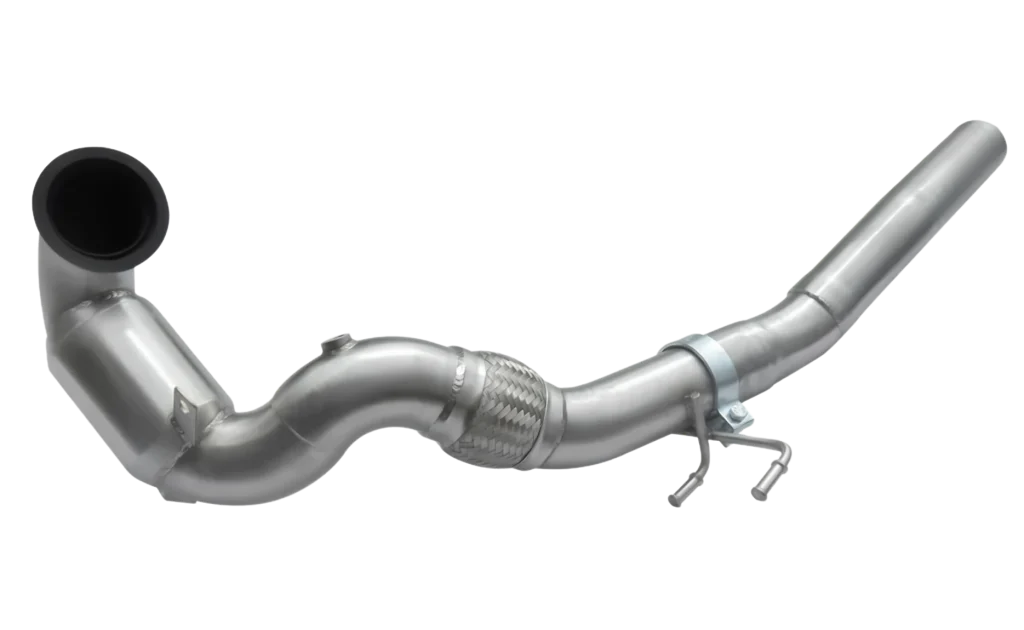
Exhaust Flex Pipe & Mid-Pipe Replacement
Stainless steel flex pipes absorb powertrain movement and thermal expansion between the manifold and mid-pipe section on all Jeep models. Failures cause cabin noise levels above 75 dB and accelerated fatigue cracking in adjacent sections. Replacement pipes are matched to the correct internal diameter of 50mm or 57mm and leak-tested at 0.5 bar before heat shield refitment.
Muffler & Resonator Replacement
The rear muffler and resonator assembly controls exhaust noise through sound absorption and wave cancellation across the full RPM range. Internal baffle degradation raises noise output and alters tuned backpressure balance. Replacement mufflers are flow-matched to the OEM pipe diameter to maintain the designed back pressure within the 0.5 to 2.0 PSI range at idle.
Exhaust Hangers & Mounting Bracket Repair
Rubber exhaust hangers and steel mounting brackets support the full system weight and isolate road vibration from the Jeep underbody. Degraded hangers increase stress at weld joints and flex pipe connections. Each hanger is inspected for cracking and compression set exceeding 3mm, and all mounting points are treated with anti-corrosion compound before reassembly.
Exhaust Pipe Welding & Joint Repair
Pinhole corrosion and joint separation in exhaust pipe sections introduce CO into the underbody environment and reduce system backpressure. TIG and MIG welding repairs perforated sections and reconnects separated joints, with weld bead penetration verified by pressure testing at 0.5 bar. Only aluminised or stainless steel filler material matched to the base pipe specification is used.
Exhaust Heat Shield Repair & Replacement
Aluminium and stainless steel heat shields protect underbody components, fuel lines, and brake hydraulics from exhaust radiant heat. Detached shields produce a tinny rattle at specific RPM ranges and create a thermal risk to adjacent systems. Damaged shields are replaced with OEM units matched to the correct thermal insulation rating for their specific exhaust section.
Turbocharger Downpipe & Wastegate Inspection
The downpipe on the 2.0L turbocharged Jeep engine carries exhaust gas temperatures of up to 950 degrees Celsius under full load. Cracks and gasket failures at the turbocharger outlet trigger overboost or underboost DTCs, including P0234 and P0299. Wastegate actuator rod length and boost control solenoid function are verified through OBD-II live data before refitment.
Full Exhaust System Replacement
A complete exhaust system replacement addresses the manifold, flex pipe, mid-pipe, catalytic converter, resonator, and rear muffler as a continuous assembly. Replacement is recommended when multiple sections show corrosion beyond 40% of the wall thickness or when previous repairs have compromised pipe alignment. A four-gas emission test confirms CO, HC, NOx, and O2 readings within UAE regulatory limits after installation.
How to Book a Jeep Exhaust Repair Service at 800Sayara?
Scheduling a Jeep exhaust repair at our Musaffah workshop takes three straightforward steps.
Share Your Jeep Details
Provide your Jeep model, model year, current mileage, and a description of the exhaust symptom you have noticed. This information allows our technicians to prepare the correct OEM exhaust components and diagnostic equipment before your vehicle arrives at the workshop.
Make a Booking
Select a date and time that fits your schedule. Same-day and next-day appointments are available, and a free pickup and delivery service is offered across Musaffah for customers who prefer not to bring their Jeep in directly.
We Repair
Certified technicians carry out the complete exhaust repair and provide a written inspection report at job completion. You receive updates at each stage of the repair, including any additional findings identified during the exhaust system assessment.
Key Features We Provide
When Does Your Jeep Need Professional Exhaust Repair?
The following signs indicate that your Jeep exhaust system requires professional inspection or repair. Early attention to these symptoms prevents further damage to connected components and emission system faults.
| Issue | Symptoms / Signs | Possible Cause | Recommended Solution |
|---|---|---|---|
| Check Engine Light On | MIL illuminated; P0420, P0430, P2002, or O2 sensor DTCs stored | Catalyst efficiency below PCM threshold; faulty lambda sensor; DPF blockage | OBD-II full scan, four-gas analysis, and fault-specific repair |
| Exhaust Noise Increase | Ticking, rumbling, or hissing from the exhaust system during cold start or under load | Cracked exhaust manifold, blown manifold gasket, perforated mid-pipe, or failed flex pipe | Exhaust pressure test, manifold flatness check, and pipe inspection |
| Fuel Economy Decline | Increased fuel consumption above the normal baseline for the model and engine | Faulty upstream O2 sensor disrupting closed-loop fuel control; EGR valve carbon build-up | Lambda sensor response test, EGR valve inspection, and fuel trim analysis |
| Exhaust Smoke | Black, white, or blue smoke from the tailpipe at operating temperature | Rich mixture from failed O2 sensor (black); coolant ingestion from head gasket or CAT contamination (white); oil burning past turbo seals (blue) | Four-gas analysis, CAT inspection, and turbocharger seal check |
| DPF Warning Light | DPF warning indicator illuminated; reduced engine power mode active | Excessive soot or ash loading above the serviceable threshold; failed DPF regeneration cycle | DPF pressure differential test, EGT sensor check, and ultrasonic DPF cleaning or replacement |
| Vibration or Rattling | Metallic rattle from beneath the vehicle at specific RPM; increased exhaust vibration felt in the cabin | Detached heat shield; degraded rubber exhaust hangers; loose muffler or resonator mounting | Underbody exhaust inspection, hanger condition assessment, and heat shield refitment |
| Sulphur or Fuel Smell | Strong exhaust odour is detectable inside the cabin or from the engine bay | Exhaust leak at manifold joint, flex pipe, or pipe union, allowing exhaust gas into the cabin environment | Exhaust smoke pressure test and full joint and gasket inspection |
| Loss of Power | Reduced throttle response and acceleration; turbo underboost condition | Blocked DPF restricting exhaust flow; cracked downpipe or wastegate fault on turbocharged models | Backpressure measurement, DPF flow test, and turbocharger downpipe inspection |
Our Services In Mussafah

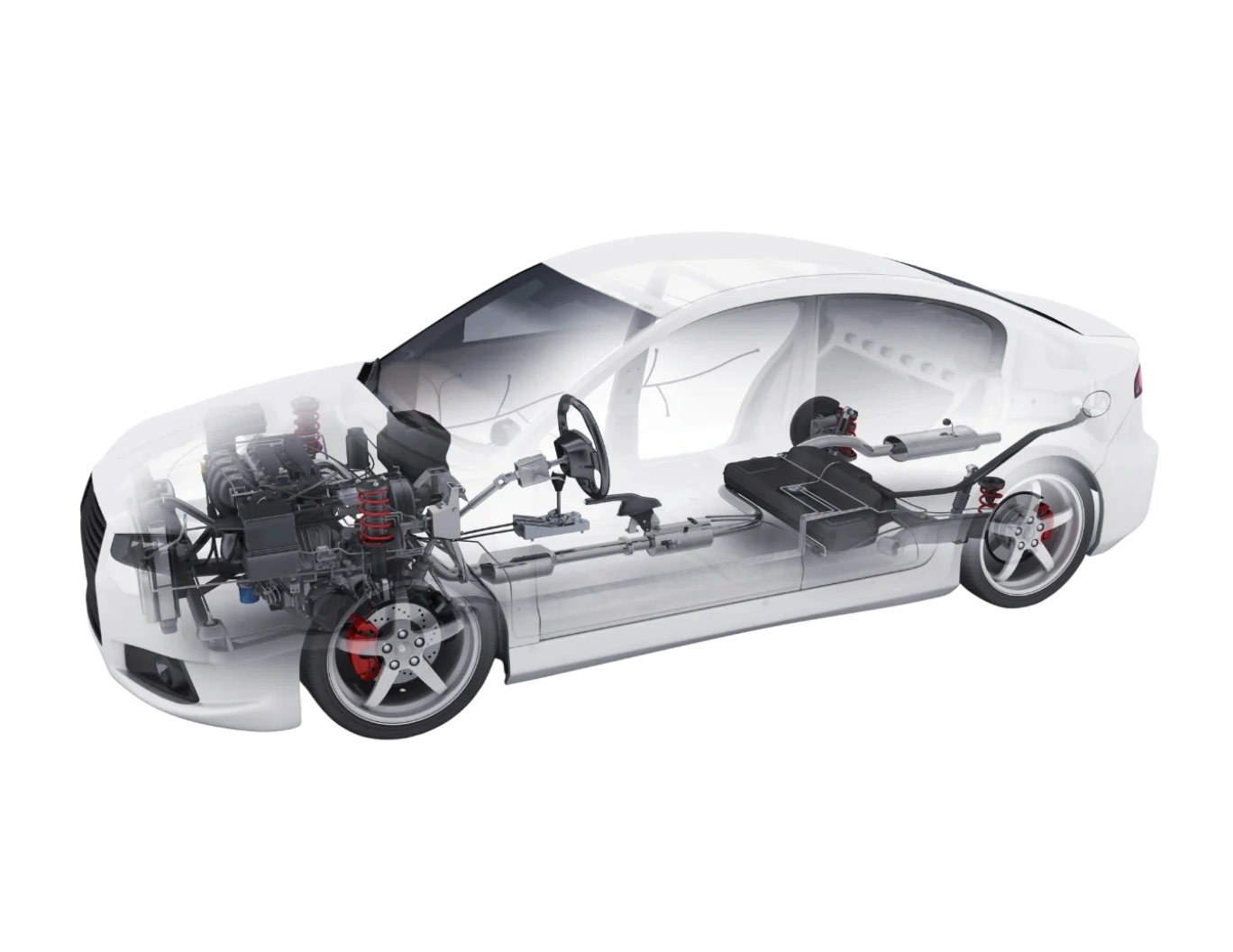
Benefits of Professional Jeep Exhaust Servicing
Timely exhaust system servicing delivers measurable improvements in emission compliance, fuel economy, and component service life across all Jeep models.
| Benefit | Description | Impact |
|---|---|---|
| Restored Emission Compliance | Replacement of degraded catalytic converters and functioning O2 sensors returns the exhaust gas composition to the OEM emission specification | A correctly functioning three-way catalyst reduces CO and HC output by up to 90% compared to a failed substrate |
| Improved Fuel Efficiency | Correct lambda sensor operation restores closed-loop fuel control and maintains stoichiometric combustion at an air-to-fuel ratio of 14.7:1 | A failed upstream O2 sensor can increase fuel consumption by up to 15% compared to a correctly functioning unit |
| Reduced Cabin Noise Levels | Replacement of worn mufflers, resonators, and degraded rubber hangers restores the designed exhaust noise attenuation | A correctly sealed exhaust system reduces underbody noise levels by up to 20 dB compared to a system with pipe perforations or gasket leaks |
| Extended Component Service Life | Addressing exhaust leaks and hanger failures early prevents accelerated corrosion and fatigue cracking in adjacent pipe sections | Timely repair of a single manifold gasket failure prevents corrosion progression that can increase the total repair scope by up to 40% |
| Maintained Engine Performance | Correct exhaust backpressure within the 0.5 to 2.0 PSI range at idle ensures the engine operates within its designed volumetric efficiency parameters | An exhaust system with correct backpressure supports peak engine output within 2% of the manufacturer's rated figure |
| Turbocharger Protection | Clean downpipe and wastegate operation prevent exhaust backpressure spikes that accelerate turbine bearing wear on the 2.0L turbocharged engine | Correct exhaust flow reduces thermal stress at the turbocharger turbine inlet and extends turbocharger service life measurably |
| Resale & Warranty Compliance | Full exhaust service records with OEM parts demonstrate regulatory compliance and support manufacturer warranty validity on applicable models | Complete exhaust service documentation improves resale value by up to 15% and confirms emission compliance to prospective buyers |
Maintenance Tips After Jeep Exhaust Repair
- Allow the Exhaust System to Fully Cure After Gasket Replacement: Avoid high-RPM driving during the first 100 km while manifold gaskets and high-temperature sealants complete their heat cycling period.
- Monitor the Check Engine Light After an Exhaust Repair: A returning MIL within 200 km may indicate an incomplete PCM drive cycle rather than a new exhaust fault.
- Check Exhaust Joints and Hangers at Every Oil Change: Inspect all hanger rubbers and pipe joints routinely, as rubber degrades from heat exposure within 60,000 to 80,000 km.
- Use OEM-Specified Fuel Grade to Protect the Catalytic Converter: Low-quality fuel introduces phosphorus and sulphur compounds that reduce catalyst conversion efficiency to below 70% within 20,000 km.
- Respond Immediately to Exhaust Odour Inside the Cabin: Any detectable exhaust smell after a repair signals a potential CO leak requiring an immediate pressure and joint inspection.
- Schedule a Follow-Up Emission Test at 1,000 km Post-Repair: A four-gas analyser check confirms CO, HC, NOx, and O2 readings remain within UAE regulatory limits after component replacement.
Customer Reviews
"My Grand Cherokee had a persistent P0420 code that two other workshops had cleared without fixing. The technicians performed a four-gas analysis and identified a failed downstream O2 sensor masking an ageing catalytic converter. Both were replaced with OEM parts, and the MIL has not returned in 4,000 km of driving since."
"A ticking sound at cold start on my Wrangler turned out to be a hairline crack in the exhaust manifold. The crack was located quickly using an exhaust smoke tester, and the manifold was replaced on the same day. The repair report included the manifold face flatness readings taken before and after the job."
"The DPF warning light came on along with a noticeable power reduction on my Compass. The technician explained that the filter had exceeded its serviceable soot loading and that the regeneration cycle had failed. After ultrasonic cleaning and an EGT sensor replacement, the system returned to normal operation within the same afternoon."
"A strong exhaust smell inside the cabin prompted me to contact 800Sayara. They arranged a pickup within two hours and traced the issue to a separated flex pipe joint. The replacement was completed the same day, the underbody was pressure-tested, and no further smell has appeared in 2,500 km since the repair."
"Brought my Gladiator in after noticing increased fuel consumption and a slow throttle response. The diagnosis identified a degraded upstream lambda sensor causing a rich fuel trim deviation of over 12%. A new OEM O2 sensor restored the closed-loop fuel control, and fuel economy returned to the normal baseline within 500 km of the repair."
Jeep Models, We Service in Musaffah
Our Recently Work
Frequently Asked Questions
What does a Jeep exhaust repair service at your workshop include?
A standard exhaust repair service covers OBD-II fault code scanning, four-gas emission analysis, exhaust manifold flatness measurement, catalytic converter efficiency testing, DPF pressure differential assessment, O2 sensor response verification, and a full pipe joint and hanger inspection. A written emission test report is provided at handover, confirming CO, HC, NOx, and O2 readings after repair.
How do I know if my Jeep needs a catalytic converter replacement or just an O2 sensor?
Both faults can trigger a P0420 or P0430 DTC, but the cause differs. An O2 sensor fault typically produces an abnormal switching pattern visible in live OBD-II data, with a switching frequency below 0.5 Hz at operating temperature. Catalyst failure is confirmed by comparing upstream and downstream sensor oscillation amplitude using a four-gas analyser. Replacing the O2 sensor without confirming the catalyst substrate condition risks a recurring fault within a short mileage interval.
How long does a Jeep exhaust repair take?
O2 sensor replacement and minor gasket repairs are completed within 1 to 3 hours. Catalytic converter replacement and DPF service take 3 to 6 hours. Manifold replacement and full exhaust system renewal take 1 to 2 working days, depending on parts availability and pipe fabrication requirements for specific Jeep model configurations.
Can you clean a blocked DPF instead of replacing it?
Yes. Ultrasonic DPF cleaning is recommended when soot and ash loading is below the irreversible blockage threshold. The DPF pressure differential sensor reading and EGT sensor data confirm whether cleaning is viable. Filters with physical substrate damage, melted channels from failed regeneration, or ash loading above 80 grams per litre of filter volume require replacement rather than cleaning.
Do you service turbocharged Jeep exhaust systems?
Yes. The 2.0L turbocharged engine requires specific exhaust procedures, including downpipe torque sequencing, wastegate actuator rod length verification, and pre-oiling of the turbocharger before a cold start after any exhaust work near the turbine housing. The correct turbocharger-specific OBD-II software and boost control diagnostic tools are used for all turbocharged Jeep exhaust repairs.
What causes a Jeep exhaust manifold to crack?
Exhaust manifold cracking results from repeated thermal cycling between cold ambient temperatures and operating temperatures of 750 to 900 degrees Celsius. Cast iron manifolds are more susceptible to cracking under rapid temperature changes than stainless steel units. Cracks appear most frequently around the port-to-manifold joint areas and the collector outlet, where thermal stress concentration is highest. Early identification through a cold-start exhaust smoke test prevents the crack from propagating to a point where the full manifold requires replacement.
How often should exhaust components be inspected on a Jeep?
Exhaust hanger rubbers and pipe joints should be visually inspected at every oil change interval or every 10,000 km. Catalytic converter efficiency testing is recommended at 80,000 km intervals on petrol Jeep models. DPF condition assessment on diesel variants should be performed every 50,000 km or when the DPF warning indicator activates. O2 sensor replacement is typically required between 80,000 and 120,000 km, depending on the engine type and operating conditions.
Do you reset the MIL after completing an exhaust repair?
Yes. All exhaust-related warning indicators are cleared using OBD-II scan tools that communicate with the PCM after the specific fault has been repaired and verified. The MIL is only cleared once a completed drive cycle confirms the repaired component is operating within the correct emission and sensor parameters. This ensures the fault code does not return during the first journey after the vehicle is returned.