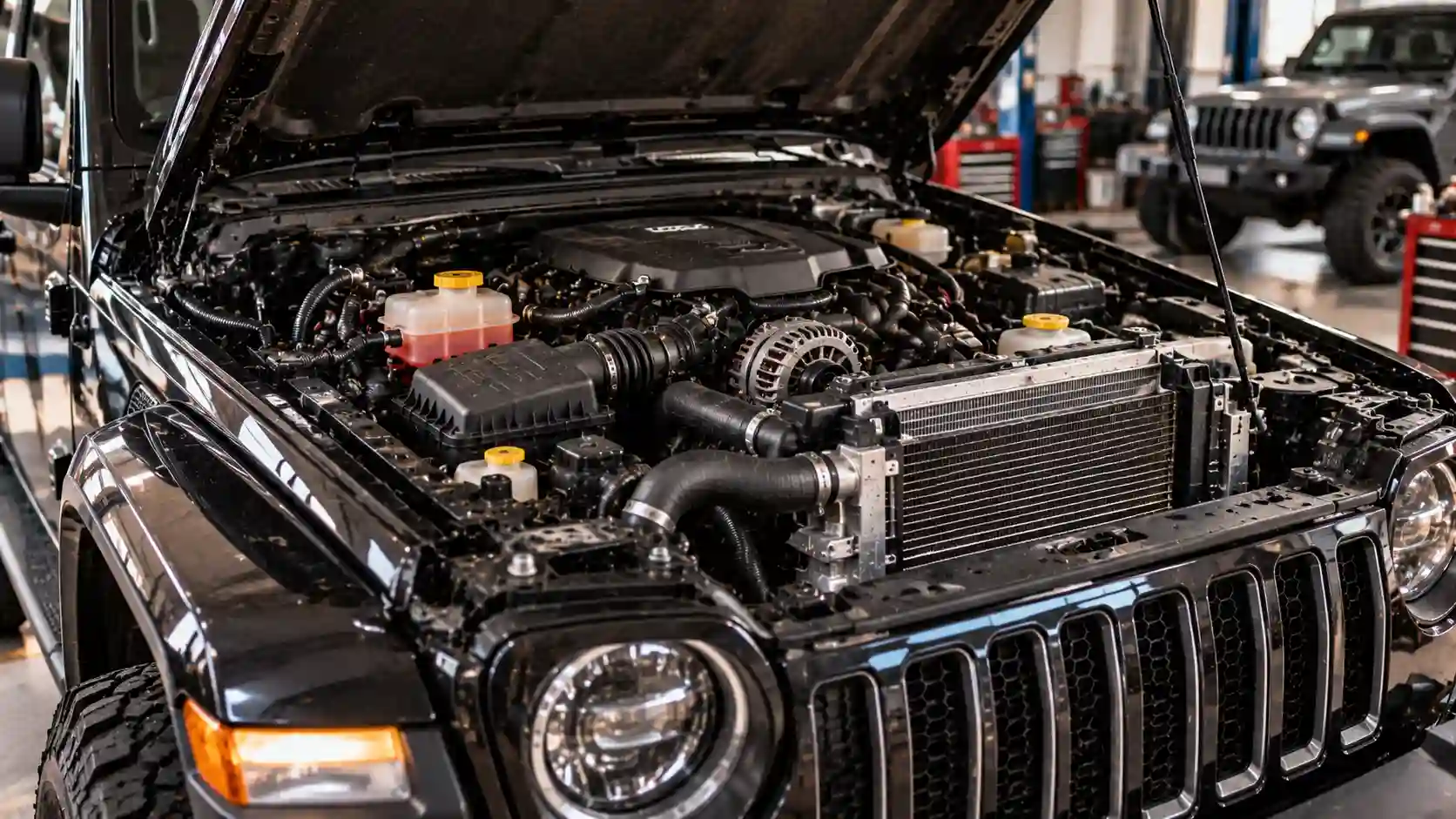
The Jeep Wrangler is built for rough roads, off-road trips, and daily driving. Its strong design and four-wheel-drive system make it a popular choice for drivers who enjoy adventure. However, like any car, a Wrangler can develop mechanical and electrical problems as it gets older or covers more miles.
Common Jeep Wrangler problems include engine overheating, oil leaks, transmission faults, steering issues, electrical failures, and water leaks around the doors or roof. Some models may also develop suspension noise, brake wear, or four-wheel-drive system faults.
Hot weather and heavy traffic in Abu Dhabi can put extra pressure on the engine cooling system and air conditioning. Knowing the warning signs can help you arrange repairs early, protect important parts, and avoid unexpected breakdowns.
Most Common Jeep Wrangler Problems You Should Know
Engine Overheating in Hot Weather
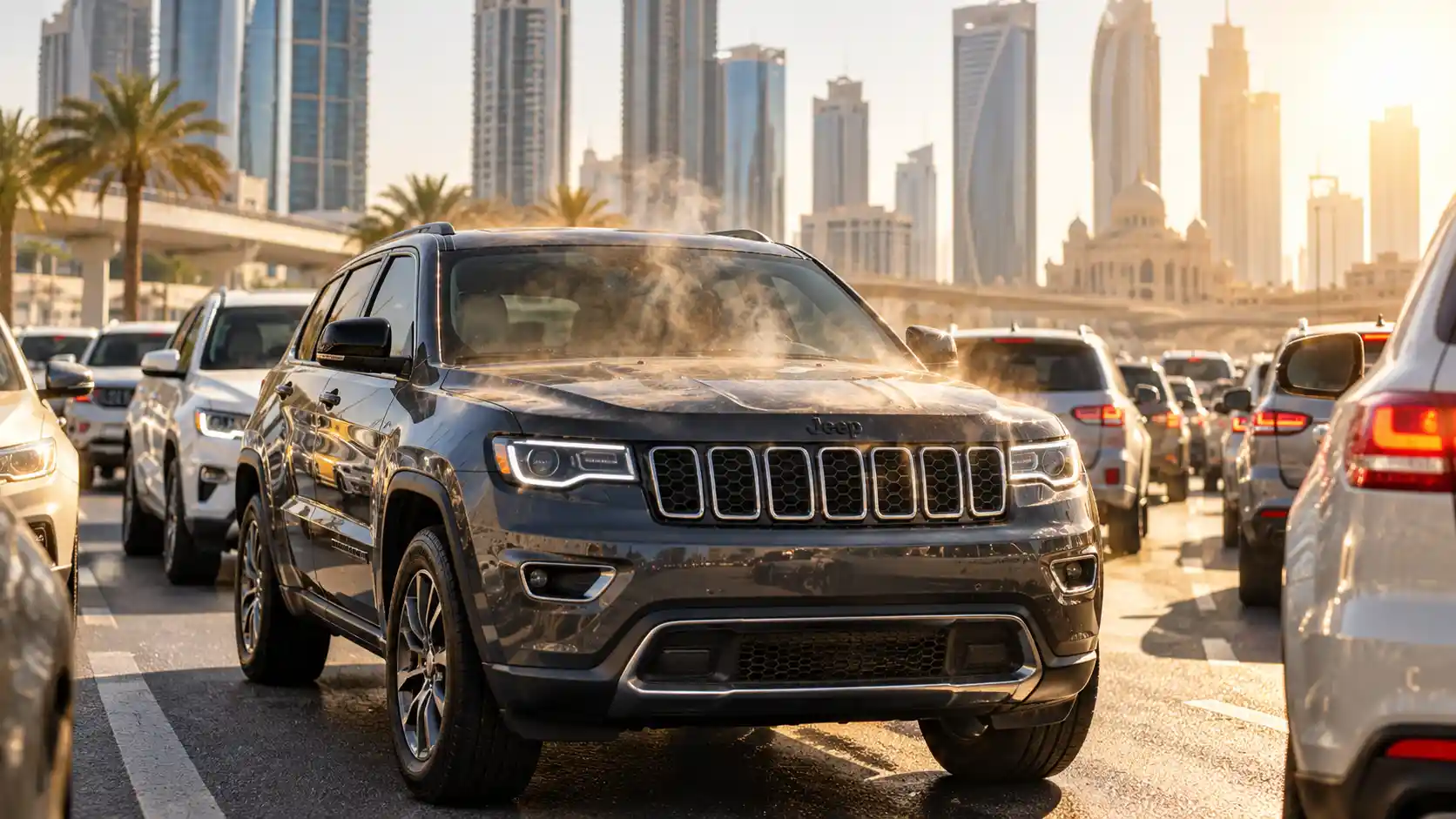
Engine overheating is a problem Wrangler owners should never ignore, especially in Abu Dhabi, where outdoor temperatures can rise sharply during summer. The cooling system uses coolant, a radiator, a water pump, a thermostat, and cooling fans to control engine temperature.
If coolant levels drop, the radiator becomes blocked, or a fan stops working, the engine may not release heat properly. Slow traffic can make the issue worse because less air passes through the radiator.
Watch for a rising temperature gauge, a coolant warning, steam, or a sweet smell near the engine. If the engine overheats, stop in a safe place and switch it off. Never open the coolant cap while the engine is hot. A mechanic can pressure-test the system and inspect the parts to find the cause.
Oil Leaks From the Engine
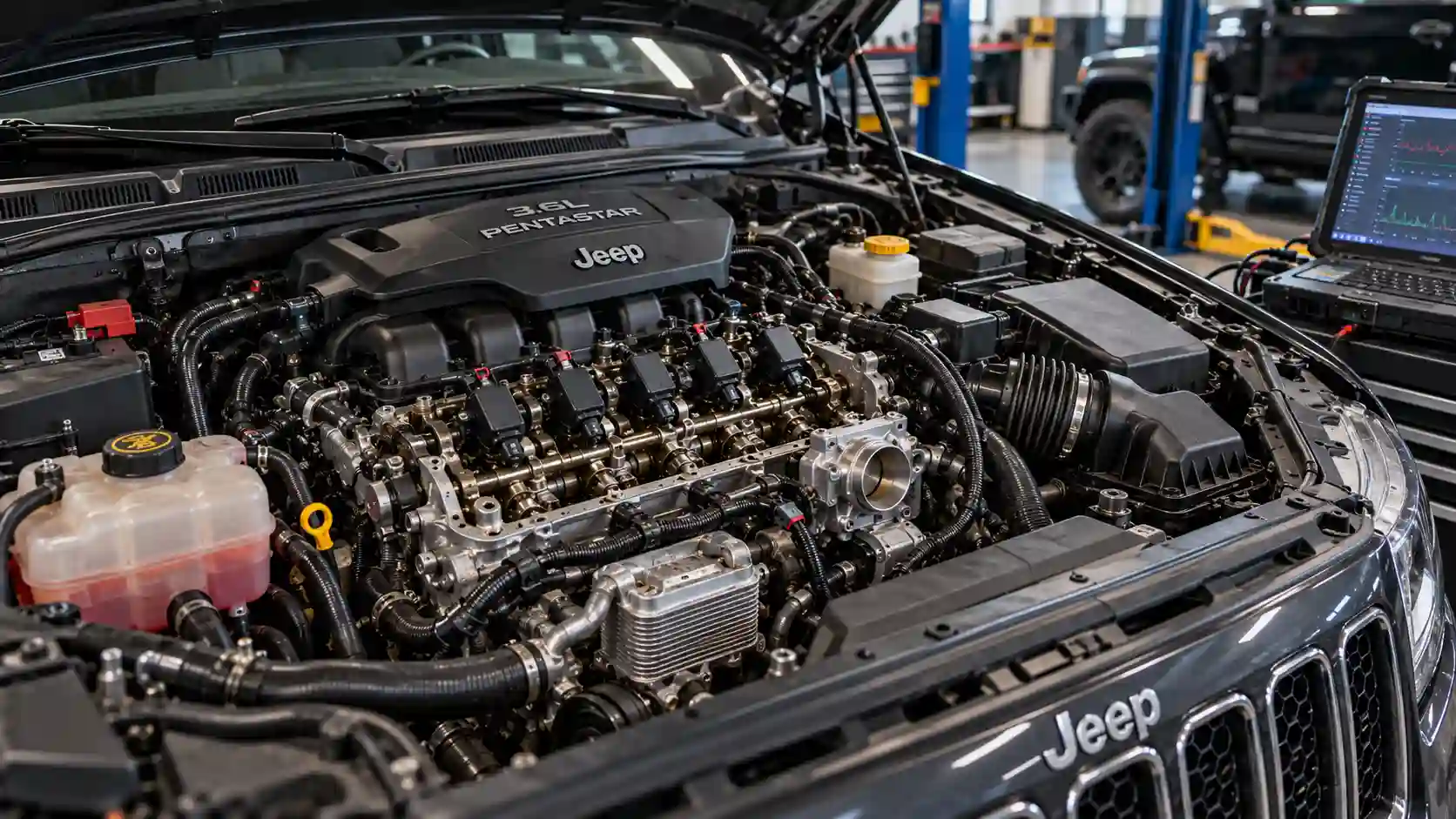
Oil leaks can occur as engine seals, gaskets, and other parts wear out. On some Wrangler models, leaks may develop around the valve cover gaskets, oil filter housing, oil pan, or other engine connections.
The exact source depends on the engine type, model year, and service history. Oil may collect on the engine or drip onto the ground after parking. Common warning signs include a burning oil smell, dark marks under the vehicle, or an engine oil level that keeps dropping.
Low oil can reduce lubrication and increase friction between moving parts. If the oil pressure warning appears while the engine is running, stop safely and switch off the engine. A workshop can clean the affected area, trace the leak, and replace damaged seals or parts.
Transmission Problems and Rough Gear Changes
The transmission transfers engine power to the wheels and allows the Wrangler to change speed smoothly. Depending on the model year, your Jeep may have a manual or automatic transmission.
Worn parts, fluid problems, sensor faults, or internal damage can lead to rough shifts, delayed engagement, slipping, or unusual noises. Some drivers may notice a delay when moving from Park to Drive or Reverse.
Transmission trouble should be checked early because continued driving with a serious fault can increase repair costs. A mechanic can inspect the transmission fluid where applicable, scan for fault codes, and test how the gears operate.
Not every shifting issue means the whole transmission needs replacement. The repair may involve a sensor, wiring, fluid service, or a damaged internal part, depending on the test results.
Steering Problems and the Death Wobble
Some Jeep Wrangler owners report strong shaking through the steering wheel, particularly after hitting a bump at speed. This is often called the death wobble. It can happen when movement in the front suspension and steering system becomes unstable.
Worn ball joints, track bar parts, tie rod ends, loose fasteners, damaged steering components, or wheel and tyre problems may contribute to the issue. If severe shaking starts, slow down carefully and pull over when safe. Do not try to control the problem by continuing to drive at high speed.
A mechanic should inspect the steering links, suspension joints, track bar, wheel balance, tyre condition, and alignment. Replacing parts without checking the full system may not solve the problem. Regular inspections are especially important if your Wrangler is often used on rough roads or off-road trails.
Suspension Noise and Worn Bushings
The Wrangler's suspension helps absorb bumps and keeps the tyres in contact with the road. Off-road driving can place extra stress on shocks, springs, control arms, ball joints, and rubber bushings.
Over time, these parts may wear out or become damaged. You may hear clunking over bumps, feel extra body movement, or notice that the Jeep no longer handles as smoothly as before.
Modified Wranglers with lift kits or larger tyres may need extra attention because changes to suspension height and wheel size can affect steering and handling. A workshop can inspect worn joints, check fasteners, and look for damaged shocks or bushings.
If your Jeep pulls to one side or feels unstable, have the suspension and wheel alignment checked. Fixing worn parts can improve ride comfort and help maintain safe handling.
Electrical Problems and Dashboard Warning Lights
Modern Jeep Wranglers use electronic control units, sensors, wiring, and modules to manage many systems. A weak battery, loose connection, damaged wire, or faulty sensor can trigger warning lights or cause features to stop working.
Depending on the fault, you may notice starting problems, flickering lights, power window issues, or warnings related to the engine, ABS, or traction control.
Electrical faults can be difficult to find because one problem may affect several systems. A weak battery, for example, can cause unusual warning messages even when other parts are working correctly.
A mechanic can test the battery and charging system, scan the vehicle for diagnostic trouble codes, and inspect the relevant wiring. It is better to identify the actual cause than replace parts based only on a dashboard warning.
Water Leaks Around the Roof and Doors
The Wrangler's removable roof and door design gives it an open-air driving experience, but the seals must fit correctly to keep water out.
Damaged weatherstripping, loose roof panels, blocked drainage points, or poorly fitted accessories may allow rainwater or wash water to enter the cabin. Water can collect around the floor, carpets, door panels, or storage areas.
Although Abu Dhabi is generally dry, heavy rain and car washing can still reveal sealing problems. Wet carpets may develop unpleasant smells and can hide moisture beneath the surface.
If water reaches electrical connectors, it may cause further faults. Check roof panels and door seals if you notice damp spots after rain or washing. A workshop can inspect the seals, adjust roof panels, and test for leaks before replacing parts.
Air Conditioning Problems in Abu Dhabi
A working AC system is important when driving a Wrangler in Abu Dhabi's hot weather. Some owners may notice weak cooling, warm air at idle, unusual compressor noise, or air that changes temperature during a trip.
Possible causes include low refrigerant due to a leak, a faulty condenser fan, a dirty condenser, a weak compressor, or an electrical control problem. If the AC cools better at higher speeds than at traffic lights, the condenser fan and airflow should be checked first. The extra air passing through the grille while driving may help remove heat.
A mechanic can test refrigerant pressure, inspect the fan, and check the compressor and electrical system. Avoid repeatedly adding refrigerant without finding the reason for low pressure. A proper repair can improve cooling and help prevent the fault from returning.
Four-Wheel-Drive System Problems
The Wrangler's four-wheel-drive system is designed to help provide traction on sand, rocks, and other challenging surfaces. However, transfer case faults, worn driveline parts, damaged driveshafts, or incorrect operation can cause problems.
Warning signs may include difficulty selecting a four-wheel-drive mode, unusual clunks, vibration, or a warning light on the dashboard. Drivers should follow the instructions in the owner's manual when selecting a four-wheel-drive mode. Some modes are intended for loose or slippery surfaces and should not be used on dry roads unless the manual permits it.
If the system does not engage or disengage correctly, avoid forcing the controls. A mechanic can inspect the transfer case, shift mechanism, driveline, and related sensors to find the cause. Proper maintenance is important for owners who often drive off-road.
Brake Wear and Unusual Braking Sounds
Brakes are essential for safe driving, especially when a Wrangler carries extra equipment or uses larger tyres. Brake pads wear down with use, while brake discs can become worn, scored, or uneven.
Dust and dirt from off-road driving may also affect brake parts. If the brakes need attention, you may hear squealing or grinding, feel vibration through the pedal, or notice that stopping takes longer.
Do not ignore grinding noises or a sudden change in braking performance. Worn pads can damage the brake discs if they are not replaced in time. A mechanic can measure pad thickness, inspect the discs, check brake fluid, and look for leaks or sticking calipers.
The repair may require new pads, disc replacement, or attention to another part of the braking system. Regular checks can help keep the brakes working as they should.
Common Jeep Wrangler Problems at a Glance
Different Wrangler generations and engine options can have different repair needs. This table gives a quick overview of common symptoms and the checks that may help identify their causes.
| Common problem | Warning signs | What a mechanic should check |
|---|---|---|
| Engine overheating | High temperature, steam, coolant loss | Radiator, coolant, fan, thermostat, water pump |
| Engine oil leak | Oil marks, burning smell, low oil level | Gaskets, seals, oil filter housing, oil pan |
| Transmission fault | Rough shifts, slipping, delayed gear changes | Fluid condition, fault codes, sensors, internal parts |
| Steering shake | Strong steering wheel vibration | Track bar, ball joints, steering links, tyres |
| Suspension wear | Clunking, poor handling, uneven tyre wear | Shocks, bushings, joints, fasteners |
| Electrical fault | Warning lights, starting issues, failed features | Battery, alternator, wiring, control modules |
| Water leak | Wet carpets, damp floor, musty smell | Roof panels, door seals, drainage points |
| AC fault | Weak cooling, warm air at idle | Condenser fan, refrigerant pressure, compressor |
| Four-wheel-drive fault | Difficulty selecting a mode, noise | Transfer case, shift system, driveshafts |
| Brake wear | Squealing, grinding, longer stopping distance | Pads, discs, calipers, brake fluid |
These symptoms can have more than one cause. A proper inspection is needed before deciding which parts should be repaired or replaced.
How Can You Prevent Common Jeep Wrangler Problems?
Regular maintenance helps you find worn parts before they cause a breakdown. Your Wrangler's service needs depend on its model year, mileage, engine, driving conditions, and any modifications. A Jeep used for frequent off-road trips may need closer checks of its suspension, steering, tyres, brakes, and underbody than one used mainly for city driving.
Follow these simple maintenance tips:
- Change engine oil and filters at the recommended intervals.
- Check engine oil and coolant levels regularly.
- Inspect tyres for uneven wear, damage, and incorrect pressure.
- Have the steering and suspension checked after hard off-road use.
- Pay attention to new noises, leaks, vibrations, and warning lights.
- Keep the AC condenser and radiator free from heavy dirt.
- Check the battery and charging system if electrical warnings appear.
- Follow the correct service schedule for the transmission and four-wheel-drive system.
- Use the fluids and replacement parts recommended for your specific model.
Keeping service records can help you track repairs and identify repeated faults. It also helps a mechanic understand the Jeep's history when diagnosing a new problem.
When Should You Take Your Jeep Wrangler to a Workshop?
You should arrange an inspection if your Wrangler develops repeated warning lights, unusual engine noises, oil leaks, rough gear changes, steering vibration, or weak AC cooling. Some problems can be checked during a routine service, while others need urgent attention.
Severe overheating, loss of oil pressure, strong steering shake, or a major brake problem should never be ignored. A qualified mechanic can scan the vehicle's control systems, inspect mechanical parts, and carry out tests to confirm the cause.
This is more reliable than replacing parts based only on symptoms. If the Jeep is unsafe to drive, arrange recovery instead of taking it to the workshop yourself. Early repairs may prevent a small fault from turning into a larger and more expensive problem.
Conclusion
Common Jeep Wrangler problems include engine overheating, oil leaks, transmission faults, steering shake, suspension wear, electrical issues, water leaks, AC problems, four-wheel-drive faults, and brake wear.
The symptoms and repair needs can vary by model year, engine type, mileage, and driving conditions. Abu Dhabi's heat and dusty roads can make cooling and AC maintenance especially important.
Watch for changes in engine temperature, fluid levels, handling, braking, and cabin cooling. Regular servicing and early diagnosis can help protect your Jeep and reduce unexpected repair costs.
If your Wrangler shows any of these warning signs, contact Jeep Service Mussafah for a professional inspection. The workshop can help identify the fault, explain the available repair options, and keep your Jeep ready for daily driving and off-road adventures.