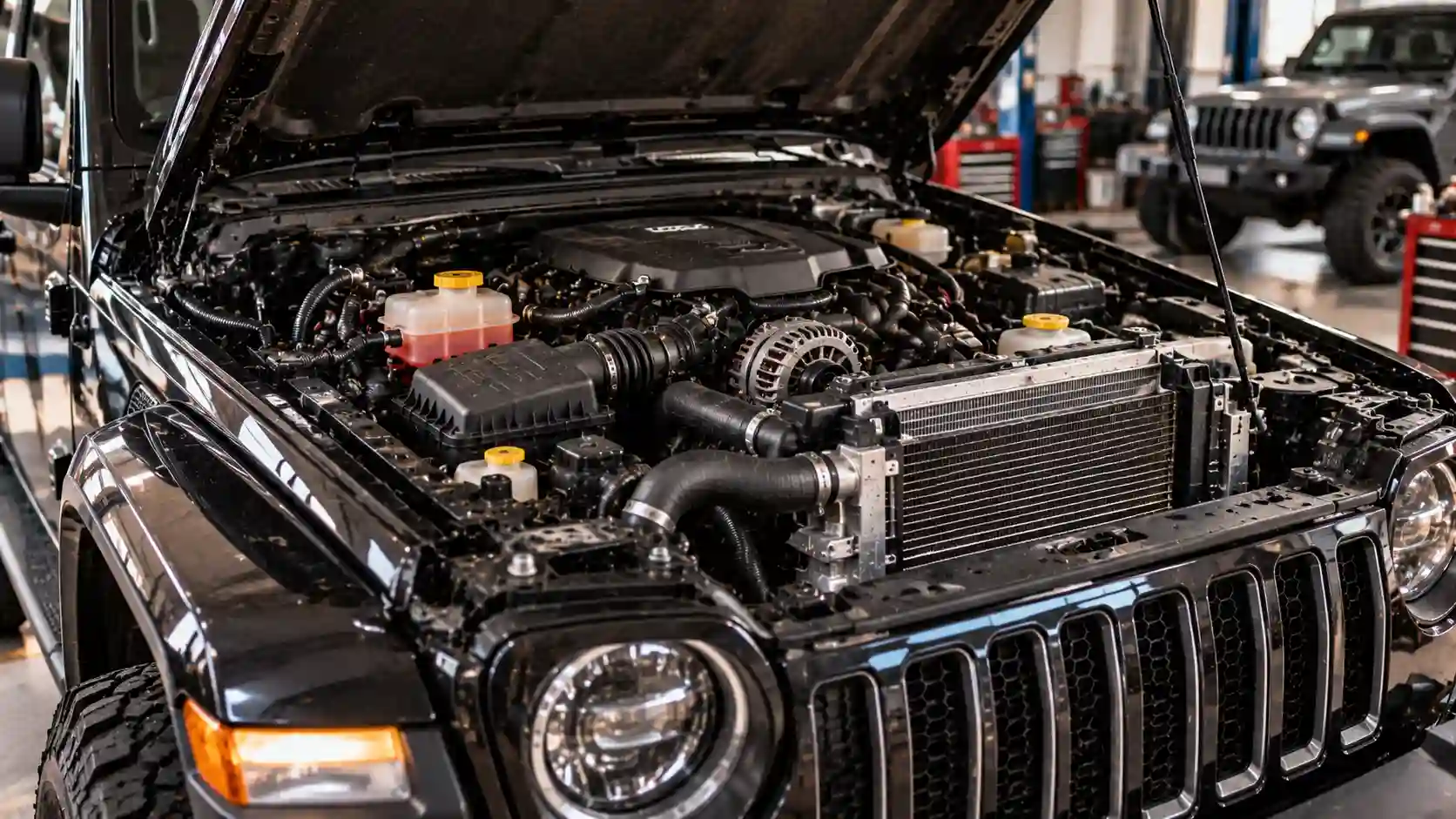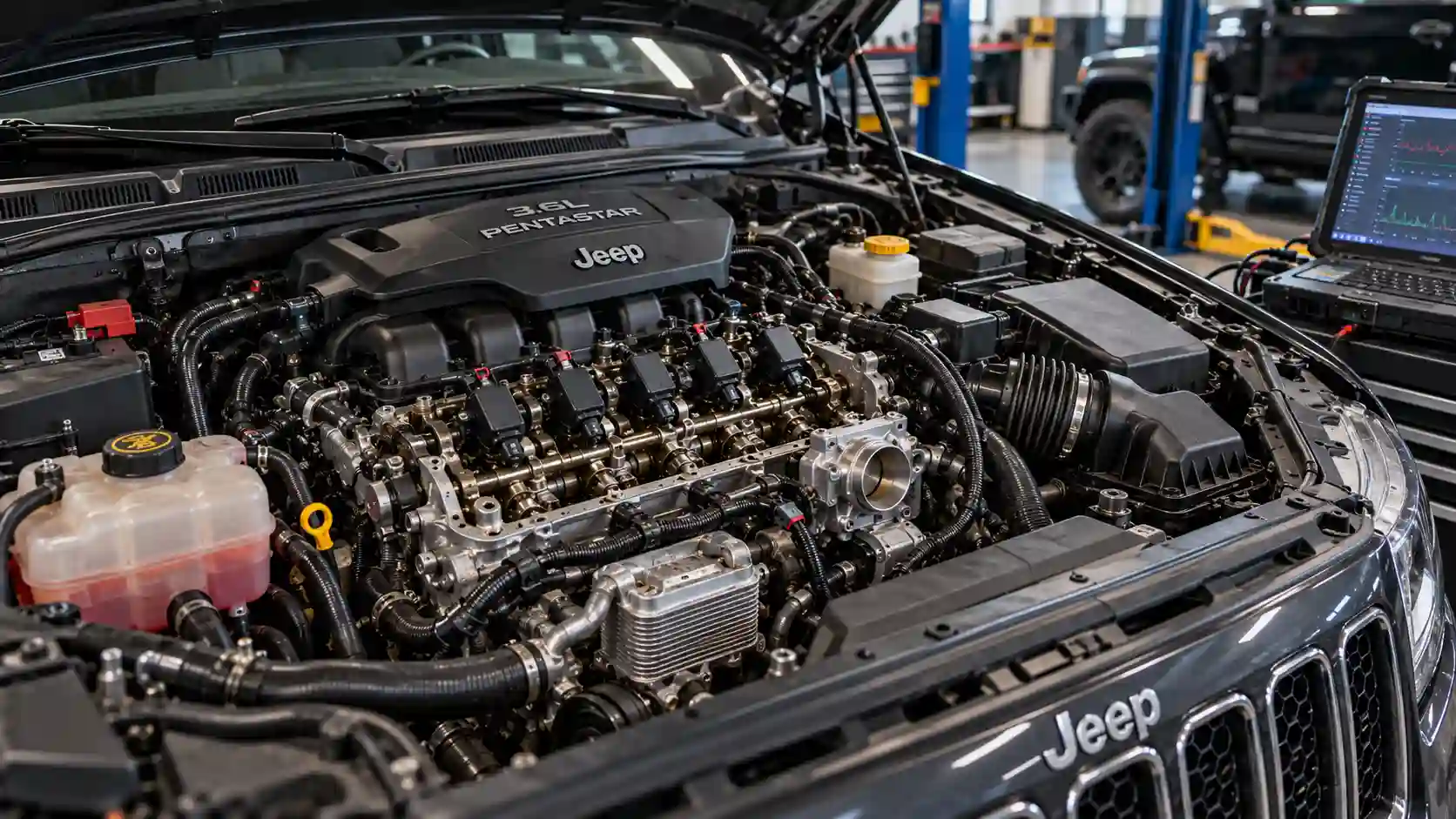

A Jeep's air conditioning should keep the cabin cool whether you are driving on an open road or waiting at a traffic light. If your AC blows cold air at high speeds but turns warm when your Jeep stops, something may be wrong with the cooling system.
This issue can be especially frustrating in Abu Dhabi, where summer temperatures can make a car cabin very hot. The most common causes are a weak radiator or condenser fan, low refrigerant, a dirty AC condenser, or a problem with the compressor.
At high speeds, air moving through the front grille helps remove heat from the AC condenser. At idle, the system depends more on its electric fans to move air. If airflow is poor or refrigerant pressure is not correct, the AC may stop cooling properly until you start driving again.
How Does Your Jeep's AC System Work?
Your Jeep's AC system uses refrigerant to carry heat from inside the cabin to the outside air. The compressor pressurizes the refrigerant, which then moves through the condenser at the front of the vehicle.
The condenser releases heat, allowing the refrigerant to change into a liquid. It then passes through an expansion valve or another metering device before entering the evaporator inside the cabin. As cabin air moves over the cold evaporator, heat is removed from the air. If any part of this process fails, cooling can become weak, especially when the Jeep is standing still.
Reasons Why Jeep AC Cools at High Speeds But Not at Idle
A Faulty Condenser Fan Can Cause Warm Air at Idle
The condenser fan is one of the first parts to check when your Jeep AC cools while driving but blows warm air at idle. The fan moves air through the condenser when natural airflow from driving is limited.
If the fan motor is weak, a fuse is blown, a relay has failed, or the wiring is damaged, the condenser may not release enough heat. This can raise refrigerant pressure and reduce cooling performance. Once you start driving, air passing through the grille may help the condenser cool again, making the AC feel normal.
Signs of a Condenser Fan Problem
- The AC becomes warm when the Jeep stops.
- Cooling improves when you drive faster.
- The engine temperature rises while waiting in traffic.
- The fan does not run when it should.
A mechanic can check fan operation, electrical connections, relays, and control signals to find the fault.
Low AC Refrigerant Can Reduce Cooling Performance
Refrigerant is the gas or fluid that carries heat through the air conditioning system. If the refrigerant level is too low, your Jeep may struggle to cool the cabin, particularly in hot weather.
Low refrigerant usually means there is a leak somewhere in the system, such as a hose, seal, condenser, or compressor connection. In some cases, the AC may still blow cool air at higher speeds but become less effective at idle.
A mechanic can connect AC pressure gauges or approved diagnostic equipment to check system performance. If the refrigerant is low, the leak should be found and repaired before the system is recharged. Simply adding more refrigerant without fixing a leak may only provide temporary relief and can lead to further problems.
A Dirty or Blocked AC Condenser
The AC condenser sits near the front of your Jeep, where it can collect dust, sand, insects, and road debris. In Abu Dhabi, fine dust can build up on the condenser fins and reduce airflow. When the Jeep is moving, natural airflow may provide enough cooling for the AC to work well.
At idle, the blocked condenser may struggle to release heat, causing the cabin air to become warmer. A workshop can inspect the condenser for dirt, bent fins, damage, or signs of a refrigerant leak. If dirt is the cause, careful cleaning may restore airflow.
The fins are delicate, so using excessive water pressure can damage them. If the condenser is leaking or badly damaged, replacement may be needed.
A Weak AC Compressor May Affect Cooling at Idle
The AC compressor circulates refrigerant through the system and helps maintain the pressure needed for cooling. If the compressor is worn, it may not pump refrigerant effectively under all operating conditions.
You may notice weak cooling at idle, uneven cabin temperatures, unusual noises, or an AC system that switches on and off too often. However, a compressor should not be replaced based on these symptoms alone.
Low refrigerant, a faulty pressure sensor, electrical problems, or poor condenser airflow can produce similar signs. A mechanic can check refrigerant pressures, compressor operation, electrical controls, and the compressor clutch where fitted. Some newer Jeep models use different compressor designs, so the correct testing method depends on the model and year.
Engine Cooling Problems Can Affect Your Jeep's AC
Your Jeep's engine cooling system and AC system work near each other and can affect one another. If the engine gets too hot, the vehicle's control system may reduce or switch off AC compressor operation to protect the engine.
A faulty radiator fan, low engine coolant, a blocked radiator, or a damaged thermostat may contribute to overheating. You may notice that the AC turns warm while sitting in traffic and cools again after the Jeep starts moving.
If the temperature gauge also rises, do not treat the problem as an AC fault alone. The engine cooling system needs to be checked. If the engine overheats, pull over safely and switch it off. Never open the coolant cap while the engine is hot.
A Faulty AC Pressure Sensor or Electrical Connection
Modern Jeep AC systems use sensors and electronic controls to manage refrigerant pressure and compressor operation. A pressure sensor sends information to the vehicle's control system. If the sensor gives an incorrect reading, the compressor may not operate as expected.
Damaged wiring, a loose connection, a faulty relay, or a blown fuse can also affect the AC fan or compressor. These faults may cause cooling to change as engine speed or system pressure changes. A mechanic can scan the vehicle for diagnostic trouble codes and test the relevant circuits.
The fault codes provide useful clues, but further testing is often needed to confirm the failed part. Replacing a sensor without checking its wiring and the actual refrigerant pressure may not solve the problem.
Why Does Your Jeep AC Work Better at High Speeds?
When your Jeep moves at high speeds, outside air flows through the grille and across the condenser. This helps remove heat from the refrigerant before it returns to the rest of the AC system. At idle, there is much less natural airflow, so the condenser fan must do more work.
If the fan is not working properly or the condenser is blocked, the system may struggle to remove heat while the Jeep is stationary. Driving faster can hide the problem because the extra airflow improves heat transfer. This is why the AC may feel cold on an open road but become warm during slow traffic. The change in cooling is an important clue for a mechanic.
How Can You Tell Which AC Part Is Faulty?
The symptoms can help narrow down the cause, but a proper inspection is needed to confirm the fault. Pay attention to when the cooling changes, whether the engine temperature rises, and whether the AC works better when the fan is running.
| Symptom | Possible cause | Recommended check |
|---|---|---|
| AC cools while moving but warms at idle | Weak condenser fan | Test fan operation and electrical controls |
| AC cooling is poor in all driving conditions | Low refrigerant or compressor fault | Check refrigerant pressure and compressor performance |
| AC works poorly in traffic on very hot days | Dirty condenser | Inspect condenser fins and airflow |
| AC turns warm as engine temperature rises | Engine cooling system fault | Check coolant, radiator fan, and thermostat |
| AC switches on and off frequently | Pressure sensor, refrigerant, or electrical fault | Scan fault codes and test system pressures |
| Unusual noise when AC starts | Compressor or belt-related issue, depending on model | Inspect compressor and drive components |
These symptoms are clues, not final diagnoses. Several faults can occur at the same time, especially in an older Jeep.
How Much Does Jeep AC Repair Cost in Abu Dhabi?
The cost depends on the faulty part, the Jeep model, and the labor required. Cleaning a dirty condenser or replacing a fuse may cost less than replacing a condenser fan or compressor. Refrigerant leak repairs can vary widely because some leaks are easy to reach, while others require parts to be removed.
Before approving a repair, ask the workshop to explain what testing was done and which part failed. The estimate should clearly list labor, parts, refrigerant, and any extra work. Avoid choosing a recharge service without checking for leaks or airflow problems. Adding refrigerant will not fix a faulty fan or blocked condenser. A proper diagnosis helps prevent repeat visits and unnecessary spending.
Conclusion
If your Jeep AC cools at high speeds but not at idle, the problem often comes down to poor airflow through the condenser. A faulty condenser fan, low refrigerant, a dirty condenser, a weak compressor, or an electrical fault may be responsible. Engine cooling problems can also affect AC performance, especially in Abu Dhabi's hot weather and heavy traffic.
Notice when the cooling changes and whether the engine temperature rises. A proper inspection can identify the cause and help you avoid unnecessary repairs. Do not ignore repeated loss of cooling, particularly if the engine is running hot.
For reliable help, contact Jeep Service Mussafah for a professional AC inspection and repair. The team can check your Jeep's cooling performance, find faulty parts, and recommend the right repair to help restore cold air at idle and while driving.