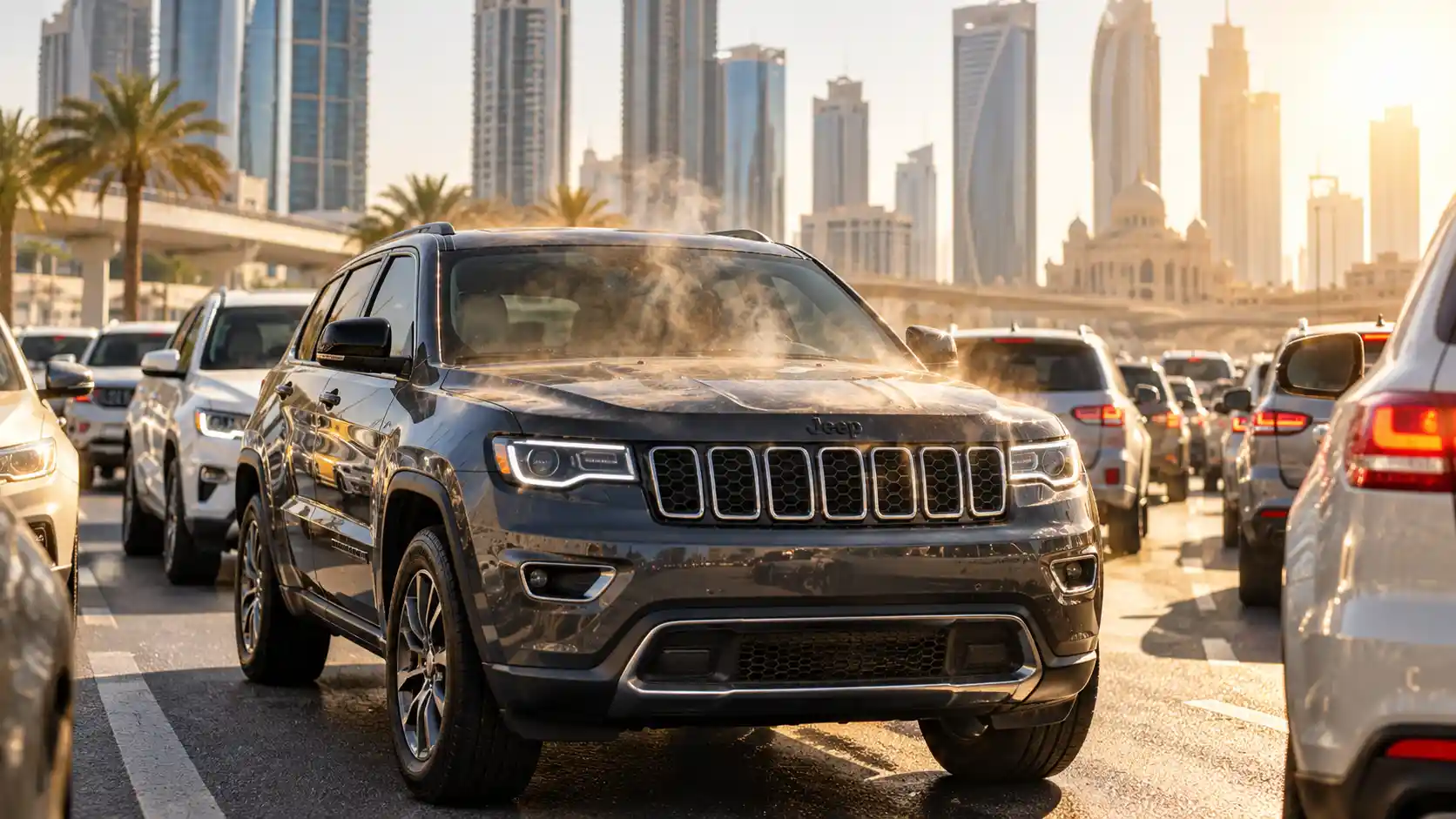
Abu Dhabi's hot weather can make driving difficult, especially when traffic moves slowly during busy hours. If your Jeep's temperature gauge starts rising while you wait at a traffic light, it may be a sign of a cooling system problem.
Your Jeep may overheat because of low coolant, a faulty radiator fan, a blocked radiator, a damaged thermostat, or a weak water pump. High outdoor temperatures can make these problems worse.
Long periods of slow driving can also reduce airflow through the radiator. A coolant leak or a damaged radiator cap may stop the system from keeping the engine at a safe temperature. Finding the cause early can help prevent serious engine damage.
Reasons Why Your Jeep Overheats in Abu Dhabi
Low Coolant Levels Can Cause Engine Overheating
Coolant is a mixture of antifreeze and water that moves through the engine and radiator to carry away heat. If your Jeep has a low coolant level, the system may not remove enough heat from the engine.
Coolant can become low because of a leak in a hose, radiator, water pump, or coolant reservoir. A loose connection may cause a slow leak that is hard to notice.
Check the coolant level only when the engine is completely cool. If you need to refill it often, have a mechanic find the cause instead of repeatedly adding more coolant.
Signs of Low Coolant
- The temperature gauge rises above its normal range.
- You notice a sweet smell near the engine.
- There are colored drops under your parked Jeep.
- A low coolant warning appears on the dashboard.
A Faulty Radiator Fan May Be the Problem
The radiator fan pulls or pushes air through the radiator to help cool the coolant. It becomes especially important when your Jeep is moving slowly or standing still. At higher speeds, air moving through the front grille helps cool the radiator.
In traffic, the fan must provide much of that airflow. If its motor fails, a fuse blows, a relay stops working, or a temperature sensor sends the wrong signal, the fan may not run when needed.
This can cause your Jeep to overheat at traffic lights but return to a normal temperature when you start driving faster.
A Blocked Radiator Can Trap Heat
The radiator transfers heat from the engine coolant to the outside air. Dust, dirt, leaves, and other debris can block airflow through its fins. Inside the radiator, rust, deposits, or old coolant can restrict the flow of liquid.
Both problems reduce the radiator's ability to remove heat. Abu Dhabi's dusty conditions can make outside dirt a concern, especially if the radiator has not been cleaned for a long time.
A mechanic can inspect the radiator, check coolant flow, and test its performance. Cleaning or replacing it may be needed, depending on the type and level of damage.
A Damaged Thermostat Can Stop Coolant Flow
The thermostat controls when coolant flows through the radiator. When the engine is cold, it stays closed to help the engine warm up. Once the engine reaches its working temperature, it opens and allows coolant to move through the cooling system. If the thermostat gets stuck closed, hot coolant cannot reach the radiator as it should.
The engine temperature may then rise quickly, even during a short drive. A thermostat that opens too late can cause similar trouble. Replacing a faulty thermostat can restore normal coolant flow and help prevent repeated overheating.
A Weak Water Pump May Reduce Cooling
The water pump moves coolant between the engine and radiator. If its internal parts wear out, the pump may not move enough coolant to remove heat effectively. A damaged seal can cause a coolant leak, while a worn bearing may create a grinding or whining noise.
Some water pumps are driven by a belt, so a loose or damaged belt can affect their performance. When coolant flow becomes too weak, your Jeep may overheat during traffic, uphill driving, or other conditions that put extra demand on the engine. A mechanic should inspect the pump and its drive system.
Coolant Leaks and a Faulty Radiator Cap
Your Jeep's cooling system needs to hold pressure to work properly. The radiator cap or coolant reservoir cap helps maintain this pressure and allows the system to manage changes in coolant temperature.
If the cap is damaged, coolant may escape too early, or the system may fail to hold the correct pressure. Cracked hoses, loose clamps, and damaged seals can cause similar problems.
Small leaks may be difficult to spot because coolant can evaporate on hot engine parts. A pressure test can help find hidden leaks and show whether the system is holding pressure correctly.
Dirty Engine Oil Can Make Overheating Worse
Engine oil does more than reduce friction between moving parts. It helps carry heat away from parts such as pistons, bearings, and the crankshaft. If the oil level is too low or the oil has become badly worn, it may not protect the engine as well as it should.
This can increase friction and add to the engine's heat load. Heavy traffic can make the problem worse because the engine continues running while the Jeep moves very little. Check the oil level as directed in your owner's manual and use the oil grade recommended for your Jeep.
Warning Signs You Should Never Ignore
Your Jeep may show several signs before the engine reaches a dangerous temperature. The temperature gauge may move above its usual position, or a dashboard warning may appear.
You might notice steam from under the hood, a sweet coolant smell, or a sudden loss of engine power. In some cases, the air conditioning may stop cooling well as the engine temperature rises, although this can have other causes too.
Pay attention to these warning signs:
- Rising temperature gauge: The cooling system may not be removing enough heat.
- Steam under the hood: Coolant may be leaking or boiling.
- Coolant warning light: The coolant level may be low or the system may need inspection.
- Repeated overheating: A fault needs to be found before further driving.
What Should You Do If Your Jeep Overheats in Traffic?
If the temperature gauge rises into the danger zone, do not keep driving in the hope that the engine will cool down. Turn off the air conditioning and move to a safe place as soon as possible. Stop the engine if it is safe to do so. If steam appears, keep your distance and wait for the engine to cool.
Never remove the radiator cap or coolant reservoir cap while the engine is hot. Pressurized coolant can spray out and cause serious burns. Do not pour cold water over a hot engine. If the temperature remains high, coolant is leaking, or steam continues, arrange roadside help or towing to a workshop.
How Can You Prevent Your Jeep From Overheating?
Regular maintenance can help your Jeep handle Abu Dhabi's hot weather and heavy traffic. A cooling system inspection can reveal worn parts before they cause a breakdown. Follow your Jeep's service schedule and use the coolant and engine oil grades recommended for your model.
Useful preventive steps include:
- Check coolant and engine oil levels regularly when the engine is cool.
- Inspect radiator hoses, clamps, and the coolant reservoir for leaks.
- Keep the radiator's outside fins free from dust and debris.
- Ask a mechanic to test the radiator fan and thermostat if the engine runs hot.
- Replace old coolant at the interval listed in your owner's manual.
- Have the water pump, belts, and cooling system checked during scheduled service.
- Do not ignore warning lights or repeated temperature changes.
These checks are useful before summer trips and long drives through busy parts of Abu Dhabi.
When Should You Visit a Jeep Workshop in Mussafah?
You should arrange an inspection if your Jeep overheats more than once, loses coolant without a clear reason, or shows a sudden rise in engine temperature. A trained mechanic can check the cooling system, test the radiator cap, inspect hoses, and confirm whether the fan, thermostat, or water pump is working correctly. Depending on the symptoms, the workshop may carry out a cooling system pressure test, scan the engine control unit for fault codes, or check for signs of a damaged head gasket.
Early repairs are usually safer than continuing to drive with an overheating engine. Severe overheating can damage the cylinder head, head gasket, pistons, and other costly engine parts.
Conclusion
If your Jeep overheats in Abu Dhabi traffic, the cause may be low coolant, a faulty radiator fan, a blocked radiator, a damaged thermostat, or a weak water pump. High outdoor temperatures and slow traffic can make these problems more noticeable.
A faulty radiator cap, coolant leak, or low engine oil level can add to the risk. Watch the temperature gauge, respond to warning signs, and stop driving if the engine gets too hot. Regular checks can help prevent sudden breakdowns and costly engine repairs.
If your Jeep keeps overheating, contact Jeep Service Mussafah for a professional inspection. The workshop can help identify cooling system faults, check worn parts, and recommend the right repairs to help your Jeep run safely in Abu Dhabi's demanding driving conditions.