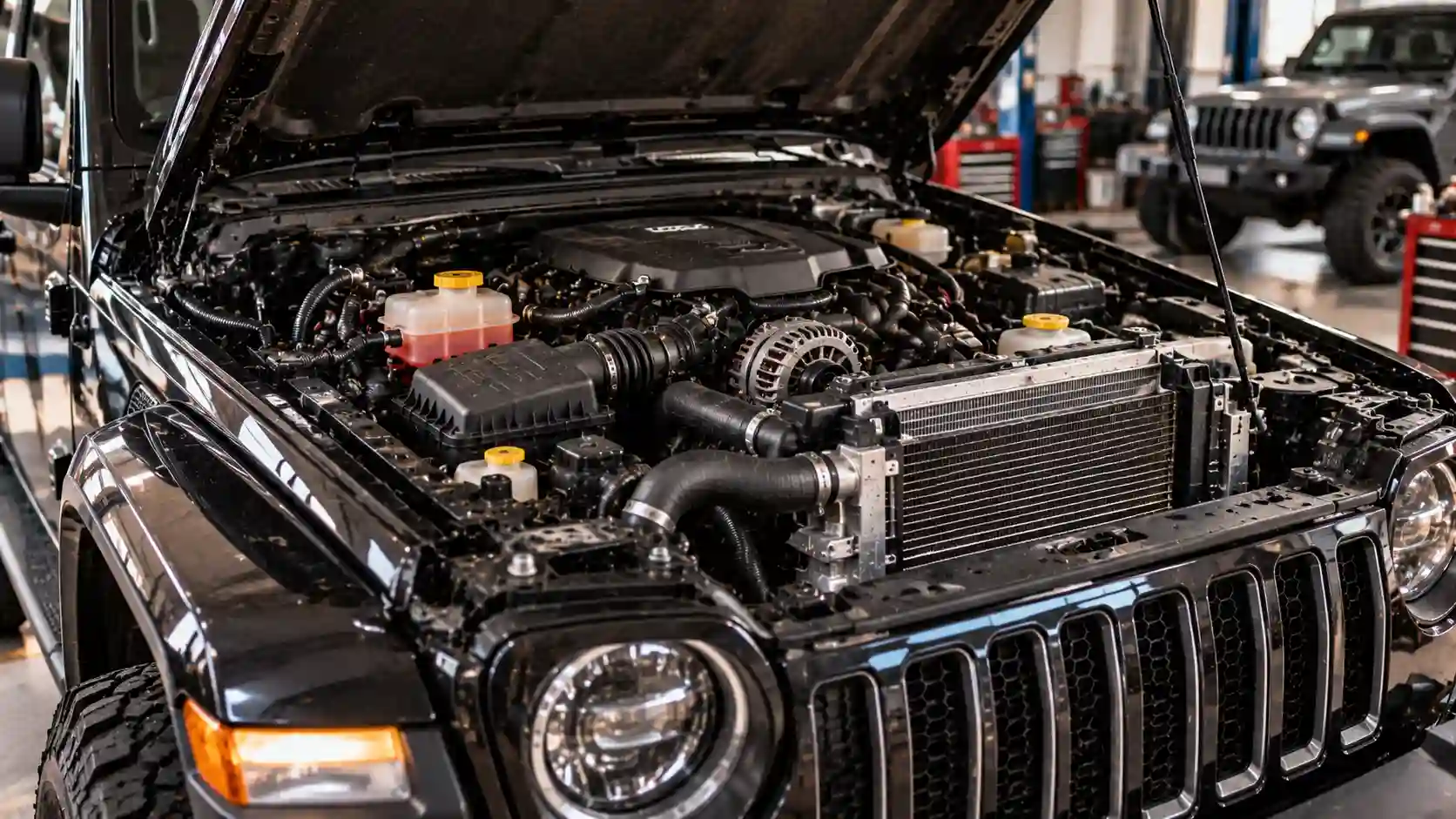
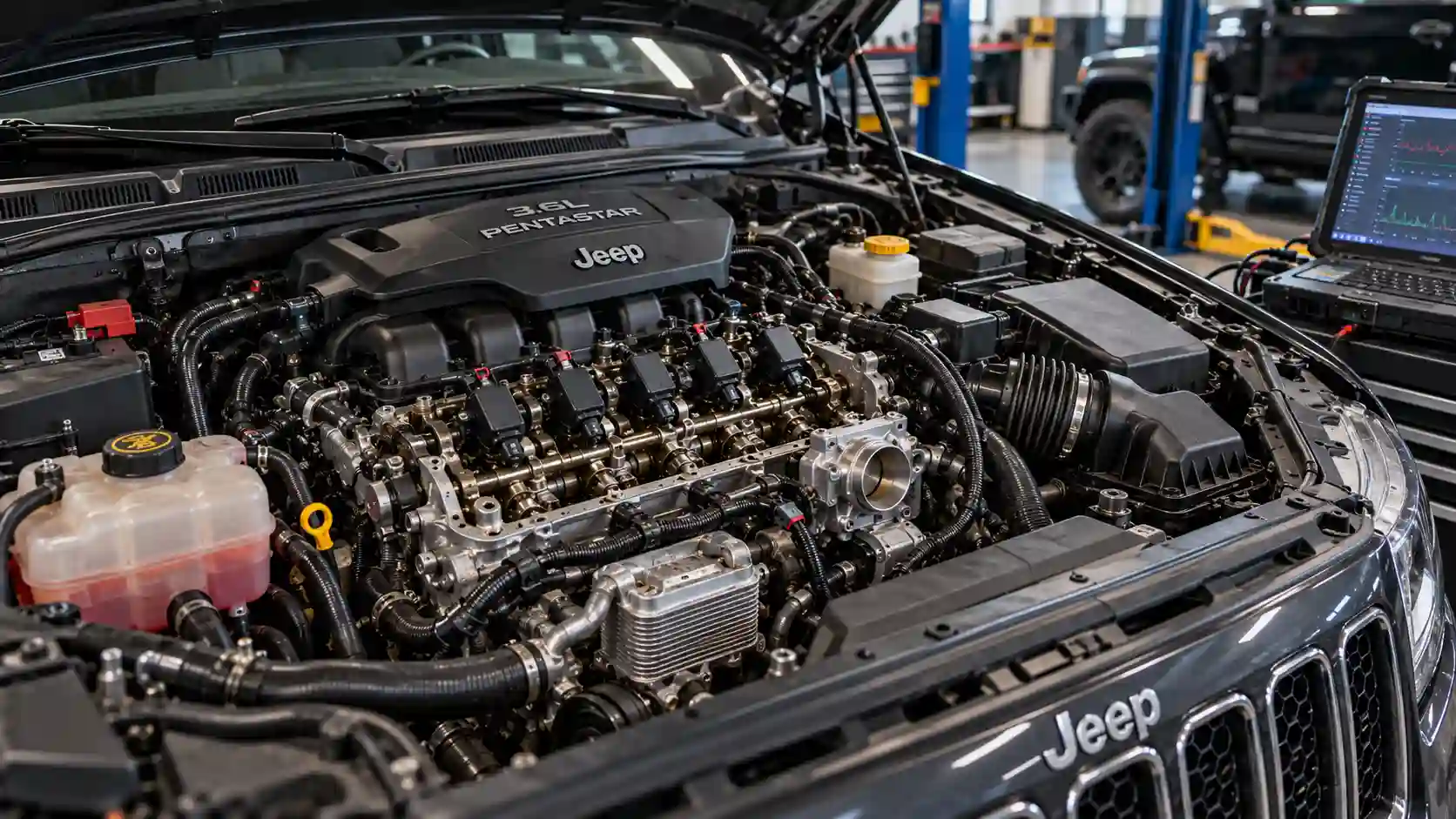
The Jeep Pentastar 3.6L V6 engine is known for its good power and smooth performance. It is used in several Jeep models, including the Wrangler, Grand Cherokee, and some versions of the Gladiator. However, like any engine, it can develop faults as parts wear out or maintenance is delayed.
Common Jeep Pentastar 3.6L engine problems include oil leaks from the oil cooler housing, ticking noises caused by rocker arm or valve train wear, overheating, and problems with the cooling system.
Some engines may develop misfires, rough idling, or loss of power due to faulty spark plugs, ignition coils, or fuel system parts. High temperatures and heavy traffic in Abu Dhabi can make existing cooling and oil problems worse. Finding these warning signs early can help prevent costly repairs.
What Is the Jeep Pentastar 3.6L Engine?
The Pentastar 3.6L is a V6 petrol engine developed by Chrysler for use in several vehicles under the Jeep, Dodge, and other related brands. It uses six cylinders arranged in a V shape to provide a balance of power, fuel use, and smooth driving.
Many versions feature dual overhead camshafts and variable valve timing, which help control how the engine takes in air and releases exhaust gases.
Although the engine has been used in many models, its parts and repair needs can vary by year. Knowing the model year helps a mechanic choose the right repair method.
Most Common Jeep Pentastar 3.6L Engine Problems
Oil Leaks From the Oil Cooler Housing
One of the known issues on many Pentastar 3.6L engines is an oil leak around the oil cooler and filter housing. On many versions, this housing sits in the engine valley beneath the intake manifold.
Some original housings use plastic parts that can crack or become damaged by heat and age. Oil may collect around the housing and run down the engine, making it hard to find the exact source.
Common Symptoms of an Oil Cooler Leak
- A burning oil smell after driving.
- Oil marks around the top or sides of the engine.
- A low engine oil warning or falling oil level.
- Oil collecting near the back or sides of the engine.
A mechanic should inspect the housing and surrounding seals before replacing parts. Depending on the engine version and damage, the repair may involve fitting a new housing, filter, and seals. Upgraded replacement housings may be available for some models. After repair, the engine should be checked for further leaks.
Ticking Noise From the Rocker Arms and Valve Train
A ticking sound from the top of the engine can be linked to the rocker arms, hydraulic lash adjusters, or other valve train parts. Rocker arms help transfer movement from the camshafts to the valves.
If a rocker arm bearing wears out, it may produce a repeated ticking or tapping noise. Low oil levels, poor oil condition, or oil flow problems can contribute to engine wear, although a ticking sound does not always mean a rocker arm has failed.
If the noise stays after the engine warms up or becomes louder with engine speed, arrange an inspection. A mechanic may remove the valve cover to examine the rocker arms and camshaft surfaces.
Worn parts should be replaced before they cause more damage. Driving for too long with serious valve train wear can lead to costly engine repairs.
Engine Overheating in Abu Dhabi's Hot Weather
The Pentastar 3.6L engine depends on a working cooling system to keep its temperature within the correct range. In Abu Dhabi, high outdoor temperatures and slow traffic can place extra demand on the radiator, cooling fan, thermostat, and water pump.
If coolant levels drop or the radiator becomes blocked, the engine may not release heat quickly enough. A faulty thermostat can restrict coolant flow, while a weak water pump may reduce circulation.
Watch for a rising temperature gauge, coolant warnings, steam, or a sweet smell near the engine. If the engine overheats, stop somewhere safe and switch it off. Never open the coolant cap while the engine is hot. A workshop can pressure-test the system, inspect for leaks, and check fan operation before recommending a repair.
Misfires, Rough Idling, and Loss of Engine Power
A misfire happens when one or more cylinders do not burn the fuel and air mixture correctly. Your Jeep may shake at idle, hesitate during acceleration, use more fuel, or show a flashing check engine light.
Common causes include worn spark plugs, faulty ignition coils, damaged wiring, or fuel delivery problems. Air leaks and sensor faults can cause similar symptoms. A mechanic can connect an OBD-II diagnostic scanner to read fault codes from the engine control unit.
These codes help narrow down the cause, but they do not always identify the failed part on their own. Further checks may include inspecting spark plugs, testing ignition coils, checking fuel pressure, and looking for air leaks. Replacing parts only after proper testing can save money and reduce the chance of repeat faults.
Timing and Variable Valve Timing Problems
The Pentastar 3.6L uses a timing chain to keep the camshafts and crankshaft moving in the correct order. It also uses variable valve timing to adjust valve operation according to engine speed and load. If a timing component, oil control valve, or related sensor develops a fault, the engine may run poorly or lose power.
Possible warning signs include a check engine light, rough running, difficult starting, or unusual noise during startup. Some faults may trigger diagnostic codes related to camshaft or crankshaft timing.
Low oil levels or poor oil condition can affect parts that rely on engine oil pressure. A mechanic should check the fault codes, oil condition, sensors, and timing system before deciding whether a part needs replacement. Timing repairs require care because incorrect valve timing can cause serious engine damage.
Coolant Loss and Possible Head Gasket Damage
If your Jeep repeatedly loses coolant without an obvious leak, the cause needs to be found. Coolant may escape through a cracked hose, radiator, water pump seal, or damaged connection.
In more serious cases, a failed head gasket can allow coolant to enter a cylinder or mix with engine oil. This can lead to overheating and internal engine damage. Possible signs include repeated coolant loss, white exhaust smoke after the engine is warm, rough starting, or milky-looking oil.
However, these signs can have other causes, so they should not be treated as proof of a head gasket failure. A workshop may perform a cooling system pressure test, a combustion gas test, or a cylinder leak-down test. The repair could be a simple leak fix or a major engine repair, depending on the test results.
Common Jeep Pentastar 3.6L Engine Problems at a Glance
The table below explains common faults, the signs drivers may notice, and the repair options a mechanic may consider.
| Engine problem | Common symptoms | Possible repair options |
|---|---|---|
| Oil cooler housing leak | Burning oil smell, oil around engine | Replace housing and seals |
| Rocker arm wear | Repeated ticking from engine top | Inspect and replace worn rocker arms or related parts |
| Cooling system fault | Rising temperature, coolant loss | Repair leaks, thermostat, fan, radiator, or water pump as needed |
| Ignition misfire | Engine shaking, poor acceleration | Replace faulty spark plugs or ignition coils |
| Variable valve timing fault | Check engine light, rough running | Test sensors, oil control valves, and timing components |
| Head gasket damage | Coolant loss, overheating, possible white exhaust smoke | Confirm failure and repair the gasket or damaged parts |
These are possible causes rather than a diagnosis. The correct repair depends on the engine's model year, mileage, fault codes, and inspection results.
How Much Does Jeep Pentastar 3.6L Engine Repair Cost?
The cost of repairing a Pentastar engine depends on the failed part, the time needed to reach it, and whether other parts have been damaged. Replacing a spark plug or ignition coil is usually a smaller job than repairing a timing system or a head gasket.
An oil cooler housing repair may cost more in labor because the mechanic may need to remove parts from the top of the engine to reach it.
Before approving work, ask the workshop to explain the cause, list the parts needed, and provide a labor estimate.
It is useful to check whether the quote includes new seals, coolant, engine oil, or other fluids. A proper diagnosis may cost less than replacing several parts without confirming the fault.
How to Prevent Pentastar 3.6L Engine Problems
Regular maintenance helps reduce wear and gives mechanics a chance to find small faults before they become serious. Follow the service schedule for your Jeep's model year and driving conditions. Abu Dhabi's heat and frequent stop-and-go traffic may make regular checks especially useful.
Follow these maintenance steps:
- Check the engine oil level regularly and use the grade listed in the owner's manual.
- Change engine oil and the oil filter at the recommended intervals.
- Inspect the oil cooler housing and surrounding areas for leaks.
- Check coolant levels when the engine is completely cool.
- Have the radiator, cooling fan, hoses, and water pump inspected if the engine runs hot.
- Replace spark plugs according to the service schedule.
- Do not ignore ticking noises, misfires, or warning lights.
- Use a qualified mechanic for timing system and internal engine repairs.
Good maintenance cannot prevent every fault, but it can help protect engine parts and reduce the risk of unexpected breakdowns.
When Should You Visit a Jeep Workshop in Mussafah?
You should arrange an inspection if your Jeep develops a repeated ticking noise, loses oil or coolant, shakes while idling, or shows a check engine warning. These symptoms may start with a small fault, but continuing to drive can cause further damage.
Stop driving and arrange recovery if the engine overheats severely, the oil pressure warning appears while the engine is running, or the engine makes a loud knocking noise.
A trained mechanic can scan the engine control unit, check fluid levels, inspect for leaks, and test the ignition and cooling systems. If needed, further tests can help identify internal engine damage. Early diagnosis helps you understand which repairs are necessary and avoid spending money on parts that are still working.
Conclusion
The Jeep Pentastar 3.6L V6 is used in many Jeep models, but it can develop problems such as oil cooler housing leaks, rocker arm wear, overheating, ignition misfires, and variable valve timing faults.
Warning signs include ticking noises, falling oil or coolant levels, rough idling, and loss of power. High temperatures in Abu Dhabi can make cooling system problems more serious, so early checks are important.
The best repair depends on the cause of the fault, not just the symptom. Regular oil changes, coolant checks, and timely inspections can help protect your engine from major damage.
If your Jeep has any of these symptoms, contact Jeep Service Mussafah for engine inspection and repair. A professional team can help diagnose the problem, explain the repair options, and get your Jeep back on the road with confidence.