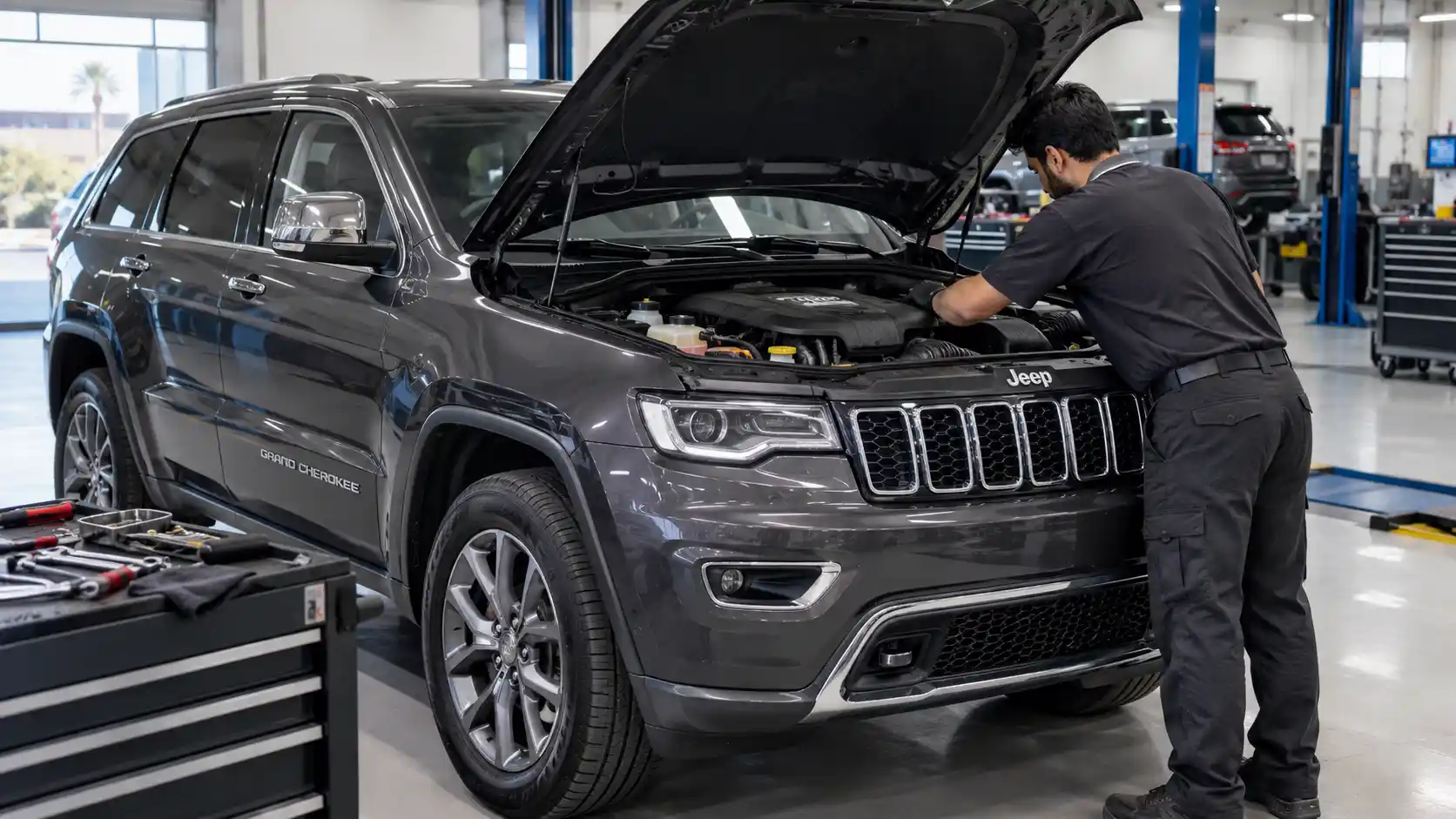
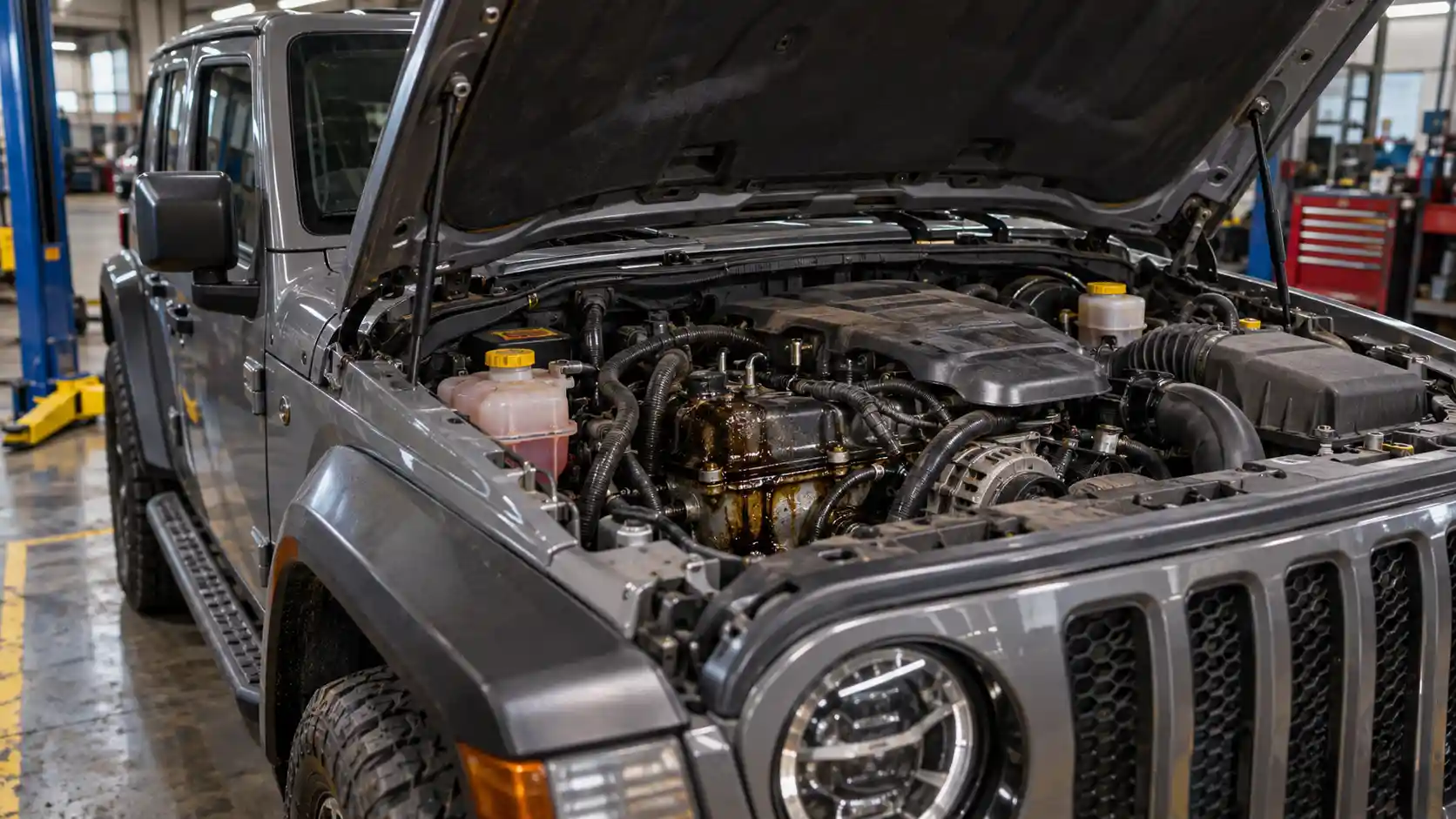
Engine oil plays an important role in keeping a Jeep engine running smoothly. It lubricates moving parts, reduces friction, and helps control heat. However, worn seals, damaged gaskets, loose fittings, and high engine temperatures can cause oil to leak from different areas.
A Jeep engine oil leak can start as a few drops under the car but may become a serious problem if ignored. Common causes include a damaged valve cover gasket, worn oil pan gasket, leaking oil filter housing, faulty crankshaft seals, and loose drain plugs.
In the UAE, high temperatures can put extra pressure on rubber seals and gaskets, making regular inspections important. Repair costs depend on the leak location, engine type, and labour required. Finding the source early can help prevent low oil levels and expensive engine damage.
Most Common Causes of Oil Leaks in Jeep Engines
Worn Valve Cover Gasket
The valve cover gasket is one of the common sources of oil leaks in Jeep engines. It sits between the cylinder head and valve cover, creating a seal that keeps engine oil inside. Over time, heat and repeated engine use can make the gasket hard, weak, or cracked. When this happens, oil may escape around the top of the engine and run down its sides.
You may notice an oily smell, smoke near the engine, or visible oil around the valve cover. Replacing the damaged gasket usually fixes the problem.
Damaged Oil Pan Gasket
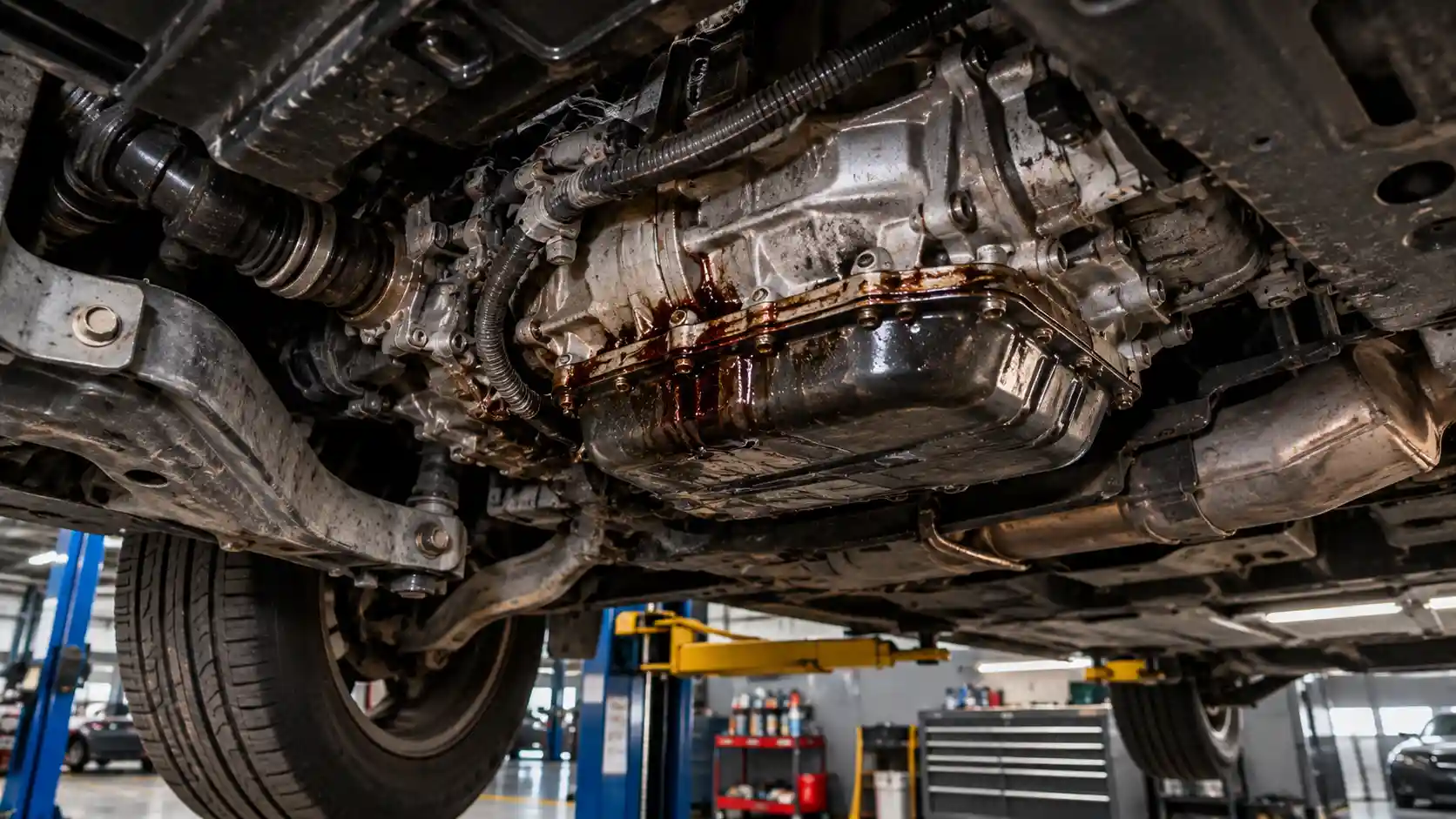
The oil pan is fitted at the bottom of the engine and stores the engine oil when the vehicle is not running. A gasket seals the connection between the oil pan and the engine block. If this gasket becomes worn or damaged, oil can slowly leak from the bottom of the engine.
Driving over rough roads, hitting road debris, or repeated exposure to heat can contribute to damage. Common signs include oil spots under the Jeep and wet areas around the oil pan. A mechanic should inspect the gasket and oil pan before deciding whether replacement or resealing is needed.
Faulty Oil Filter Housing
A faulty oil filter housing is another possible cause of oil leaks in certain Jeep engines. The housing holds the oil filter in place and helps direct engine oil through the filtration system. In some Jeep models, the housing or its seals can develop cracks or leaks over time.
Plastic oil filter housings may become brittle after repeated exposure to engine heat. You may notice oil collecting around the filter housing or running down the engine. In some cases, oil can reach nearby components and make the source difficult to identify without a proper inspection.
Worn Crankshaft Seals
Crankshaft seals prevent engine oil from escaping where the crankshaft passes through the engine block. Most engines have front and rear crankshaft seals. The front seal is usually located behind the crankshaft pulley, while the rear seal sits between the engine and transmission.
Over time, these seals can become hard or worn due to heat and engine movement. A damaged front seal may cause oil to collect near the pulley area. A leaking rear main seal can leave oil between the engine and gearbox. Replacing these seals may require considerable labour.
Damaged Timing Cover Gasket
The timing cover protects the timing chain and related engine parts. It helps keep dirt away from these components while holding engine oil inside the engine. A gasket or sealant creates a tight connection between the cover and engine block.
If the gasket becomes weak or the sealant starts to break down, oil may leak from the front or side of the engine. You may notice wet patches around the timing cover or oil collecting near the lower engine area. A mechanic should inspect the cover and sealing surface before applying new sealant or replacing damaged parts.
Loose or Damaged Oil Drain Plug
The oil drain plug is fitted at the bottom of the oil pan. It is removed during an oil change to drain old engine oil. If the plug is not tightened correctly, oil may escape through its threads.
A damaged washer or worn plug can cause the same problem. In some cases, excessive tightening can damage the oil pan threads and make it difficult to create a proper seal. Oil drops near the bottom of the engine after servicing may indicate this issue. The mechanic should check the plug, washer, and threads and replace damaged parts when needed.
Faulty Oil Filter Seal or O-Ring
The oil filter removes dirt and small particles from engine oil before it circulates through the engine. It uses a rubber sealing ring or O-ring to prevent oil from escaping around its connection.
If the seal is damaged, incorrectly fitted, or left behind from an old filter, oil may leak when the engine is running. Using an incorrect filter can create similar problems. You may notice fresh oil around the filter area shortly after an oil change. Always use the correct filter and make sure its sealing ring is fitted properly during replacement.
High Crankcase Pressure
High crankcase pressure can force engine oil through seals and gaskets that would normally hold it inside. This pressure may develop when the Positive Crankcase Ventilation (PCV) system becomes blocked or stops working correctly.
The PCV system controls gases that build up inside the engine and sends them back into the intake system for combustion. If the ventilation system is blocked, pressure can increase and push oil past weak seals. Common signs include oil leaks, rough idling, and increased oil consumption. A mechanic should inspect the PCV valve, hoses, and ventilation passages.
Overfilled Engine Oil
Adding too much engine oil during servicing can increase pressure and cause problems with the engine's lubrication system. Excess oil may come into contact with moving engine parts, creating foam and reducing proper lubrication. In some cases, it can contribute to oil leaks through existing weak seals.
Overfilling may also increase oil consumption and cause smoke from the exhaust. Always follow the oil capacity listed for your specific Jeep engine. Mechanics should check the dipstick or electronic oil level reading according to the manufacturer's instructions before returning the vehicle.
High Engine Temperatures and Worn Seals
Jeep owners in the UAE should pay attention to engine heat. Summer temperatures, heavy traffic, and long drives can place extra pressure on the cooling and lubrication systems. Repeated exposure to high temperatures can make rubber seals and gaskets lose flexibility.
Once these parts become hard or cracked, they may no longer create a tight seal. This can lead to leaks around the valve cover, oil filter housing, and other engine connections. Regular cooling system checks and timely oil changes help protect engine components and reduce the risk of heat-related wear.
Common Signs of an Oil Leak in a Jeep
An engine oil leak does not always cause an immediate warning light. Sometimes, the first sign is a small oil spot under the vehicle. Other symptoms may become noticeable as the leak gets worse.
Look for these common warning signs:
- Oil spots under the Jeep: Dark brown or black patches on the parking surface may indicate an engine oil leak.
- Burning oil smell: Oil dripping onto hot exhaust parts can produce a strong burning smell.
- Blue exhaust smoke: Blue smoke may indicate that engine oil is entering the combustion chamber and burning. It can also point to internal engine problems.
- Low oil level: Frequent drops in engine oil level may indicate a leak or excessive oil consumption.
- Oil around engine parts: Wet or greasy areas near gaskets, seals, and the oil filter housing can help identify the source.
- Oil pressure warning: A low oil pressure warning can indicate a serious lubrication problem that needs immediate attention.
If the oil pressure warning appears, stop the engine as soon as it is safe to do so. Continuing to drive with low oil pressure can cause serious engine damage.
Which Jeep Models Can Develop Oil Leaks?
Oil leaks can occur in almost any Jeep model, but the possible causes depend on the engine design and age of the vehicle. Some engines have specific components that mechanics should inspect carefully.
Jeep Wrangler
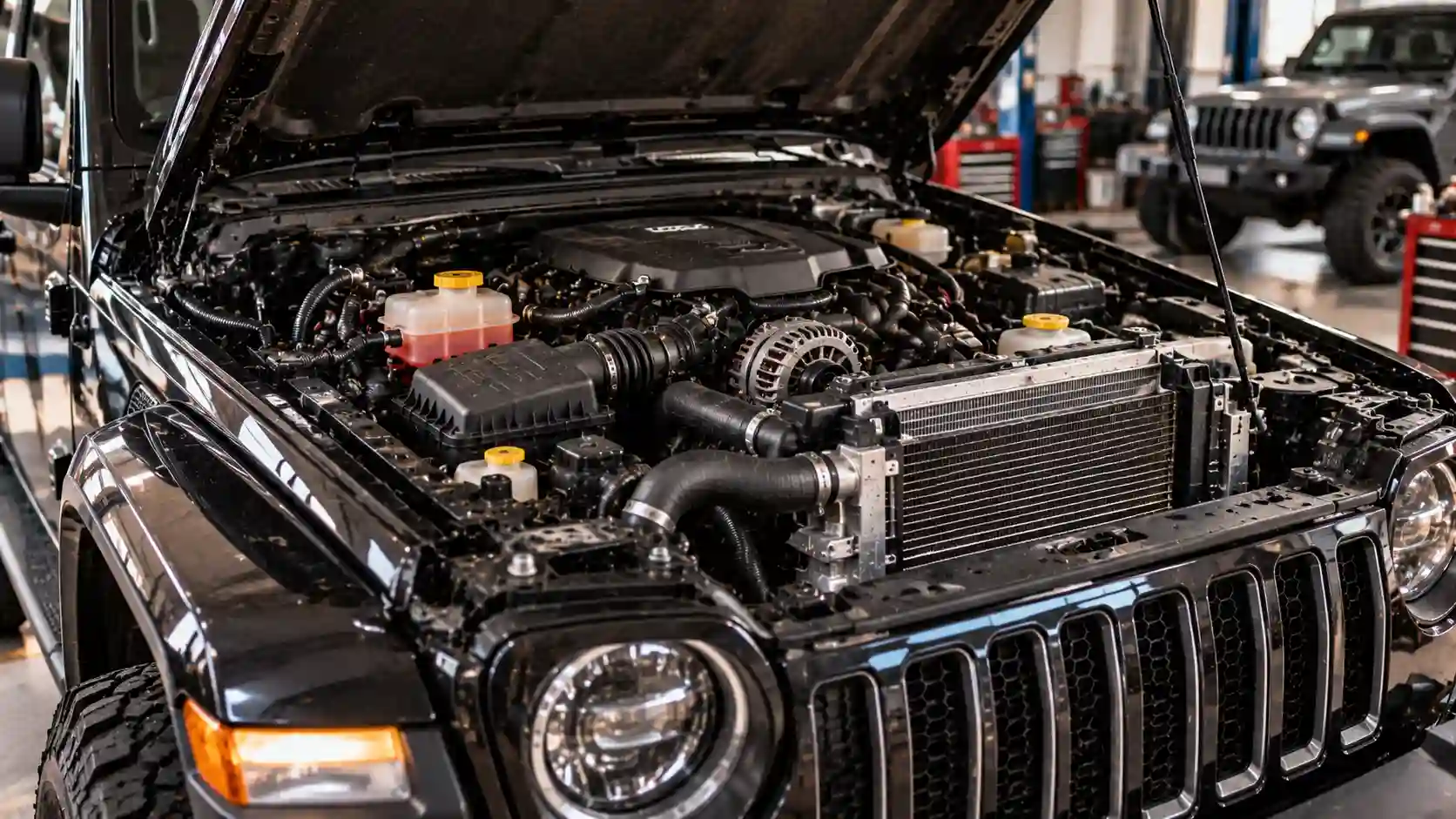
The Jeep Wrangler is available with different engine options, including the 3.6L Pentastar V6 in many model years. On these engines, the oil filter housing and oil cooler assembly are known areas to inspect when oil appears around the top of the engine.
The Wrangler may also develop leaks from valve cover gaskets, oil pan seals, and crankshaft seals as mileage increases. Regular engine inspections can help identify these problems before oil reaches nearby components.
Jeep Grand Cherokee
The Jeep Grand Cherokee has been offered with several petrol and diesel engine options over different generations. Depending on the engine, common inspection points include the valve cover gasket, oil filter housing, timing cover, and crankshaft seals.
Oil leaks may become more noticeable as seals age and engine parts experience repeated heat cycles. A proper inspection is important because oil can travel across the engine and collect far from its original leak point.
Jeep Cherokee
The Jeep Cherokee also comes with different engine options depending on the model year and market. Oil filter seals, valve cover gaskets, oil pan seals, and other engine connections may develop leaks over time.
Drivers should pay attention to oil spots under the vehicle, burning smells, and changes in engine oil levels. Regular servicing helps mechanics identify worn seals and other problems before they become more expensive to repair.
How Do Mechanics Find the Source of a Jeep Oil Leak?
Finding an oil leak requires more than looking at the oil spot under the vehicle. Engine oil can travel along different surfaces, making the actual source difficult to identify. A proper inspection helps prevent unnecessary part replacements.
Mechanics generally follow these steps:
- Visual inspection: Check the engine, oil filter housing, valve covers, oil pan, and visible seals for fresh oil.
- Clean the affected area: Remove old oil and dirt to make it easier to identify a new leak.
- Run the engine: Observe the engine while it is running to see where fresh oil appears.
- Use UV dye if needed: Add a special dye to the engine oil and use a UV light to trace the leak.
- Check oil pressure and ventilation: Inspect the lubrication system and PCV components if excessive pressure is suspected.
- Confirm the repair: After fixing the problem, run the engine again and check for further leakage.
This inspection process helps identify the exact cause and reduces the chance of replacing parts that are still in good condition.
How to Fix an Oil Leak in a Jeep Engine?
The correct repair depends on where the oil is escaping. Some leaks only require a new gasket or sealing ring, while others need more detailed engine work. A mechanic should identify the source before recommending any replacement.
Common repair solutions include:
- Replacing damaged gaskets: Install new valve cover or oil pan gaskets to stop oil from escaping.
- Repairing the oil filter housing: Replace cracked housings, damaged seals, or faulty O-rings.
- Replacing crankshaft seals: Install new front or rear seals if they are worn or damaged.
- Fixing the PCV system: Clean or replace blocked valves and damaged ventilation hoses.
- Repairing the oil drain plug: Replace worn washers, damaged plugs, or repair stripped threads.
- Fixing timing cover leaks: Replace damaged gaskets or apply the correct engine sealant.
After the repair, mechanics should check the engine oil level and inspect the repaired area for further leakage. A short road test may also help confirm that the problem has been fixed.
How to Prevent Oil Leaks in Your Jeep
You cannot prevent every oil leak, but regular maintenance can reduce the risk of seal damage and other engine problems. Small leaks should be checked early instead of waiting until the engine loses a large amount of oil.
Follow these maintenance tips:
- Change engine oil regularly: Follow the recommended oil change interval for your Jeep model.
- Use the correct oil grade: Choose engine oil that meets the manufacturer's specifications.
- Check oil levels: Inspect the engine oil level regularly, especially before long journeys.
- Replace worn gaskets: Do not delay replacement when a gasket starts showing signs of leakage.
- Inspect the cooling system: Make sure the radiator, coolant hoses, and thermostat are working correctly.
- Check the PCV system: Keep the crankcase ventilation system clean and working properly.
- Inspect after oil changes: Look around the oil filter and drain plug for signs of fresh oil.
These simple steps help protect engine components and reduce the risk of unexpected repair expenses.
Is It Safe to Drive a Jeep With an Oil Leak?
Driving with an oil leak depends on how much oil is escaping and where the leak is coming from. A very small leak may not cause immediate damage, but it should still be inspected. Ignoring it can allow the engine oil level to drop below the recommended limit.
A serious leak can reduce oil pressure and affect lubrication. This may damage the crankshaft bearings, pistons, camshafts, and other moving parts. Oil reaching hot exhaust components can also produce smoke and create a fire risk.
If you notice heavy oil leakage, smoke, or a low oil pressure warning, stop driving and arrange a professional inspection. Do not rely on topping up the oil as a permanent solution.
Frequently Asked Questions
Why does my Jeep smell like burning oil?
A burning oil smell can mean oil is dripping onto hot exhaust parts. A leaking valve cover gasket is one possible source, because oil can escape around the top of the engine and run down its sides. Oil on hot exhaust parts can also cause smoke and a fire risk.
Why is my Jeep leaking oil after an oil change?
A leak right after an oil change can come from the drain plug or the oil filter. The plug may be loose, or its washer may be damaged. The filter seal may be badly fitted, damaged, or left behind from the old filter. Using the wrong filter can cause the same problem.
Can too much engine oil cause a leak?
Yes, it can. Overfilling raises pressure in the engine and can push oil through seals that are already weak. Extra oil can also touch moving parts and turn foamy, which reduces lubrication. It may also lead to higher oil use and smoke from the exhaust.
Where should I check for an oil leak on a Jeep Wrangler 3.6L?
Start with the oil filter housing and oil cooler assembly on the 3.6L Pentastar V6. These are known areas to inspect when oil appears around the top of the engine. The valve cover gaskets, oil pan seals, and crankshaft seals can also leak as mileage increases.
Can I keep topping up the oil instead of fixing the leak?
No. Topping up is not a permanent fix. If the leak continues, the oil level can drop below the recommended limit and oil pressure can fall. Low oil pressure can damage the crankshaft bearings, pistons, camshafts, and other moving parts inside the engine.
Conclusion
Oil leaks in Jeep engines can develop due to worn valve cover gaskets, damaged oil pan seals, faulty oil filter housings, crankshaft seals, and loose drain plugs. High engine temperatures, blocked PCV systems, and incorrect oil levels can contribute to the problem as well.
The best way to avoid expensive engine repairs is to identify leaks early, check oil levels regularly, and follow the recommended maintenance schedule. If you notice oil spots under your Jeep, a burning smell, or an unexplained drop in oil level, arrange an inspection before the problem gets worse.
For reliable Jeep engine repair in Abu Dhabi, contact Zenfo Auto Services. Book an inspection today to find the source of the oil leak and get the right repair for your Jeep.