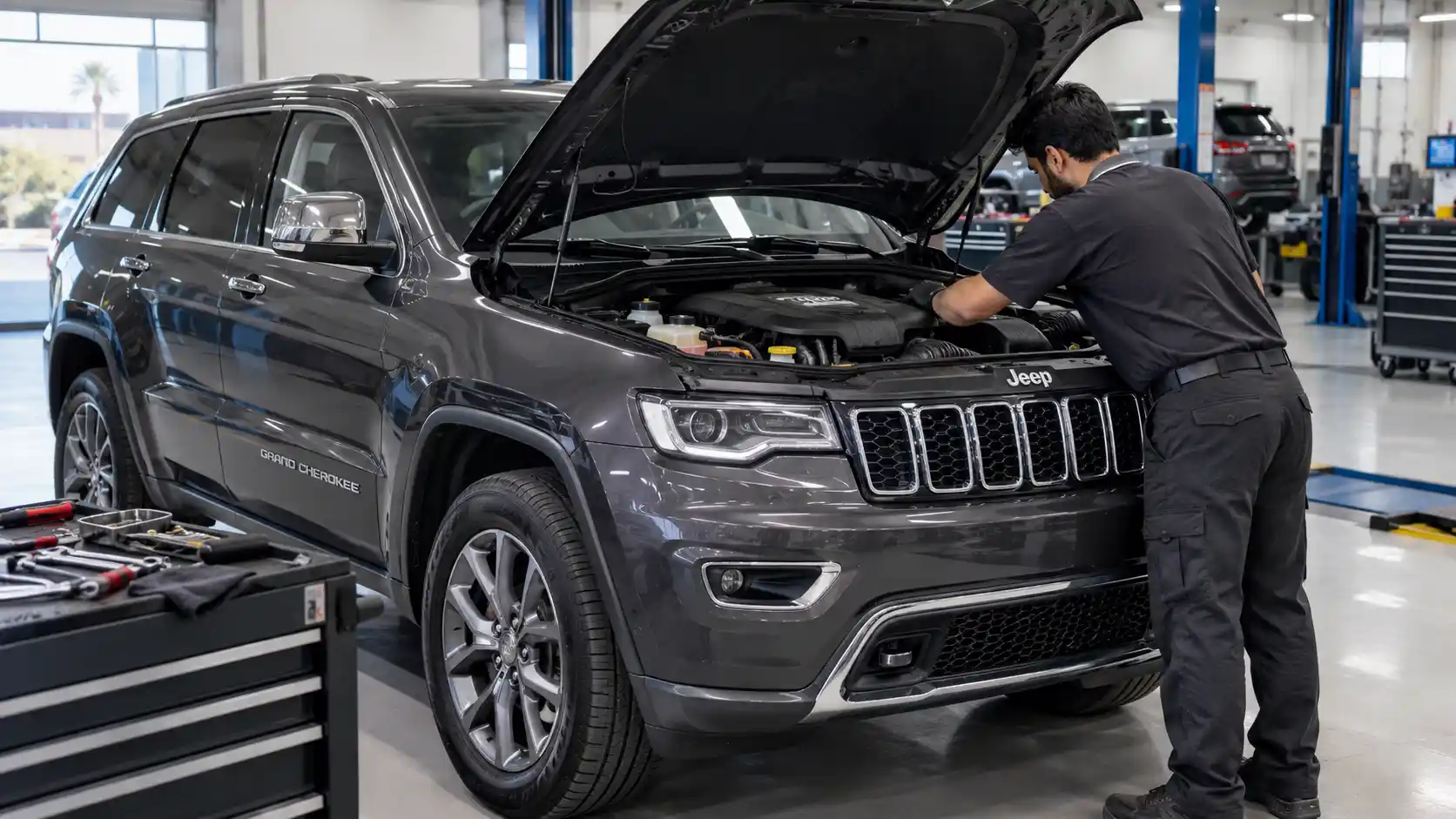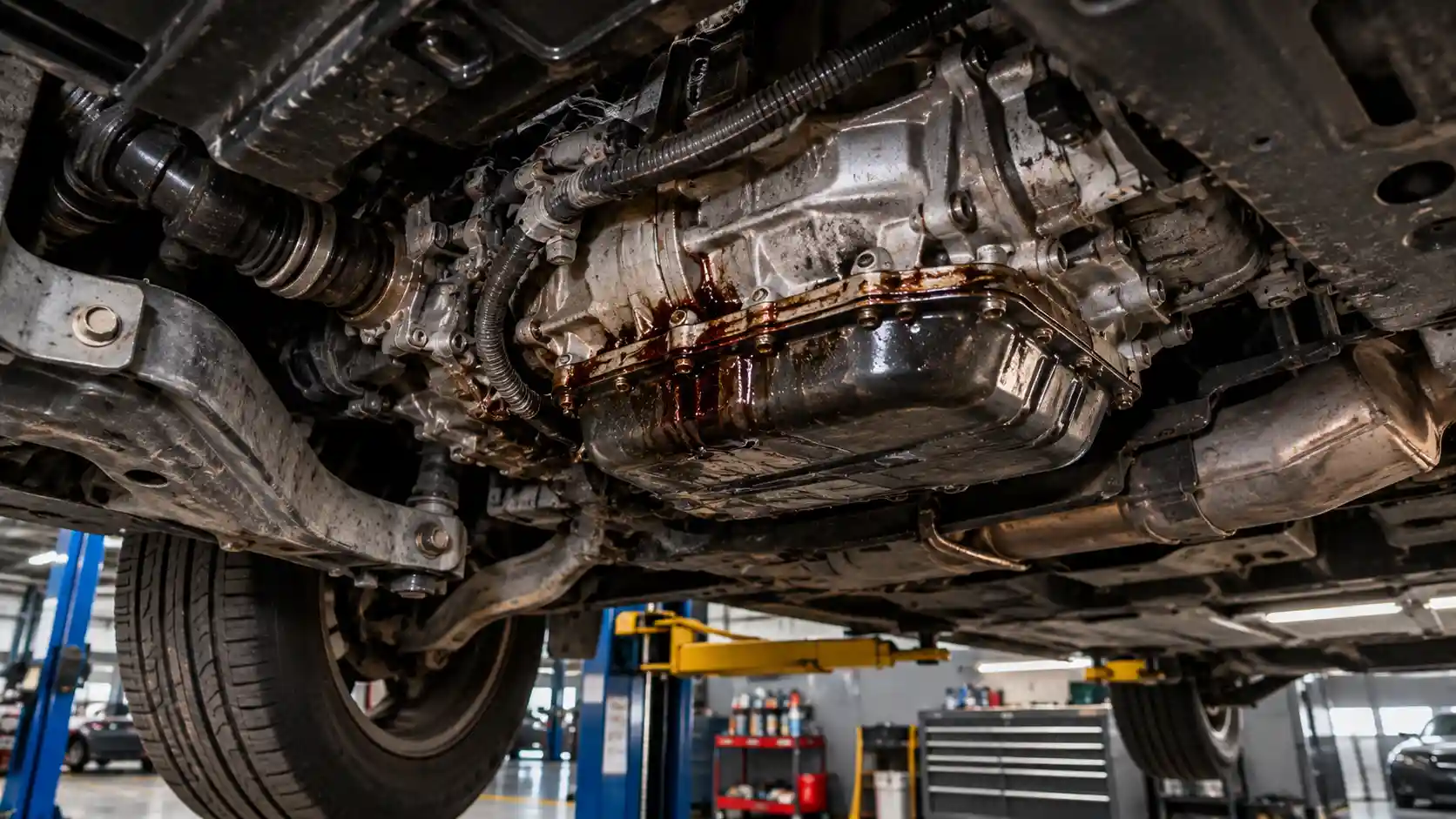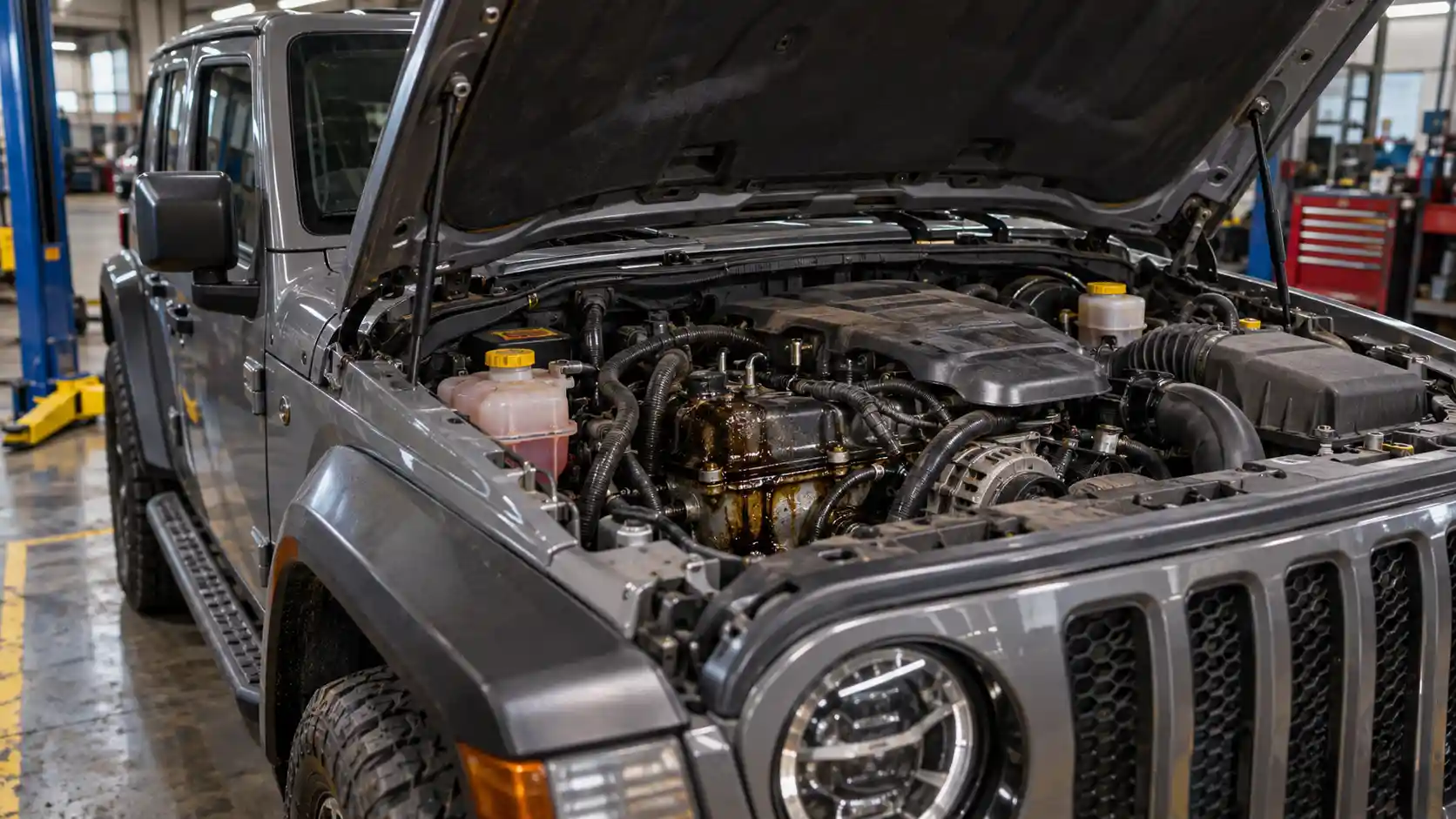
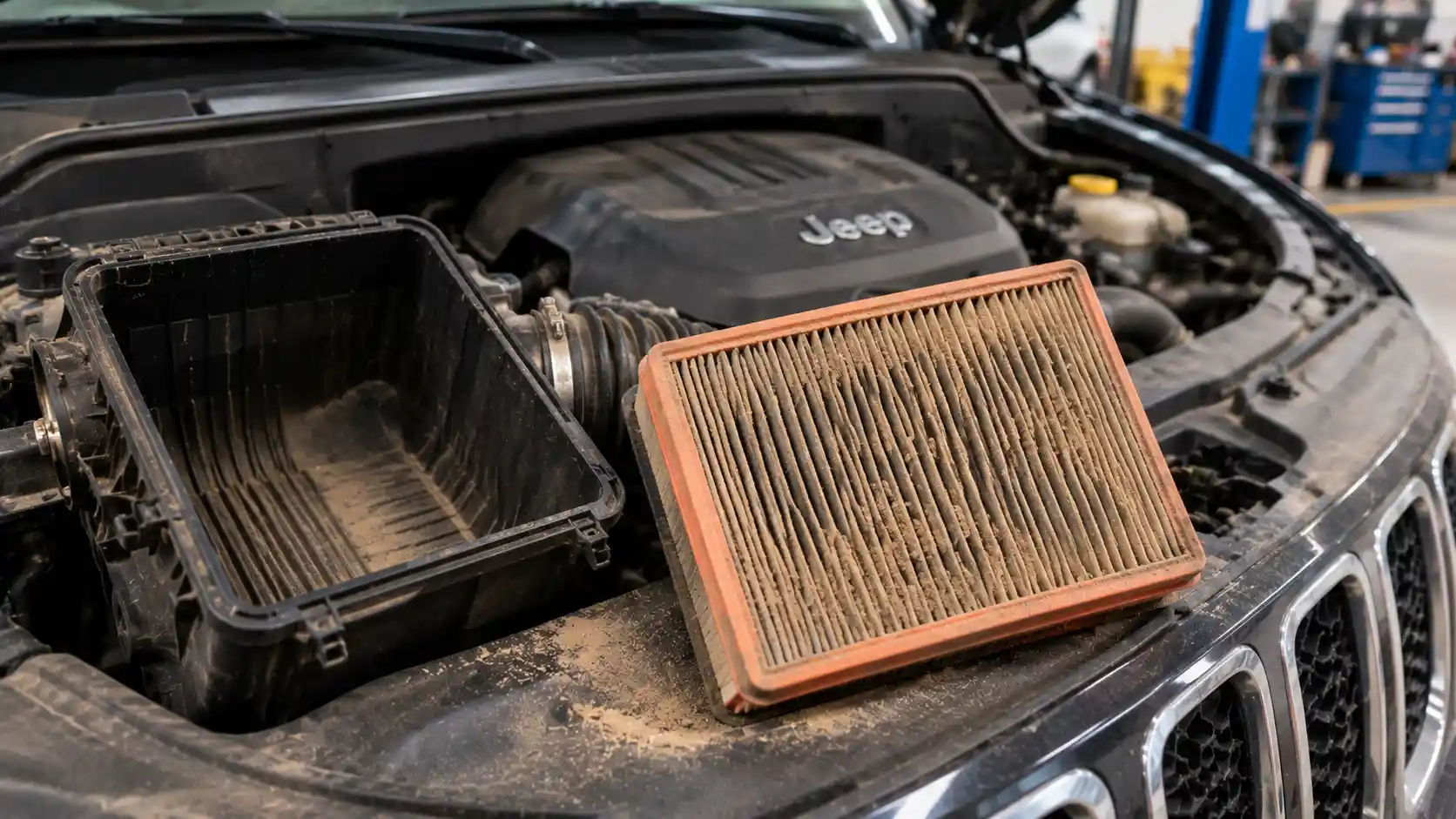
Desert dust is finer than flour and harder than many of the metals it touches. For a Jeep, the air filter is the only barrier between that dust and the engine.
Desert dust affects a Jeep by clogging the engine air filter, starving the engine of air and, when fine grains slip past, wearing piston rings, cylinder walls, and bearings.
A choked filter can cut power and raise fuel use, while dust in the oil speeds up internal wear. Checking the filter often, keeping the intake sealed, and changing oil on time keep the damage in check.
How Much Dust a Jeep Faces in Abu Dhabi
Research near the Abu Dhabi and Dubai airports recorded PM10 dust levels of 100 to 250 µg/m³ on normal days, rising to about 750 µg/m³ during mild storms. Dust levels also peak in the hotter months, when winds lift fine sand from open desert.
Off-road driving adds far more. A Jeep following another vehicle on a desert track breathes the dust cloud kicked up from the sand.
Every litre of fuel burned needs several cubic metres of air. That means the filter handles huge volumes of air, and the dust inside it, on every drive.
Why Dust Is So Harmful to Engines
Most desert dust is quartz, which rates 7 on the Mohs hardness scale. Engine research published in Combustion Engines in 2024 names this hard mineral dust as the main cause of wear on piston rings, cylinder liners, bearings, and valve stems.
Good air filters stop around 99% of incoming dust. The small share that gets through is made of tiny grains, and the most damaging are those close in size to the oil film between moving parts.
Lab tests on sand show the risk clearly. Fine silica dispersed in engine oil caused heavy wear on test parts after only a short running period.
| Dust type | Typical size | What happens |
|---|---|---|
| Coarse sand | Over 100 µm | Usually trapped by a healthy air filter |
| Fine dust and silt | Below 100 µm | Can pass a worn or leaking filter into the oil |
| Very fine grains | Close to oil film thickness | Cause the most wear on rings, liners and bearings |
What Dust Does to the Air Filter
A new filter traps dust in its pleats, and a light dust layer even helps it catch finer grains. As dust builds, though, airflow drops and the engine works harder to breathe.
A clogged filter can cause sluggish acceleration, higher fuel use and, on some engines, a rough idle or check engine light. Modern Jeeps adjust fuel to measured airflow, so a loss of power is often the first sign.
Filters can also fail by leaking rather than clogging. A torn pleat, cracked airbox or badly seated filter lets unfiltered air go straight into the engine.
How Dust Damages the Engine Over Time
Piston Rings and Cylinder Walls
Fine dust caught between the rings and cylinder wall acts like sandpaper. Worn rings let oil into the combustion chamber, which leads to oil burning and lower compression.
On the 3.6L Pentastar, rising oil use between services is already a warning sign. Dust wear can make it worse and speed up the need for engine work.
Bearings and Oil Contamination
Dust that reaches the oil travels to the crankshaft and camshaft bearings. An oil analysis showing high silicon points to dust getting in.
Changing oil more often in dusty conditions flushes these particles out before they do more harm. A fresh oil filter traps some of them too.
Sensors and Throttle Body
The airflow sensors and throttle body sit after the filter, so dust that slips past coats them. Dirty sensors send wrong readings, which can cause hesitation and poor fuel economy.
Cleaning these parts during a service restores smooth running. If fuel delivery has also suffered, injector cleaning can bring back lost response.
How Often to Check a Jeep Air Filter in the UAE
Jeep lists engine air filter replacement at about 48,000 km under normal conditions. In dusty Abu Dhabi use, the filter should be inspected at every oil service and replaced when dirty.
| Driving type | When to inspect | Typical replacement guide |
|---|---|---|
| City and highway | Every oil service | 20,000 to 30,000 km |
| Mixed, with dusty roads | Every 5,000 km | 15,000 to 20,000 km |
| Regular desert and off-road | After every desert trip | Every 10,000 km or sooner |
These are guides rather than fixed rules. The filter's actual condition should always decide.
Simple Habits That Protect a Jeep in Dust
Check the filter after every desert trip or dust storm. Tapping out loose dust is only a short-term fix, so plan a replacement soon after.
Keep well back from vehicles ahead on sandy tracks, and avoid thick dust clouds where you can. Make sure the airbox clips and seals are closed after any check.
Replace the cabin filter too, since it protects the AC system and the air you breathe. A blocked cabin filter is one reason a Jeep AC weakens in slow traffic.
Frequently Asked Questions
Can I clean and reuse a Jeep paper air filter?
It is not a good idea. Light tapping removes loose dust, but it cannot clear the fine particles deep in the paper. Compressed air can also tear the filter media and let dust through. Tapping out dust is only a short-term fix, so replacement is the safer choice.
What are the signs of a dirty air filter?
Slower acceleration, higher fuel use, and a dark, dusty filter face are common signs. Some engines also show a rough idle or a check engine light. Modern Jeeps adjust fuel to the measured airflow, so a loss of power is often the first thing drivers notice.
Do open cold air intakes help in the desert?
Usually not. Many open-element intakes let more fine dust through than the factory airbox. For desert use, a sealed factory-style box with a quality filter is usually the safer choice. Whatever intake is fitted, the airbox clips and seals must be closed properly after every check.
Does dust affect the cabin air filter too?
Yes. The cabin filter traps dust before it reaches the AC system and the cabin. A clogged cabin filter weakens airflow and can cause musty smells. It is also one reason a Jeep AC can feel weaker in slow traffic, so it should be replaced along with the engine filter.
Conclusion
Desert dust never takes a day off in Abu Dhabi. The air filter is the small part that decides how much of it reaches the engine.
Hard quartz dust clogs filters, cuts power and, when fine grains slip through, wears rings, cylinders and bearings. Storm days and desert tracks raise the dust load many times over. Inspecting the filter at every service, sealing the intake, and changing oil on time stop desert dust from shortening your Jeep's engine life.
Zenfo Auto Services checks and replaces Jeep air filters and cleans intake sensors at its Musaffah M9 workshop. Book a Jeep minor service after your next desert trip.